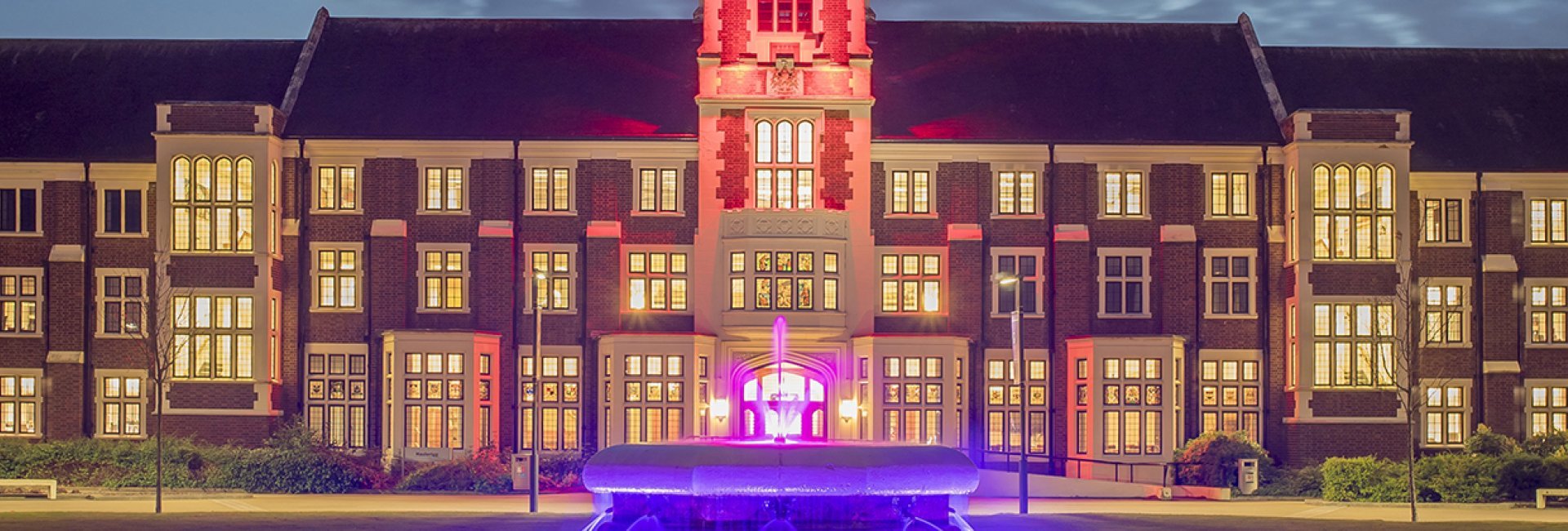
Loughborough University - open day event
19 Jun 2026, 08:00
Loughborough

Our MPhys Physics with Theoretical Physics degree focuses on the formulation and solution of physical problems using mathematics and computing.
This degree combines the core physics course with applied mathematics modules with topics such as probability theory and differential geometry, providing the skills to think like a theoretical physicist and understand what it means to progress the theoretical underpinnings of physics.
What's the difference between MPhys and BSc?
Our MPhys programmes offer a competitive edge in the job market due to their advanced content, highlighting commitment and specialized knowledge. The MPhys programmes include an extended research project, allowing deep exploration and potential contributions to human knowledge. For careers needing deep physics understanding and research capability, an MPhys bolsters prospects. While a BSc partially meets Chartered Physicist and Chartered Scientist requirements, MPhys fully satisfies them.
For a full list of areas studied, see the 'What You'll Study' section of the course page on our website.
You will be assessed using a variety of methods, including:
A mixture of coursework and examination (for example 25% coursework and 75% examination), whereas, some modules are assessed by 100% coursework or 100% by examination.
Coursework is based on a variety of tasks including individual essays, projects, laboratory work, contribution in tutorials, group work and presentations.
This is the equal consideration deadline. You can still apply after this date, but your application may not receive guaranteed consideration.

Loughborough University has participated in the Teaching Excellence Framework. These ratings were awarded in 2023, for four years.
See why these ratings were awarded
What does this TEF outcome mean?
The following entry points are available for this course:
AAA including Maths and Physics
Applicants without A level Physics may be considered on a case by case basis
BTEC Level 3 National Extended Diploma in Applied Science or Engineering: DDD with Distinctions in units 1-5 (Applied Science) or in units 1, 7, 8, 19 - 21, 25, 29 or 31 or 35 (Engineering) plus A Level Maths at Grade A
Preferred subjects include: Applied Science or Engineering (Engineering BTEC includes Engineering, Electrical and Electronic Engineering, Mechanical Engineering, Computer Engineering).
Access applications decided on a case by case basis but if offered will always require Distinctions in all Maths & Physics credits at Level 3.
BTEC Level 3 National Diploma in Applied Science or in Engineering: DD including Distinctions in units 1-5 (Applied Science) or in units 1, 7, 8, 19 - 21, 25, 29 or 31 or 35 (Engineering) plus A Level Maths at Grade A
Preferred subjects include: Applied Science or Engineering (Engineering BTEC includes Engineering, Electrical and Electronic Engineering, Mechanical Engineering, Computer Engineering).
BTEC Level 3 National Extended Certificate: D plus two A Levels at Grades AA including Maths and Physics
Preferred subjects include: Applied Science or Engineering (Engineering BTEC includes Engineering, Electrical and Electronic Engineering, Mechanical Engineering, Computer Engineering).
AA in Maths and Physics, plus Highers at majority A/B grades
34 (6,6,6 HL) including Maths and Physics at HL
Applicants taking the Welsh Baccalaureate Advanced Diploma will be asked to achieve the A level requirements for their course as part of their qualification. The Skills Challenge Certificate will be accepted alongside two A levels as long as individual course entry and subject requirements are met. www.lboro.ac.uk/study/undergraduate/apply/entry-requirements/
We recognise the benefit of the Extended Project in developing independent research and critical thinking skills. We would consider this as evidence of motivation to study a specific subject in more depth, and while we do not generally include it as part of our offer conditions, it may be used to further consider an application upon receipt of final examination results. www.lboro.ac.uk/study/undergraduate/apply/entry-requirements/
We accept a wide range of international qualifications for entry as outlined on our website – please view the individual course typical offers on our website and choose Ireland in the Country/region drop down field for more information.
This qualification is accepted in combination with other qualifications. For details please contact Loughborough University.
GCSE English Language grade 4/C
Loughborough accepts a wide range of qualifications for entry as outlined on our website www.lboro.ac.uk/study/undergraduate/getting-started/applying/entrance-requirements/
This information details the general requirements and should be read in conjunction with the information given for each course.
Loughborough also accepts a wide range of international qualifications for entry as outlined on our website www.lboro.ac.uk/international/applicants/country/
Loughborough uses contextual data in the admissions process to provide insights into the context in which your academic qualifications have been achieved. This may influence the typical offers outlined in the information given for each course. www.lboro.ac.uk/study/undergraduate/getting-started/applying/contextual-data/
Find out more about qualification requirements for this course.
All applicants are required to demonstrate that they have an appropriate level of English language http://www.lboro.ac.uk/international/applicants/english/
We consider contextual information as part of the assessment of an application to provide us with further insight into your achievements. This may lead to reduced offers, up to two grades lower than the typical offer requirements, as well as additional consideration when your results are received. For further information about Contextual Admissions at Loughborough including our Access Loughborough Contextual Offer please visit our website.
This section shows the range of grades that students who received offers were previously accepted on to this course with (learn more).
It is designed to support your research but does not guarantee whether you will or won't get a place.
Admissions teams consider various factors, including interviews, subject requirements, and entrance tests. Check all course entry requirements for eligibility.
We are unable to show previous accepted grades for this course. This could be because the course is new, it's a postgraduate course, there isn't enough historical data, or the provider has opted out of sharing their entry grades data for this course - learn more.
| Location | Fee | Year |
|---|
Tuition fee status depends on a number of criteria and varies according to where in the UK you will study. For further guidance on the criteria for home or overseas tuition fees, please refer to the UKCISA website.
The fees stated above are for the 2025/26 academic year; fees for 2026/27 have not yet been confirmed by the UK government. We will update this information as soon as it is available. Fees are reviewed annually and are likely to increase to take into account inflationary pressures.
While the cost of your tuition covers lots of things, it doesn’t cover everything. For instance this course doesn’t cover the cost of any stationery, printing, books or re-assessments which you might need.
UK tuition fees align with the applicable fee caps set by the UK government, and as such they are subject to changes made to the agreed cap in a specific year.
At Loughborough University