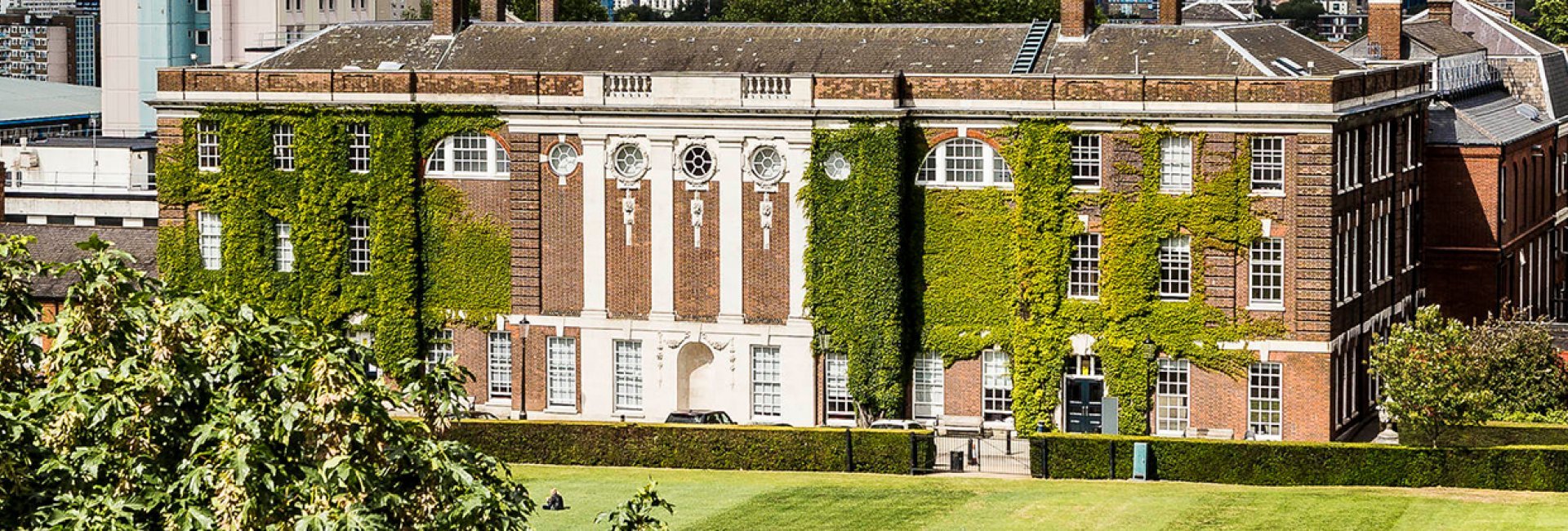
Goldsmiths, University of London - Virtual Campus Tour
25 Nov 2025, 12:00
London

Why study BA Social Work (with Integrated Foundation Year) at Goldsmiths
This programme, which includes a foundation year, supports you in accessing our BA Social Work undergraduate programme and studying to become a qualified Social Worker.
If you do not have the required qualifications for degree-level study, our BA in Social Work (with Integrated Foundation Year) offers an alternative entry route.
The foundation year is closely aligned with our undergraduate BA Social Work programme, offering an introduction to social work theories and practice.
As part of the foundation year, you will take modules that develop your academic and research skills to ensure you are well-equipped for undergraduate study.
You will undertake social work assessments that will support you in meeting the academic and work experience requirements for entry to our BA Social Work programme.
On successful completion of the foundation year, you can progress onto the first year of the BA Social Work programme and study to become a qualified Social Worker.
It is both an academic and professional qualification, so it's ideal if you're interested in pursuing a professional career in social work.
We'll equip you with the knowledge, values and skills you'll need to practise as a reflective and ethical social worker, equipped for the challenges of contemporary social work practice.
Our social work programmes are highly regarded by potential employers within London and further afield, and our graduates have an excellent record of securing employment.
The degree includes practice placements in two settings and with different service user groups, so you'll be able to gain invaluable real-world experience.
You will cover topics including: social work practice methods; anti-oppressive practice; social theories; developmental perspectives; research methodologies; and social policy. The knowledge that you gain will help you develop the broad set of skills and perspectives needed for successful social work practice in a variety of settings.
We'll encourage you to think deeply about human rights and social justice, and to embed these values in your practice.
The degree also prepares you according to the Professional Capabilities Framework (PCF), the Quality Assurance Agency subject benchmark for social work, and the Department of Health's requirements for social work training.
You will study with a cohort of other social work students from London and elsewhere, and some of your modules will also allow you will also study alongside students from other programmes, including Youth Work and Community Studies. Interdisciplinarity is a strength of our programme.
Social work education at Goldsmiths has a long and distinguished record – you'll be taught by established social work academics who have considerable research and/or practice experience in their fields
On successful completion of the BA Social Work programme, you will be eligible to apply to Social Work England for registration as a qualified social worker and will be able to access numerous graduate social work opportunities in London and beyond. You could go on to work in areas such as child protection, youth justice, adult social care, mental health and much more in local authorities, charities and other social care agencies
Year 0/Foundation Year
Developing your academic skills
Alongside direct preparation for an undergraduate degree in social work, you will take two modules with our Centre for Academic Language and Literacies (CALL). These modules will help you develop the broader academic and research skills required for undergraduate study.
You will also learn how key social and political movements of the period have influenced the world we live in today through a cross-disciplinary module: Culture and Society in Post-war Britain.
Through the Social Work Foundation module, you will be introduced to social work theories and practices that prepare you for the BA Social Work programme, while ensuring you meet the entry requirements for the course.
You take the following modules:
Reading and Writing Your World
Building Your Research World
Culture and Society in Postwar Britain
Social Work Foundation
Year 1
You are introduced to social work as a professional activity and an academic discipline. You consider key concepts such as the nature of need, community, social work services, and the significance of the service user perspective. Major theoretical approaches within the social sciences and their relationship to social work will be investigated, as will studies in professional development for practice, where you will have the opportunity to shadow a qualified social worker.
You'll study the following modules:
Introduction to Social Work, Community Development, and Youth Work
Group Work
Introduction to Applied Social Science Research
Professional Development for Practice
Foundation to Social Work
Introduction to Social Science
Race, Racism and Professional Practice
Year 2
You address issues of life-span development and are given a grounding in methods of intervention.
Your assessed practice consists of 70 days in a student social work role. This gives you the chance to develop your communication and social work practice skills with service users, and to work in partnership across professional disciplines and agencies. You are also provided with an introduction to assessment in social work and to the links between social work theory and practice.
You'll take these modules:
Social Work Skills and Methods 1
Introduction to Law and Social Work
Applied Social Research Methods
Theory, Policy and Practice
Theories of Individual Development
Social Work 70-Day Placement and Practice Integration
Year 3
Your final year gives you an overview of the legal and organisational context of social work and extends your knowledge and skills in one of the two main specialist areas of social work practice: working with children and families, or working with adults in need.
A theory and practice module looks at methods of intervention and theories applied to a particular area of social work, while another assessed practice element enables you to meet the professional requirements for social work training via 100 days of practice under the guidance of a practice educator.
You are expected to demonstrate competence across a range of standards and this is formally assessed. The learning on the degree builds over the three years and prepares you to apply that knowledge to practice situations.
You take these modules:
Social Work Skills and Methods 2
Social Justice and Social Work
Social Work 100-Day Placement and Practice Integration
Practice placements
You are required to spend 170 days in practice settings. These placements are arranged through the allocation system devised by the College.
In Year 1, you are expected to complete two days shadowing an experienced Social Worker as well as a period of voluntary work, both of which you arrange.
In Year 2 there is a practice placement lasting 70 days.
In Year 3 the practice placement lasts 100 days.
The practice placements will be supported by 30 days for the development of practice skills.
Please note that due to staff research commitments not all of these modules may be available every year.
You’ll be assessed by a variety of methods that broaden your academic skillset. These may include coursework assignments such as essays, critical commentaries, presentations and personal reflections as well as seen examinations.
This is the equal consideration deadline. You can still apply after this date, but your application may not receive guaranteed consideration.

Goldsmiths, University of London has participated in the Teaching Excellence Framework. These ratings were awarded in 2023, for four years.
See why these ratings were awarded
What does this TEF outcome mean?
The following entry points are available for this course:
For candidates who have not studied any Level 3 qualifications in the last two years, there are no formal qualifications (other than GCSE English grade 4 or equivalent) required for admission but you will need to demonstrate that you can benefit from the programme by undertaking an additional admissions process. This may involve an interview or the submission of a piece of writing to assess suitability to study.
You will also need Grade 4/C in GCSE English or certificated equivalent.
Find out more about qualification requirements for this course.
| Test | Grade | Additional details |
|---|---|---|
| IELTS (Academic) | 7 |
English Language Requirements https://www.gold.ac.uk/apply/english-language-requirements/
We pay careful attention to your personal statement which is your opportunity to demonstrate your interest in your desired subject. Referees are also welcome to include any relevant contextual comments around your academic achievements. We consider all these things when making a decision as well as your qualifications and grades. If you are unsure about applying, we would be happy to advise you.
This section shows the range of grades students (with UK A-Levels or Pearson BTEC Level 3 National Extended Diplomas) who received offers were previously accepted with (learn more). It is designed to support your research but does not guarantee whether you will or won't get a place. Admissions teams consider various factors, including interviews, subject requirements, and entrance tests. Check all course entry requirements for eligibility.
We are unable to show previous accepted grades for this course. This could be because the course is new, it's a postgraduate course, there isn't enough historical data, or the provider has opted out of sharing their entry grades data for this course - learn more.
No fee information has been provided for this course
Tuition fee status depends on a number of criteria and varies according to where in the UK you will study. For further guidance on the criteria for home or overseas tuition fees, please refer to the UKCISA website.
To find out more about fees and funding, please check our undergraduate fees guidance or contact the Fees Office https://www.gold.ac.uk/ug/fees-funding/
New Cross
Lewisham
SE14 6NW
Visit our website Visit our course page
Email:course-info@gold.ac.uk
Phone:020 7078 5300
Email:pssthub@gold.ac.uk
Phone:020 8228 5550
At Goldsmiths, University of London