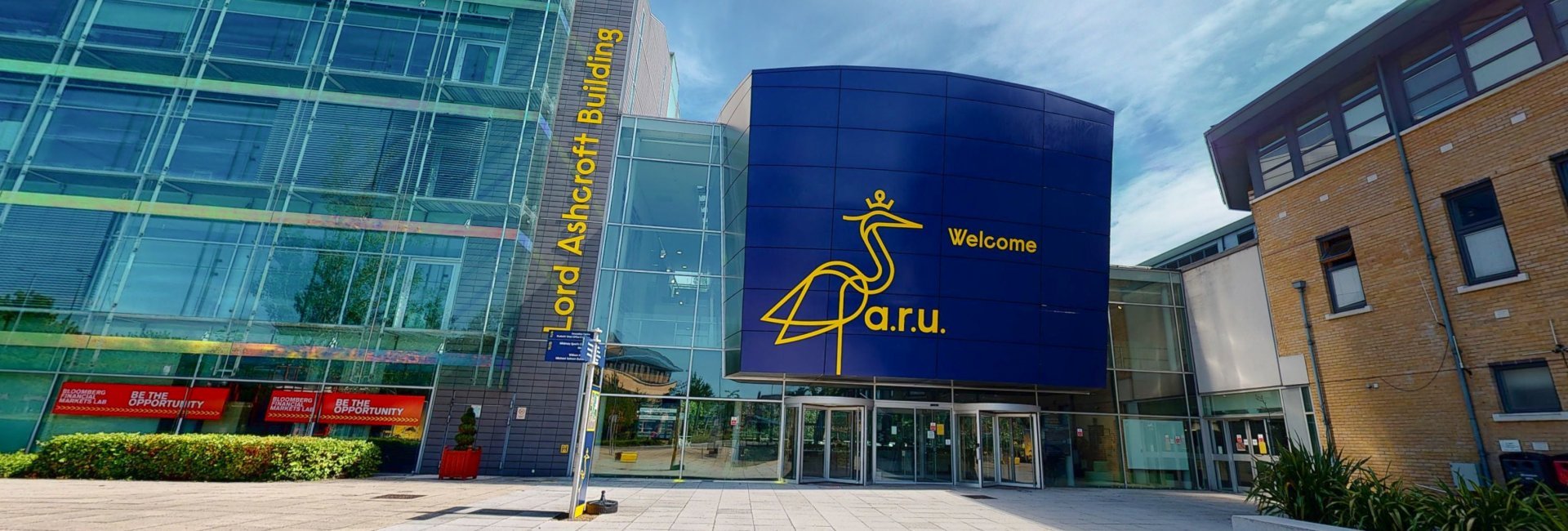
Anglia Ruskin University - Undergraduate Open Day - Cambridge
6 Jun 2026, 09:00
Cambridge

Explore how to collect, analyse and interpret chemical and biological evidence from crime scenes and how to present your findings in court.
Accredited by the Chartered Society of Forensic Sciences, the professional body for forensic practitioners, meaning you'll have maximum opportunity to gain essential skills for a career in this field.
Designed and led by an international, multidisciplinary teaching team with expertise in analytical chemistry, forensic anthropology, toxicology, forensic genetics and crime scene examination.
Bring the world of work to life through Live Briefs; take on real-world challenges and present modern solutions that directly impact and benefit prospective employers.
Obtain hands-on experience working in forensic scenarios in our crime scene rooms and using the latest specialist equipment in our SuperLab, and gain courtroom experience during a mock court session.
Take advantage of the knowledge and experience of our expert staff and prepare for employment opportunities spanning law enforcement, forensic science, and other parts of the scientific sector.
Based in our £45m Science Centre in Cambridge, you’ll be able to analyse and investigate a range of evidence in crime scene rooms and our forensic lab. Under the guidance of our expert tutors, you’ll get hands-on with specialist analytical equipment such as gas chromatography and high-performance liquid chromatography (LC) instruments with different detection systems.
You’ll learn outside the classroom too, with visits to law courts and a local mortuary, and opportunities to work with local police forces and forensic labs.
Our course was ranked third in the country for Learning Opportunities (Source: subject ranking for Forensic and Archaeological Sciences, National Student Survey 2022), so we’re confident you’ll graduate with advanced skills in chemistry, biology and laboratory analysis – ready to start a career as a forensic scientist.
As a forensic scientist, you'll learn how to apply scientific principals and techniques to analyse and interpret evidence in criminal and civil investigations. You’ll understand and practice the collection of evidence from crime scenes and the subsequent examination of that evidence using specialised equipment. You’ll need a firm understanding of the UK legal system and the ability to present evidence in court as an expert witness. All of this is on offer when you study the BSc (Hons) Forensic Science degree at ARU.
You'll need an understanding of core scientific principles surrounding biology and chemistry, which will be provided during this Forensic Science degree.
Practical experience is essential, so you'll examine ‘real’ forensic samples including ignitable liquid residues, biological exhibits, and trace evidence such as paint and fibres. Together, we’ll explore techniques including microscopy, microspectrophotometry, spectroscopy and chromatography; and get hands-on experience of specialist instruments for biological and chemical analysis. You’re free to book additional time with this equipment outside of lessons.
As well as refining your lab skills, you’ll learn to conduct thorough, independent research, which is crucial for staying current with advancements in Forensic Science. In addition, you'll develop the communication skills needed to effectively present your findings in legal settings.
As a Forensic Science student at ARU, you’ll be eligible for student membership of the Royal Society of Chemistry and the Chartered Society of Forensic Sciences.
Going to university can offer you a series of once-in-a-lifetime opportunities. As part of your course, you could study abroad with one of our short-term Global Opportunity programmes, which last from one to four weeks and are funded by ARU’s UK Turing Scheme grants.
Related courses:
BSc (Hons) Crime and Investigative Studies
Year 1:
United Kingdom Legal Systems and Law for Forensic Scientists (15 credits)
Applied Science for Forensic Investigators (30 credits)
Introduction to Forensic Photography and Methodologies (30 credits)
Professional and Personal Development - Level 4
Physical and Quantitative Chemistry for Analytical Scientists (15 credits)
Biological and Trace Evidence Analysis (30 credits)
Year 2:
Introduction to Forensic Genetics (15 credits)
Forensic Scene Examination (15 credits)
Forensic Spectroscopy Techniques (15 credits)
Forensic Analytical Chemistry (30 credits)
Professional and Personal Development - Level 5
Forensic Biology (15 credits)
Project Preparation (15 credits)
Ruskin Module (15 credits)
Year 3 Core Modules:
Forensic Analysis of Drugs and Poisons (15 credits)
Forensic Pathology (15 credits)
Undergraduate Major Project (30 credits)
Advanced Forensic Methodologies (30 credits)
Year 3 Optional Modules:
Advanced Fire and Explosion Investigation (15 credits)
Advanced Forensic Genetics (15 credits)
Forensic Anthropology (15 credits)
Throughout the course, we’ll use a range of assessment methods to measure your progress. This course has a hands-on approach, so a lot of your assessment will be through practical work. You’ll also do exams, essays, portfolios, role plays and presentations.
Professionally accredited courses provide industry-wide recognition of the quality of your qualification.
This is the equal consideration deadline. You can still apply after this date, but your application may not receive guaranteed consideration.

Anglia Ruskin University has participated in the Teaching Excellence Framework. These ratings were awarded in 2023, for four years.
See why these ratings were awarded
What does this TEF outcome mean?
The following entry points are available for this course:
We welcome applications from international and EU students, and accept a range of international qualifications.
Find out more about qualification requirements for this course.
ARU operates a policy of making contextualised offers for this course which may be a reduced conditional offer or an unconditional offer, using data from UCAS to make our assessment. We consider that this approach promotes the equality of educational opportunity for applicants from low participation groups in HE. ARU welcomes students from diverse backgrounds and helping them achieve their full potential. The offer of a place through the contextual offer process is at the discretion of ARU.
This section shows the range of grades students (with UK A-Levels or Pearson BTEC Level 3 National Extended Diplomas) who received offers were previously accepted with (learn more). It is designed to support your research but does not guarantee whether you will or won't get a place. Admissions teams consider various factors, including interviews, subject requirements, and entrance tests. Check all course entry requirements for eligibility.
We are unable to show previous accepted grades for this course. This could be because the course is new, it's a postgraduate course, there isn't enough historical data, or the provider has opted out of sharing their entry grades data for this course - learn more.
| Location | Fee | Year |
|---|---|---|
| England | £9535 | Year 1 |
| Northern Ireland | £9535 | Year 1 |
| Scotland | £9535 | Year 1 |
| Wales | £9535 | Year 1 |
| Channel Islands | £9535 | Year 1 |
| Republic of Ireland | £9535 | Year 1 |
Tuition fee status depends on a number of criteria and varies according to where in the UK you will study. For further guidance on the criteria for home or overseas tuition fees, please refer to the UKCISA website.
https://www.aru.ac.uk/student-life/preparing-for-study/help-with-finances/undergraduate
https://www.aru.ac.uk/study/tuition-fees
East Road
Cambridge
CB1 1PT
Visit our website Visit our course page
Email:answers@aru.ac.uk
Phone:01245 686868
Email:answers@aru.ac.uk
Phone:01245 686868
At Anglia Ruskin University