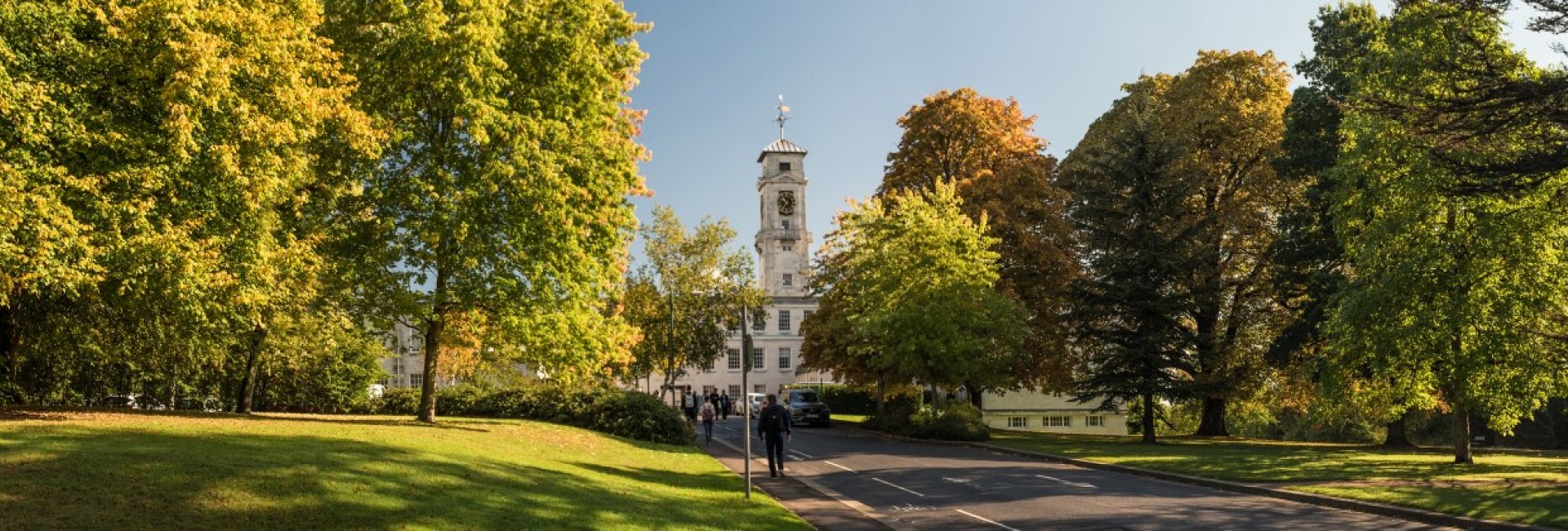
University of Nottingham
University Park
Nottingham
NG7 2RD
Visit our website Visit our course page
Course contact details
Undergraduate admissions
Phone:+44 (0) 115 951 5559

If you are interested in sport, exercise and biomedical sciences, this course will provide you with scientific knowledge into why and how the body functions during and after sport and exercise.
Unlike most other sport and exercise courses, this degree has a strong scientific focus.
You will be working with high-tech equipment to study biomechanics, nutrition, sports medicine, psychology, physiology and anatomy. We are the only Sport and Exercise Science degree to have access to a well-equipped medical school anatomy suite and use physical and virtual 3D modelling to help you better understand the anatomy of the human body.
You will enhance your employability through your Personal Development Portfolio. For this you will complete 100 hours of placement and profession-related activities that are tailored to individual career goals and we have a dedicated placements manager to support you every step of the way.
The University of Nottingham has a strong tradition of sporting success across a wide number of sports. The University has finished in the BUCS top 10 for the last 15 years. In 2022 we finished 2nd in the UK.
Sports scholarships are also available for talented athletes who wish to join this course.
You will study in a range of facilities including our new exercise physiology, psychology and human movement laboratories in the David Ross Sports Village on University Park Campus and our Medical School which includes an anatomy suite and functional sports medicine resources.
Depending on the module being studied, you may also be based in the Faculty of Engineering on University Park Campus. There is a footbridge linking the Medical School to University Park, providing easy access to facilities on both sites.
In year one, you’ll learn about the fundamentals of exercise physiology, psychology and functional anatomy. You'll also study biochemistry, cell biology and biomechanics. You'll gain lab experience and complete a first aid qualification as part of your Personal Development Portfolio.
In year two, teaching expands to include nutrition and how the body responds to environmental stress. You’ll study biomechanics and psychology in more depth, as well as taking a closer look at the musculoskeletal system and cardiovascular and respiratory physiology.
You can choose four advanced optional modules in year three, to study alongside your research project.The research project is an exciting opportunity to consolidate your learning while exploring an area you find interesting. You'll work alongside a research group in the University, with supervision from a research-active academic.
This is the equal consideration deadline. You can still apply after this date, but your application may not receive guaranteed consideration.

University of Nottingham has participated in the Teaching Excellence Framework. These ratings were awarded in 2023, for four years.
See why these ratings were awarded
What does this TEF outcome mean?
The following entry points are available for this course:
Find out more about qualification requirements for this course.
| Test | Grade | Additional details |
|---|---|---|
| IELTS (Academic) | 6.5 | including no less than 6.0 in any element |
| TOEFL (iBT) | 87 | Minimum of 20 in Speaking and 19 in all other elements |
We consider applicants solely on the basis of their merits, abilities and potential – we use exam grades to prioritise applicants but look at a range of factors and aim to give everyone an equal opportunity to show their achievements.
We understand that background and personal circumstances can have an impact on academic performance at school or college. Applicants who are eligible under our contextual admissions policies may be considered for a reduced contextual offer.
This section shows the range of grades students (with UK A-Levels or Pearson BTEC Level 3 National Extended Diplomas) who received offers were previously accepted with (learn more). It is designed to support your research but does not guarantee whether you will or won't get a place. Admissions teams consider various factors, including interviews, subject requirements, and entrance tests. Check all course entry requirements for eligibility.
We are unable to show previous accepted grades for this course. This could be because the course is new, it's a postgraduate course, there isn't enough historical data, or the provider has opted out of sharing their entry grades data for this course - learn more.
| Location | Fee | Year |
|---|---|---|
| Channel Islands | £9535* | Year 1 |
| Republic of Ireland | £9535* | Year 1 |
| England | £9535* | Year 1 |
| Northern Ireland | £9535* | Year 1 |
| Scotland | £9535* | Year 1 |
| Wales | £9535* | Year 1 |
| International | £30750* | Year 1 |
| EU | £30750* | Year 1 |
* This is a provisional fee and subject to change.
Tuition fee status depends on a number of criteria and varies according to where in the UK you will study. For further guidance on the criteria for home or overseas tuition fees, please refer to the UKCISA website.
No additional fees or cost information has been supplied for this course, please contact the provider directly.
University Park
Nottingham
NG7 2RD
Visit our website Visit our course page
Phone:+44 (0) 115 951 5559
At University of Nottingham