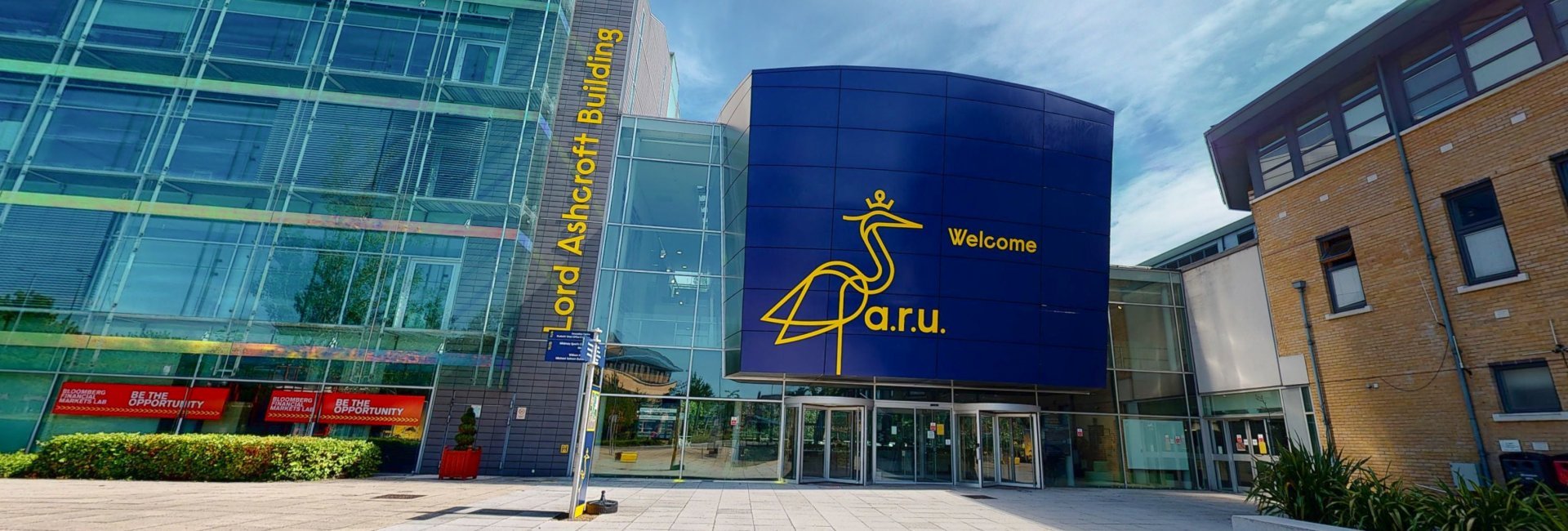
Anglia Ruskin University - Undergraduate Open Day - Cambridge
6 Jun 2026, 09:00
Cambridge

Develop as a creative and professional writer while exploring the writing that has shaped, and been shaped by, different societies by studying our BA (Hons) Writing and English Literature degree in Cambridge.
Join a course that scored 92% for Academic Support in the National Student Survey 2023. Explore professional writing techniques and learn to write compelling narratives whether you want to write poetry, drama, short fiction, news, features, or something else. You’ll improve your writing skills with invaluable feedback from professional writers, and workshops with your fellow students.
You’ll also find out how English literature is shaped by its historical and cultural context, and how, in turn, it influences individual readers and the whole of society. You’ll also learn about many other subjects, including history, politics, religion, psychology and history of art, which will enrich your writing. Your deeper understanding of literary texts will improve your abilities as a writer.
You can tailor your Writing and English Literature degree to your ideal career with our wide range of optional modules, including work-based modules in Years 2 and 3. We’ll support you to find work placements relevant to your chosen career, and you’ll have opportunities to take part in live briefs with our partner organisations. Some of our students recently worked with Slow Theatre Company, producing a series plays for their Women in Red Wiki project to increase awareness of the under-representation of women on Wikipedia. Our course options also allow you to take a placement year as part of your course.
You’ll also have the option to learn a language with our Anglia Language Programme in Years 2 and 3, and/or study abroad for a semester and apply for funding to help cover the cost.
You’ll develop many skills besides writing, including literacy, communication, research, creative thinking, self-reliance and teamwork, all of which can help you start a career in many different areas.
The impact of our English Language & Literature research achieved 'world-leading' in the Research Excellence Framework 2021.
Outstanding student support
Join our student community and:
benefit from award-winning learning facilities, including extensive library and IT resources
learn from expert staff who will guide your research interests and career development
access support, should you need it, with study skills, careers advice, health and wellbeing, and more.
make the most of studying in the picturesque city of Cambridge, with its wealth of literary connections and opportunities
Careers
Our BA (Hons) Writing and English Literature students go on to successful careers in a variety of fields, including journalism, teaching, writing, television, radio, the music industry, gallery work and arts administration.
The literacy, creativity, problem-solving, research, analysis and communication skills our Writing and English Literature students gain are highly valued by employers. You’ll also learn to work well independently and as part of a team.
You could also learn more, develop a specialism or start an exciting career in research with our Masters degrees in English Literature or Creative Writing. Take advantage of our Alumni Scholarship and get 20% off your fees.
Employability and personal career development
Informed by employers, our courses support an integrated approach to employability. You’ll have opportunities to develop the skills and abilities they are looking for and gain a deeper understanding of how your academic learning relates to the world of work through Live Briefs and Ruskin Modules.
You will need to dedicate time outside of your course to develop your employability, through placements, internships or volunteering or through our partner scheme Students at the Heart of Knowledge Exchange (SHoKE). You can evidence this experience on your CV and talk about it in interviews to give you that all important edge.
Year 1 core modules: Introduction to the Study of Literature and Writing; Introduction to Imaginative Writing; Screenwriting: The Short Film; Contemporary Publishing for Writers; Reading Critically, Old English to Enlightenment; Nineteenth Century Literature and the Environment; Crocodiles, Pirates and Moon-men: Renaissance Encounters. Year 2 core modules: Writing Short Fiction; Writing for the Stage; Ruskin Module. Year 2 optional modules: Nineteenth Century Afterlives and Adaptations; Online Journalism; Writing Creative Non-Fiction; Anglia Language Programme. Year 3: Placement. Year 4 core modules: Writing Poetry; Writing and the Present. Year 4 optional modules: Major Project Writing; Major Project English Literature; Elizabeth Gaskell and the Brontës; Renaissance Magic; Spectacle and Representation in Renaissance Drama; Careers with English; Romantic Ideals; New Media Discourse; Literature and Exile: Displacement, Identity, Self; Film Journalism; Forbidden Stories: Banned Children's Books; Anglia Language Programme; Worldbuilding 1 and 2; The Business of Being a Writer: Craft and Professional Practice; Novel Writing: Long-Form Prose; Screenwriting: Writing and Selling the Feature Film. Modules are subject to change and availability.
You’ll show your progress through many methods, reflecting the varied nature of your course. These will include writing portfolios, critical commentaries, presentations, journals and log books, critical essays, film reviews and analyses, internet, print and video production, and commissions. You’ll also take part in 'crits', in which you’ll present and defend your work.
This is the equal consideration deadline. You can still apply after this date, but your application may not receive guaranteed consideration.

Anglia Ruskin University has participated in the Teaching Excellence Framework. These ratings were awarded in 2023, for four years.
See why these ratings were awarded
What does this TEF outcome mean?
The following entry points are available for this course:
Find out more about qualification requirements for this course.
ARU operates a policy of making contextualised offers for this course which may be a reduced conditional offer or an unconditional offer, using data from UCAS to make our assessment. We consider that this approach promotes the equality of educational opportunity for applicants from low participation groups in HE. ARU welcomes students from diverse backgrounds and helping them achieve their full potential. The offer of a place through the contextual offer process is at the discretion of ARU.
This section shows the range of grades students (with UK A-Levels or Pearson BTEC Level 3 National Extended Diplomas) who received offers were previously accepted with (learn more). It is designed to support your research but does not guarantee whether you will or won't get a place. Admissions teams consider various factors, including interviews, subject requirements, and entrance tests. Check all course entry requirements for eligibility.
We are unable to show previous accepted grades for this course. This could be because the course is new, it's a postgraduate course, there isn't enough historical data, or the provider has opted out of sharing their entry grades data for this course - learn more.
| Location | Fee | Year |
|---|---|---|
| England | £9535 | Year 1 |
| Northern Ireland | £9535 | Year 1 |
| Scotland | £9535 | Year 1 |
| Wales | £9535 | Year 1 |
| Channel Islands | £9535 | Year 1 |
| Republic of Ireland | £9535 | Year 1 |
Tuition fee status depends on a number of criteria and varies according to where in the UK you will study. For further guidance on the criteria for home or overseas tuition fees, please refer to the UKCISA website.
In the 2025/26 academic year, the placement year fee will be £1,500.
https://www.aru.ac.uk/student-life/support-and-facilities/careers-and-employability/placements
https://www.aru.ac.uk/study/tuition-fees
https://www.aru.ac.uk/student-life/preparing-for-study/help-with-finances
East Road
Cambridge
CB1 1PT
Visit our website Visit our course page
Email:answers@aru.ac.uk
Phone:01245 68 68 68
At Anglia Ruskin University