University of Nottingham
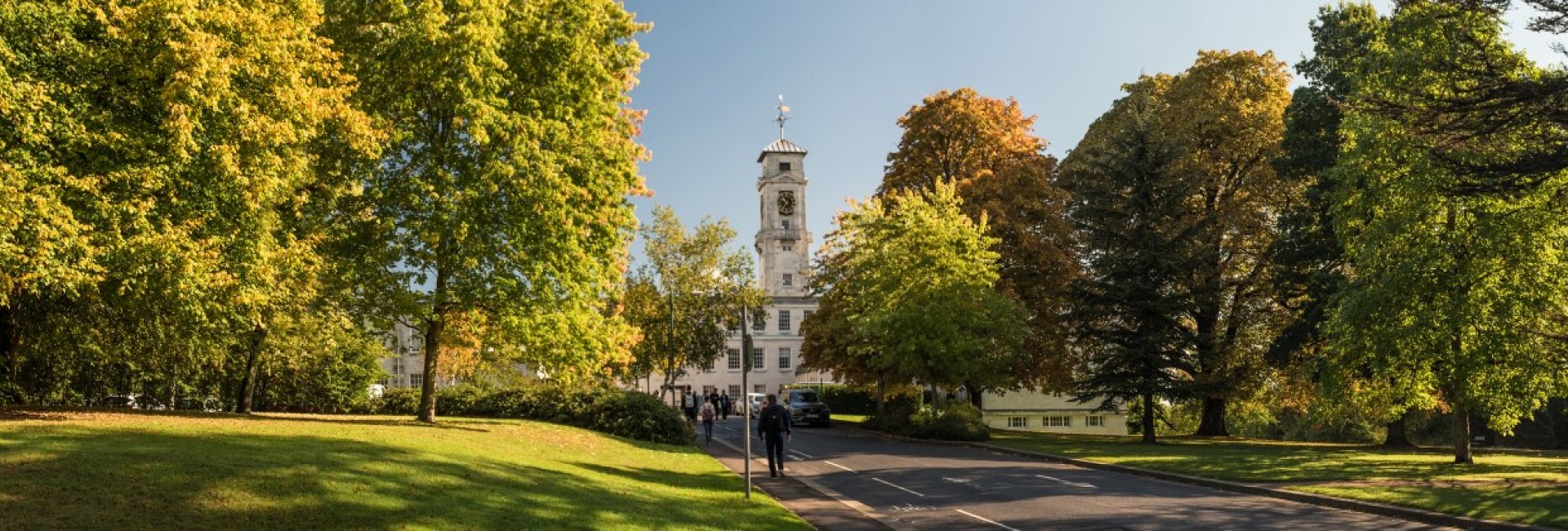
University Park
Nottingham
NG7 2RD
Visit our website Visit our course page
Course contact details
Undergraduate admissions
Phone:+44 (0) 115 951 5559

Please note: We are no longer accepting applications for April 2025 . Please select either September 2025 or April 2026 if you wish to study in the 2025/2026 academic cycle. For deferred entry to the 2026/2027 academic cycle, please select September 2026 and contact the University of Nottingham with details of your preferred start date (September or April).
Our veterinary course boasts a 99% student satisfaction rate (National Student Survey 2021). You will get hands-on with animals and can choose when you start - September 2025 or April 2026.
You'll learn theory and practical aspects of domestic, wild and exotic species, with clinical experience integrated throughout the course. Practicing with our Clinical Associates on your placement year ensures you learn a varied case-load of animals and treatments.
Teaching is delivered through body system-based modules in years one and two, which integrate traditional medical subjects, such as anatomy and physiology. Topics are then repeated within a clinical module in year three or four.
Uniquely, our courses have an integrated BVMedSci, saving you a year of study, tuition fees and living costs. This part of the course will help enhance your ability for continual learning and development in veterinary medicine through research.
You will graduate with a Bachelor of Veterinary Medicine (BVM) and Bachelor of Veterinary Surgery (BVS) degree. Plus gain an additional award of BVMedSci, after completing an integrated research project in your third year.
Theory and practical learning are integrated through body-system based modules. Each covering all the common domestic, wildlife, and exotic species. These modules are covered twice – in year one and two as a veterinary subject, and again in year three and four as a clinical subject.
During your first two years, you will learn the basic science which underpins veterinary medicine. This will include circulatory, respiratory, neuromuscular, endocrine, gastrointestinal and urogenital systems, as well as animal health and welfare. Teaching will be practical to help develop your clinical skills.
You will also develop animal handling skills, and an understanding of animal husbandry, relevant industries, and the role of animals in society. Professional skills such as teamwork, communication, decision-making and the professional role of the veterinary surgeon will also be covered.
In your third year there is the opportunity to focus on a research project of your choice. You will further develop your understanding of scientific principles and enhance your skills learnt from years one and two, in preparation for the clinical phase. You will also gain insight into veterinary public health.
Year four equips you with the underpinning knowledge and skills required to work in small animal, farm animal and equine clinical veterinary practice.
The final year consists of a series of rotated placements and clinical teaching with our Clinical Associates. These placements happen in veterinary hospitals or practices, farms, zoos and labs. Teaching and assessment uses observation, discussion, and practical experience. At each placement you will be under the supervision of University academic staff who are placed at, and working within, the Clinical Associate.
Extra Mural Studies (EMS):
A total of 12 weeks of Animal Husbandry Extra Mural Studies (AHEMS) and 26 weeks of Clinical Extra Mural Studies (CEMS) are also undertaken throughout the course. EMS and CEMS follow recommendations defined by the Royal College of Veterinary Surgeons (RCVS). EMS exposes you to the practical, ethical, financial, managerial, and interpersonal aspects of professional practice. EMS placements take place during University holidays as well as during timetabled weeks in years one and two.
This course is not accepting applications at this time. Please contact the provider to find out more.
This is the equal consideration deadline. You can still apply after this date, but your application may not receive guaranteed consideration.

University of Nottingham has participated in the Teaching Excellence Framework. These ratings were awarded in 2023, for four years.
See why these ratings were awarded
What does this TEF outcome mean?
This course is not accepting applications at this time. Please contact the provider to find out more.
The following entry points are available for this course:
In addition to the above, all applicants must meet GCSE requirements - minimum of five grade As (numeric grade 7) at GCSE to include Chemistry and Biology (or Double Science), one of Physics or Maths must be passed to grade A (7), minimum of grade B (6) in maths and English language; Core Science, Additional Science and Further Additional Science are required at grade A (7).
If GCSEs have not been taken, applicants must provide evidence of achievement at an equivalent level.
European Baccalaureate - 80% overall including Biology and Chemistry 80% or 8.0.
Degree - at least 2:1 in any Bsc subject, together with A level grade B in both Biology and Chemistry, and GCSE grade B in English Language and Maths.
Please see website for resit policy and further details.
We consider applicants solely on the basis of their merits, abilities and potential – we use exam grades to prioritise applicants but look at a range of factors and aim to give everyone an equal opportunity to show their achievements.
We understand that background and personal circumstances can have an impact on academic performance at school or college. Applicants who are eligible under our contextual admissions policies may be considered for a reduced contextual offer.
This section shows the range of grades students (with UK A-Levels or Pearson BTEC Level 3 National Extended Diplomas) who received offers were previously accepted with (learn more). It is designed to support your research but does not guarantee whether you will or won't get a place. Admissions teams consider various factors, including interviews, subject requirements, and entrance tests. Check all course entry requirements for eligibility.
We are unable to show previous accepted grades for this course. This could be because the course is new, it's a postgraduate course, there isn't enough historical data, or the provider has opted out of sharing their entry grades data for this course - learn more.
| Location | Fee | Year |
|---|---|---|
| Channel Islands | £9250 | Year 1 |
| Republic of Ireland | £9250 | Year 1 |
| England | £9250 | Year 1 |
| Northern Ireland | £9250 | Year 1 |
| Scotland | £9250 | Year 1 |
| Wales | £9250 | Year 1 |
| International | £38400* | Year 1 |
| EU | £38400* | Year 1 |
* This is a provisional fee and subject to change.
Tuition fee status depends on a number of criteria and varies according to where in the UK you will study. For further guidance on the criteria for home or overseas tuition fees, please refer to the UKCISA website.
No additional fees or cost information has been supplied for this course, please contact the provider directly.
University Park
Nottingham
NG7 2RD
Visit our website Visit our course page
Phone:+44 (0) 115 951 5559
At University of Nottingham