Daria
University of the Arts London
BA (Hons) Illustration and Visual Media

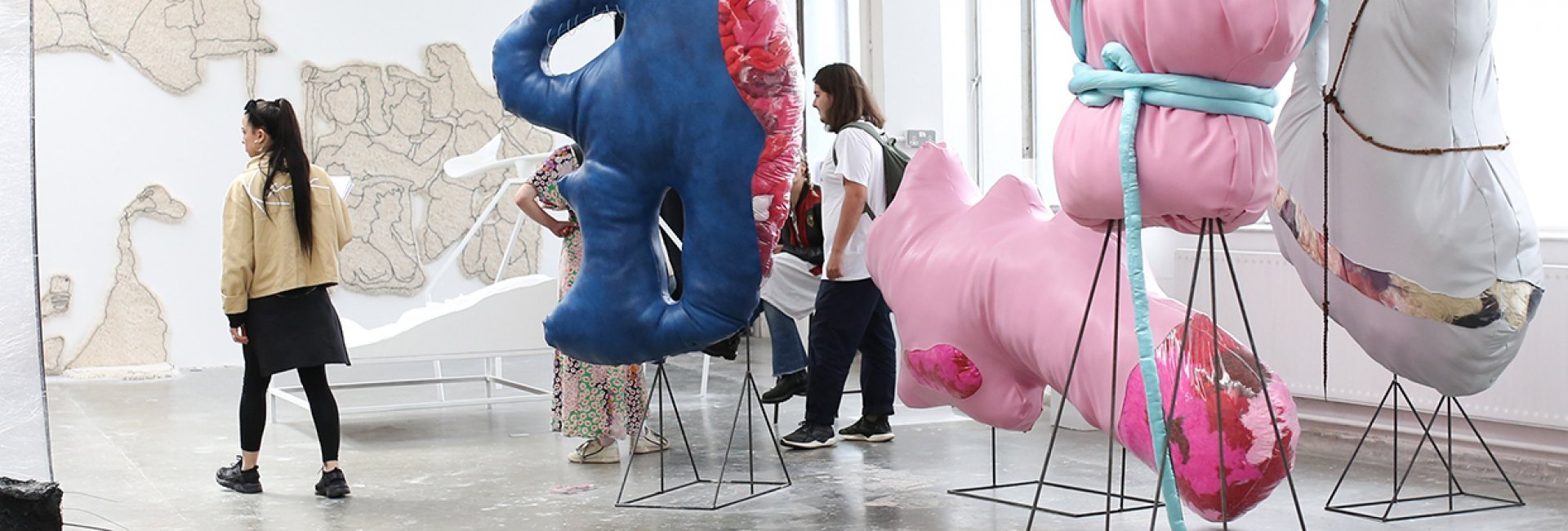
BA (Hons) Design Management offers a creative and experiential approach to the study of design, problem-solving, business and leadership, global cultures, innovation and sustainability. We apply design thinking to live industry collaborations, addressing complex problems with empathy, insight, collaboration, agility, ethics and contextual intelligence. We believe that design management plays a strategic role in shaping better futures. This course is taught at London College of Communication, at Elephant and Castle, part of University of the Arts London (UAL).
Why choose this course at London College of Communication
• The only undergraduate design management course of its kind delivered at a world-leading creative institution located in central London, with excellent links to the creative and cultural industries.
• A course with human-centred values, sustainability and design thinking at the core of subject delivery. Design thinking involves an approach to innovation and problem solving that takes into account “the needs of people, the possibilities of technology and the requirements for business success” (Tim Brown, IDEO).
• Real-world multidisciplinary design projects - work with a diverse team of industry active educators, professionals, creatives, external collaborators and visiting practitioners.
• Strong industry links - recent project briefs from design and branding agencies, non-profit organisations, research, strategy and marketing departments, start-ups, financial tech companies and competitions.
• Opportunities for international exchanges with Paris College of Art (PCA), Hong Kong Polytechnic University (HKPU) and IADE European Design School in Lisbon, Portugal.
• With over 95% graduate employment and postgraduate progression since 2015, with active alumni, we are a course that produces highly employable graduates, strategic thinkers, communicators, change makers and entrepreneurs.
• A focus on developing leadership and entrepreneurial mindsets, emotional intelligence and design competencies especially to support final year students.
What to expect
Seminars investigate the role of design in society, networks, business, organisations, cultures and contexts that give design its multiple meanings. Practical projects and workshops provide immersive experiences of the design process: from research methods to defining and reframing problems, developing briefs, brainstorming, prototyping, testing, delivery and assessing effectiveness. Theory, frameworks and strategic tools drawn from a broad range of design, business and humanities disciplines mean that you'll build your practice with hands-on projects, crits and collaborations.Management skills: communication, presentation, critical reflection, scoping briefs, live research and feedback, budgeting, time management, team working. Design principles: visual thinking, ideation, working with multiple mediums (print, objects, images, video, sound, web) and exhibitions. Industry Projects – There is an emphasis on strategic and socially engaged design and real-world projects with agencies, research and strategy organisations, non-profits and councils
About London College of Communication
London College of Communication is for the curious, the brave and the committed: those who want to transform themselves and the world around them. Through a diverse, world-leading community of teaching, research and partnerships with industry, we enable our students to succeed as future-facing creatives in the always-evolving design, media and screen industries. The London College of Communication experience is all about learning by doing. Our students get their hands dirty and develop their skills through the exploration of our facilities and technical spaces. Students work on live briefs and commissions, with everything from independent start-ups and charities in Southwark, through to major global companies, including Penguin, the National Trust and Royal Mail, to name a few.
This is the equal consideration deadline. You can still apply after this date, but your application may not receive guaranteed consideration.

University of the Arts London has participated in the Teaching Excellence Framework. These ratings were awarded in 2023, for four years.
See why these ratings were awarded
What does this TEF outcome mean?
The following entry points are available for this course:
Discover what it's like to study Design Management at University of the Arts London: insights on the course, making friends, personal statement tips, uni prep, and recommended books, podcasts, and videos.

This section shows the range of grades students (with UK A-Levels or Pearson BTEC Level 3 National Extended Diplomas) who received offers were previously accepted with (learn more). It is designed to support your research but does not guarantee whether you will or won't get a place. Admissions teams consider various factors, including interviews, subject requirements, and entrance tests. Check all course entry requirements for eligibility.
Students aged 17/18 who applied to this course were offered a place.
See how students with your grades have been accepted onto this course in the past.
| Location | Fee | Year |
|---|---|---|
| England | £9535 | Year 1 |
| Northern Ireland | £9535 | Year 1 |
| Scotland | £9535 | Year 1 |
| Wales | £9535 | Year 1 |
| Channel Islands | £9535 | Year 1 |
| Republic of Ireland | £9535 | Year 1 |
| EU | £29990 | Year 1 |
| International | £29990 | Year 1 |
Tuition fee status depends on a number of criteria and varies according to where in the UK you will study. For further guidance on the criteria for home or overseas tuition fees, please refer to the UKCISA website.
The Home fee is correct for entry in autumn 2025 and may increase for entry in autumn 2026. Please note that this fee is subject to the passing of secondary legislation approving a fee cap of £9,535. In the event this is not passed the tuition fee would be £9,250. Please check the fees and funding section of your course page on our website for more information: www.arts.ac.uk/courses. Tuition fees may increase in future years for new and continuing students.
The International fee is correct for entry in autumn 2025 and is subject to change for entry in autumn 2026. Tuition fees for international students may increase by up to 5% in each future year of the course.