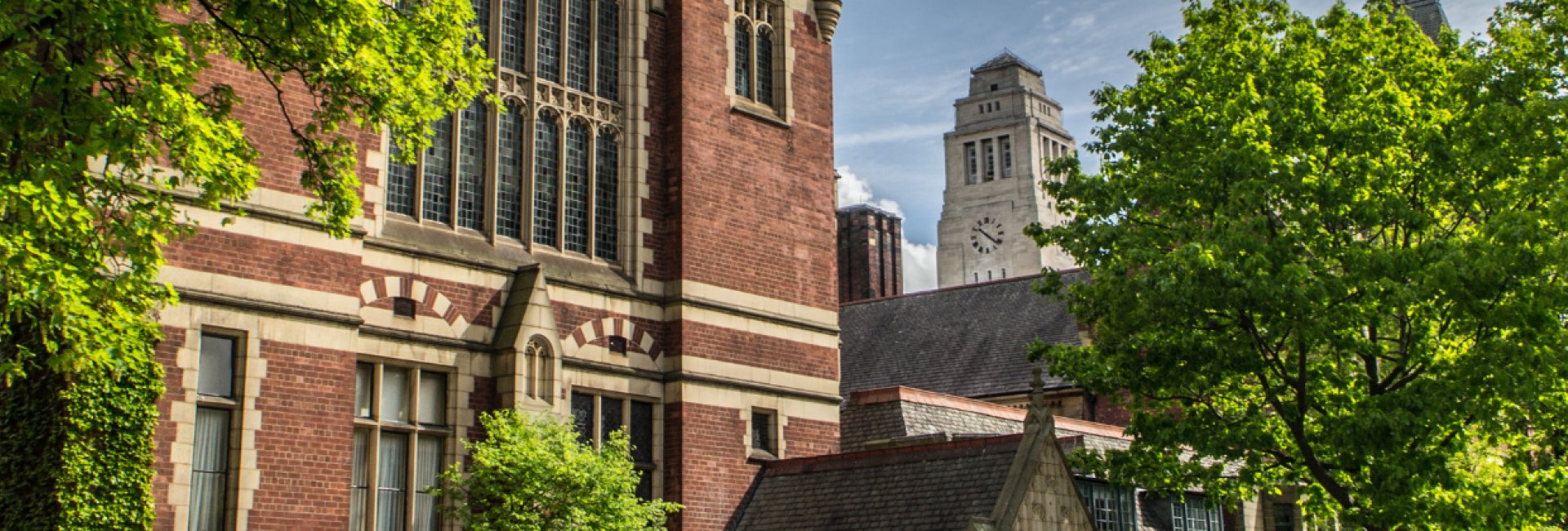
University of Leeds Open Day - 12 June
12 Jun 2026, 09:00
Leeds

The benefits of civil and structural engineering are all around us. Safe buildings and infrastructure not only protect us but also ensure that any adverse impact on the natural environment is minimised. Civil and structural engineers both play key roles in addressing global challenges in climate, sustainability and environment – which is why studying both disciplines gives you flexibility for your future career choice.
This accredited degree develops civil engineers who actively contribute to sustainable and economic growth whilst maintaining the highest ethical standards and delivering the infrastructure we all rely on in everyday life.
At Leeds, sustainable development is integrated into teaching and learning throughout the degree. You'll focus on design and engineering projects which minimise society’s impact on the environment, reduce the temporary borrowing of finite materials and resources, while maximising societal benefit. You’ll also develop and fine-tune theoretical and practical abilities and learn to solve problems using analytical, technical and decision-making skills – all attributes sought after by employers in industry.
This is a practical course, so you’ll also have access to excellent laboratory facilities and a design studio, as well as extensive library facilities and computing equipment, including industry standard software such as Revit (Building Information Modelling), IES (dynamic thermal modelling) and Robot (structural analysis). Our impressive laboratory facilities include specialist facilities for structures, materials, public health engineering, building services and geotechnics – everything you need to get started on your career as a civil engineer.
Qualified civil and structural engineers are in demand across the construction sector. Exciting roles are also found working for consultancies, local authorities, government departments, utility companies and environmental organisations in the UK and internationally.
Why study at Leeds
This course is accredited by the Joint Board of Moderators (JBM).
Work on your own construction design projects to solve real-world problems, putting into practice what you have learned, building scale physical models and developing graphical presentation and computer modelling skills using industry-standard software.
Benefit from our globally-renowned research here at Leeds, which feeds directly into your course and shapes what you learn with the latest thinking in addressing societal, technical and environmental challenges with infrastructure around the world.
Take part in valuable fieldwork opportunities to apply your knowledge and practical skills outside of the lab and classroom.
Access specialist facilities including our new design studio, computing laboratories and extensive study spaces.
Develop your experience and boost your career prospects with our industrial placement opportunities or study abroad programmes.
All degree courses within the School of Civil Engineering share a common first year, which gives you the flexibility to switch between these courses at the end of your first year.
Our Civil Engineering Society (CivSoc) gives you the chance to meet like-minded people who share your passion for civil engineering with industrial networking events and site visits to build your experience and connections in the field, alongside exciting social events like paintballing and the annual CivSoc Ball.

University of Leeds has participated in the Teaching Excellence Framework. These ratings were awarded in 2023, for four years.
See why these ratings were awarded
What does this TEF outcome mean?
This course may be available at alternative locations, please check if other course options are available.
Course optionsThis section shows the range of grades students (with UK A-Levels or Pearson BTEC Level 3 National Extended Diplomas) who received offers were previously accepted with (learn more). It is designed to support your research but does not guarantee whether you will or won't get a place. Admissions teams consider various factors, including interviews, subject requirements, and entrance tests. Check all course entry requirements for eligibility.
We are unable to show previous accepted grades for this course. This could be because the course is new, it's a postgraduate course, there isn't enough historical data, or the provider has opted out of sharing their entry grades data for this course - learn more.
Choose a specific option to see funding information.
Course optionsWoodhouse Lane
Leeds
LS2 9JT
Email:study@leeds.ac.uk
At University of Leeds