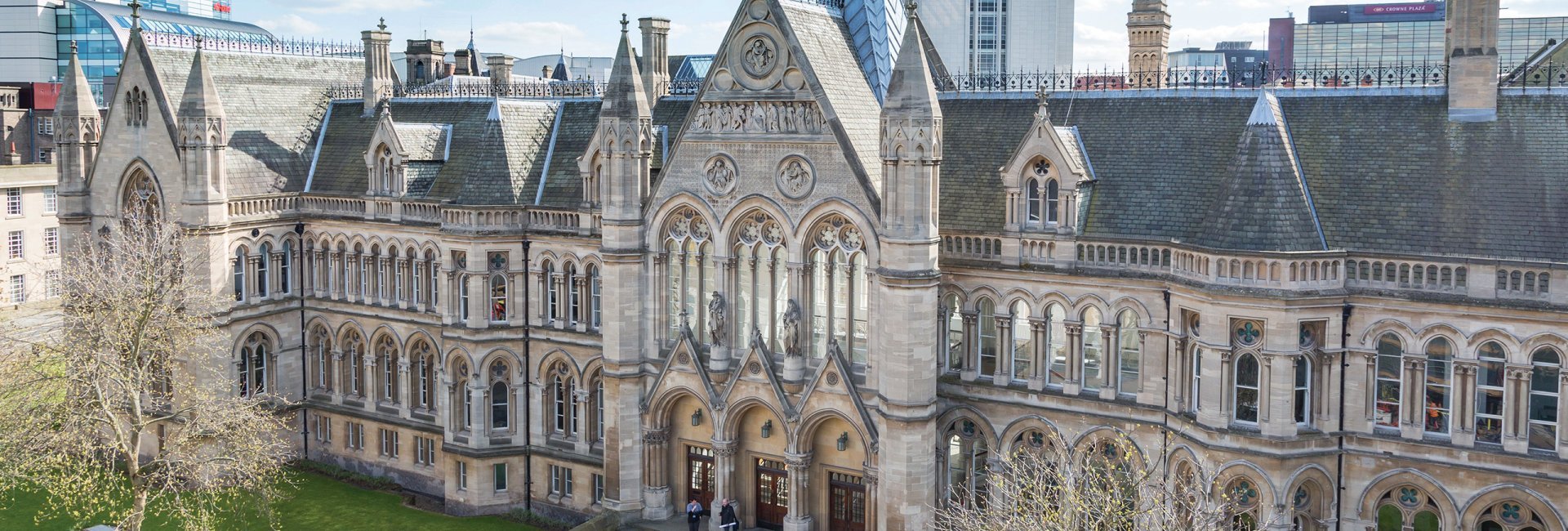
Nottingham Trent University - 25 April Open Day
25 Apr 2026, 08:00
Nottingham

Have you ever played a video game and wished that the gameplay was less frustrating or the level design more challenging? This course will take your technical skills to the next level as you design game scenarios and work out the gameplay and playability, programming and designing levels with the respective degrees of difficulty and fun. Working with games art and visual effects art students to add visual appeal, you will programme Blueprint games.
Working alone, in teams or in industry-focused charrettes, you will develop the digital toolset, technical invention and contextual knowledge to create stimulating and fun games. You will graduate with an industry-ready reel demonstrating your invention and technical prowess.
The course will focus on students designing game scenarios, working out the gameplay and playability and designing the levels with the respective degrees of difficulty, working with Games Art, Visual Effects Art, and Animation students.
You’ll be able to personalise your studies by choosing from a range of up to eight optional modules. Your course also includes our School-wide, sector-leading CoLab module.
Employability
Graduates will be prepared for a broad range of careers in games design. This could include roles such as level designer, gameplay designer, games UX designer, games writer, graphics programmer, AI programmer, generalist programmer and games tester.
Facilities
We’re committed to helping you explore, expand and refine your craft, as you discover new creative horizons with some truly great tools, equipment and workspaces. Visit our facilities hub at www.ntu.ac.uk/artfacilities to find out more.
We are also proud to be launching the new Design & Digital Arts building to prepare our graduates for success in professional, technical and commercial careers in the growing cultural and creative industries.
This landmark building will place Nottingham as a UK hub for film, television, animation, UX design, games design, graphic design and more.
Facilities include:
Collaborative studio spaces for each discipline
Digital Innovation Lab and VR/Mixed Reality Studio
Exhibition spaces
TV and Film Studio
Black Box studio
Film Production editing suites
Screen printing room
Sound studios
Stop Motion Studio
Café
[Year one]
Year 1 coursework (87%), practical exams (13%)
Year 2 coursework (93%), practical exams (7%)
Year 3 coursework (93%), practical exams (7%)
People excel in different ways, and we want everybody to have the best possible chance of success. On this course you will be assessed on a range of individual and group presentations, and your final year project. Your work in Year Two accounts for 20% of your final degree mark, and your work in your final year accounts for the other 80%.
This is the equal consideration deadline. You can still apply after this date, but your application may not receive guaranteed consideration.

Nottingham Trent University has participated in the Teaching Excellence Framework. These ratings were awarded in 2023, for four years.
See why these ratings were awarded
What does this TEF outcome mean?
The following entry points are available for this course:
A lower offer may be made based on a range of factors, including your background (such as where you live and the school or college you attended), your experiences and individual circumstances (you may have been in care, for example). This is called a contextual offer and we get data from UCAS to make these decisions. NTU offers a student experience like no other, and this approach helps us to find students who have the potential to succeed here, but may have faced barriers that can make it more difficult to access university.
We also consider equivalent qualifications and combinations. Please contact Nottingham Trent University Admissions team for further information.
NTU makes contextual offers for this course to give everyone a fair chance to access their chosen degree.
Contextual offers are lower than our standard entry criteria or may be an unconditional offer for courses that require a portfolio. We also take individual circumstances into account when we receive results and may accept grades lower than our published criteria.
We use a range of data from UCAS to make our offers and more information on our approach is available at the link below.
This section shows the range of grades students (with UK A-Levels or Pearson BTEC Level 3 National Extended Diplomas) who received offers were previously accepted with (learn more). It is designed to support your research but does not guarantee whether you will or won't get a place. Admissions teams consider various factors, including interviews, subject requirements, and entrance tests. Check all course entry requirements for eligibility.
We are unable to show previous accepted grades for this course. This could be because the course is new, it's a postgraduate course, there isn't enough historical data, or the provider has opted out of sharing their entry grades data for this course - learn more.
| Location | Fee | Year |
|---|---|---|
| England | £9535 | Year 1 |
| Northern Ireland | £9535 | Year 1 |
| Scotland | £9535 | Year 1 |
| Wales | £9535 | Year 1 |
| International | £18250 | Year 1 |
Tuition fee status depends on a number of criteria and varies according to where in the UK you will study. For further guidance on the criteria for home or overseas tuition fees, please refer to the UKCISA website.
Tuition fees are payable for each year that you are at University.
The level of tuition fees for the second and subsequent years of your undergraduate course may increase in line with inflation and as specified by the UK government.
50 Shakespeare Street
Nottingham
NG1 4FQ
Visit our website Visit our course page
Phone:+44(0)115 848 4200
At Nottingham Trent University