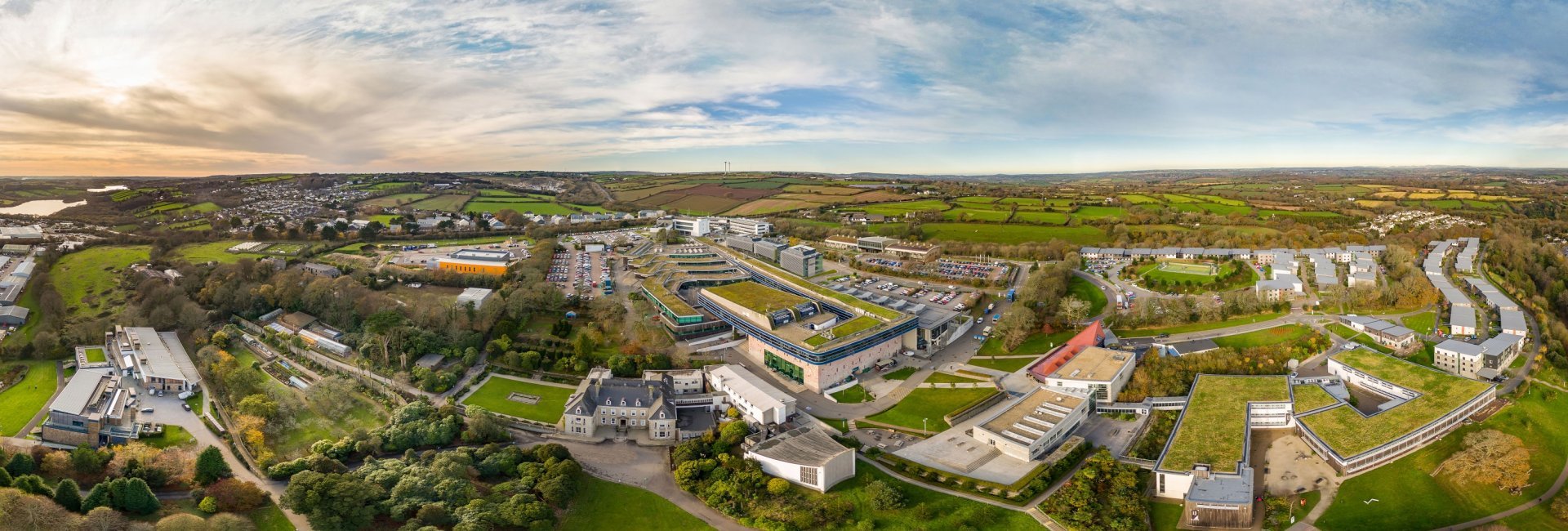
Falmouth University
Woodlane
Falmouth
TR11 4RH
Visit our website Visit our course page
Course contact details
Admissions
Email:applicantservices@falmouth.ac.uk
Phone:01326 213730

Tell powerful conservation stories with your camera.
Join a passionate group of environmentalists who believe that images can change the world. Evolve as a skilled communicator, exploring important and powerful ecological and conservation issues and bring them to life with your camera.
Combining the rigour of research with the creativity of storytelling, you’ll expose some of the biggest challenges that face people and planet, while celebrating the beauty of nature.
Based in some of the most outstanding landscapes in the UK, you’ll learn from award-winning and industry-connected photographers, expert filmmakers, explorers and scientists, gaining career-boosting insights and opportunities during your studies.
While developing technical proficiency, we also encourage students to think critically, to ask questions and to challenge patterns of thought and behaviour to make a difference.
Why study this course at Falmouth?
Cornwall’s diverse marine and land environments will be your studio – you can get from campus to coast or moorland in a matter of minutes
Rivalling professional studios, our facilities and stores are stacked with high-spec digital and analogue equipment and are some of the best of any UK university
You'll gain insider insights and professional connections through masterclasses, guest speakers, field trips and live briefs
We encourage adventure – former students have travelled to the Ecuadorian rainforest, Indonesian coral reefs, and Norwegian glaciers to produce their Major Projects
You’ll become part of our close-knit, globe-trotting alumni that have picked up huge commissions (BBC, Netflix) and awards for their work
As part of our supportive creative community, you’ll start building your professional network from day one of your degree
You'll develop a passionate understanding of earth’s habitats and fragile ecosystems while mastering the technical film and photographic skills to create images that inspire, move and educate audiences.
As well as developing an industry-ready portfolio of original work, you’ll graduate with the professional skills to turn your creative practice into a rewarding career.
Year one
You'll practice photographic skills alongside research and critical thinking. During this year, you'll explore biodiversity and habitat, as well as the marine environment, and will participate in a number of local field trips to land and marine environments.
Modules
Developing Practice
Research and Critical Thinking
Biodiversity and Habitat
Exploring Practice: Land or Underwater
Communicating Nature
The Marine Environment
Year two
Alongside studying moving image and still photography, you'll develop your research and critical thinking skills, explore global conservation, and get ready for your own research project. You will also get the opportunity to undertake a short period of work experience.
Modules
Extending Practice: Land or Underwater
Introduction to Filmmaking
Conservation Stories
Photography of the Natural World
Independent Filmmaking Practice
Work Experience
Year three
In your final year, you’ll create your Major Project using still or moving images, or a combination of both. You will support this with an extensive piece of writing about the subject of your project, along with a career plan to help you move into your chosen area of the industry.
Modules
Project Development
Culture and the Environment
Major Project
Professional and Entrepreneurial Practice
As part of our process of continuous improvement, we routinely review course content to ensure that all our students benefit from a high-quality and rewarding academic experience. As such, there may be some changes made to your course which are not immediately reflected in the content displayed on our website. Any students affected will be informed of any changes made directly.
100% of your assessment will be coursework.
Assessment methods
Practice-based modules will be assessed on the presentation of portfolios, including preparatory work.
Critical studies modules will be assessed on written assignments or presentations.
In the final year, you’ll be assessed on your major independent project which is supported by an extended piece of contextual writing and a professional portfolio.
Feedback is given throughout the modules to help you improve your work.
This is the equal consideration deadline. You can still apply after this date, but your application may not receive guaranteed consideration.

Falmouth University has participated in the Teaching Excellence Framework. These ratings were awarded in 2023, for four years.
See why these ratings were awarded
What does this TEF outcome mean?
The following entry points are available for this course:
If English is not your first language, you will need to demonstrate English language skills that are sufficiently developed for successful completion of your studies. We accept a range of recognised English language qualifications that are equivalent to the International English Language Testing System (IELTS) Academic minimum score of 6.0 overall, with a minimum of 5.5 in Reading, Writing, Speaking and Listening. Through the award of international scholarships, we aim to support academic enrichment by encouraging diversity and excellence at Falmouth. For details of our international scholarships, and how to apply for them, please visit our website at www.falmouth.ac.uk
If you are able to demonstrate relevant, current, equivalent experience instead of formal qualifications, we encourage you to apply. Please contact our Applicant Services team before applying, for advice regarding your individual experience and eligibility.
If you are an international applicant and require a Student visa to study in the UK, you must have a recognised English language test approved and vouched for by the University at the appropriate level. Our Applicant Services team can help you with any general questions you may have about study visas or suitable language tests. For more specific advice, we recommend you also consult UKCISA http://www.ukcisa.org.uk/
| Test | Grade | Additional details |
|---|---|---|
| IELTS (Academic) | 6 | An (IELTS) Academic minimum score of 6.0 overall is required, with a minimum of 5.5 in Reading, Writing, Speaking and Listening |
| Trinity ISE | A minimum of Trinity ISE II with Distinction in all four components is required. | |
| Cambridge English Advanced | Level B2 | A minimum on the Cambridge English scale of 169 is required |
| PTE Academic | 55 | A minimum score in the Pearson Academic Test of English of 55 overall is required, with a minimum of 51 in all four components. |
English language support at Falmouth https://www.falmouth.ac.uk/international/english-language-support
This section shows the range of grades students (with UK A-Levels or Pearson BTEC Level 3 National Extended Diplomas) who received offers were previously accepted with (learn more). It is designed to support your research but does not guarantee whether you will or won't get a place. Admissions teams consider various factors, including interviews, subject requirements, and entrance tests. Check all course entry requirements for eligibility.
We are unable to show previous accepted grades for this course. This could be because the course is new, it's a postgraduate course, there isn't enough historical data, or the provider has opted out of sharing their entry grades data for this course - learn more.
No fee information has been provided for this course
Tuition fee status depends on a number of criteria and varies according to where in the UK you will study. For further guidance on the criteria for home or overseas tuition fees, please refer to the UKCISA website.
No additional fees or cost information has been supplied for this course, please contact the provider directly.
Woodlane
Falmouth
TR11 4RH
Visit our website Visit our course page
Email:applicantservices@falmouth.ac.uk
Phone:01326 213730
At Falmouth University