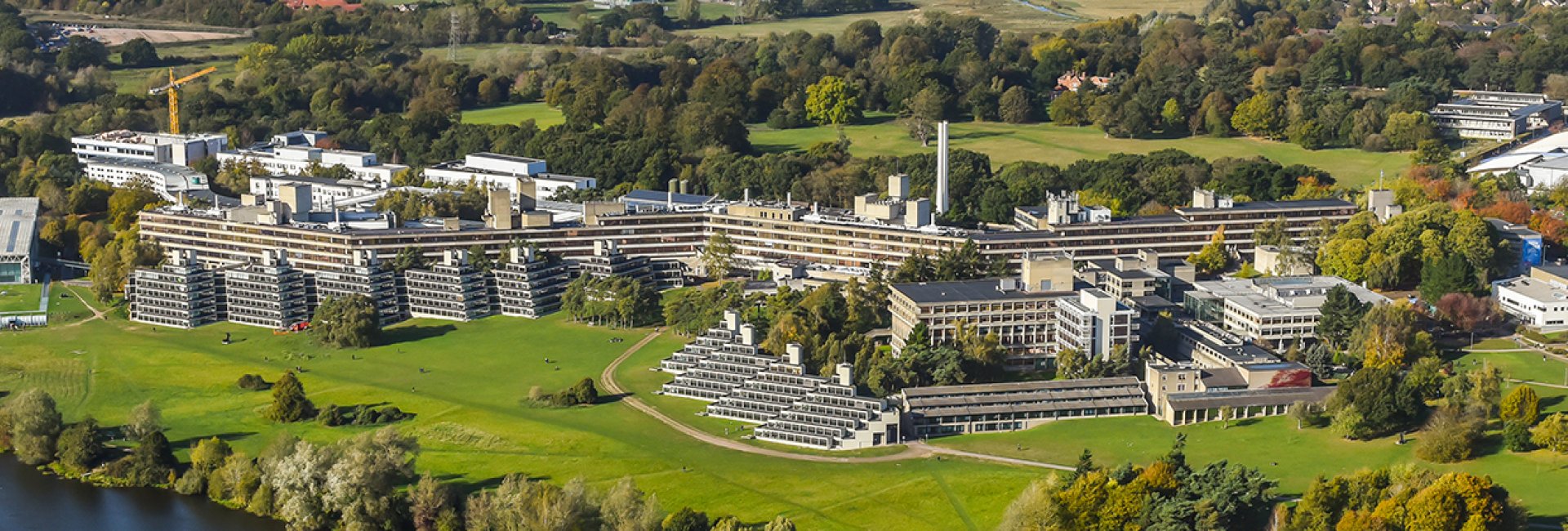
University of East Anglia UEA
Norwich Research Park
Norwich
NR4 7TJ
Visit our website Visit our course page
Course contact details
Admissions Service
Email:admissions@uea.ac.uk
Phone:01603 591515

Overview
Have you ever wondered why some countries are richer than others? Why being born in one country can mean you're likely to earn 70 times more than someone born in another? Why some have managed to grow rapidly, whilst others have been left behind? Have you thought about what poverty looks like in different contexts, or why some groups in society are worse off than others? How do inequalities arise? How effective are anti-poverty efforts? How should we distribute aid? What is the impact of the global economy on developing countries? What policies can improve health, education and happiness in developing countries? Essentially, how do we improve the fiscal, economic, and social conditions for the world’s poorest and create a more just world?
Learn to tackle these big questions – and many more – in our BA Global Development with Economics. This innovative course combines a strong interdisciplinary foundation with a specialist economics lens in the study of global development. You’ll take core modules that seek to understand critical contemporary issues from an economics perspective – including poverty, exclusion, deprivation, foreign aid, the environment, trade and globalisation – focusing specifically on how economic and social inequalities arise, and exploring the policies and processes that can reduce them. You’ll develop practical skills in economic methods and statistics, learning basic data analysis techniques and exploring specialist statistical software, in order to think systematically about important macroeconomics and microeconomics questions
In addition to this economics focus, you’ll gain a broad grounding in the key issues, organisations and practices of development, fusing insights from economics with those from across the social sciences, including anthropology, environmental sciences, geography, media, and politics. You can develop your understanding of particular regions in the world, and you can pursue your interests as they emerge. You’ll also have the option of completing an 8-to-10-week work placement with a development organisation as part of your degree. The result is an extremely flexible degree programme that you can tailor to suit your particular interests, and that allows you to combine an interdisciplinary foundation with your niche specialism.
By studying with us, you’ll join our close-knit academic community, made up of experts from across multiple disciplines, all housed within the School of Global Development. As such, you'll not only learn from our world-renowned economists within the school, but you can benefit from a truly vibrant, academic environment.
At UEA, we’re amongst the best in the world for researching, teaching, and practicing development, and our students go on to work in a variety of careers in development, and beyond. Come and study with us and help to create a fairer world.
Disclaimer
Course details are subject to change. You should always confirm the details on the provider's website: www.uea.ac.uk
This is the equal consideration deadline. You can still apply after this date, but your application may not receive guaranteed consideration.

University of East Anglia UEA has participated in the Teaching Excellence Framework. These ratings were awarded in 2023, for four years.
See why these ratings were awarded
What does this TEF outcome mean?
The following entry points are available for this course:
Discover what it's like to study Global Development with Economics at University of East Anglia UEA: insights on the course, making friends, personal statement tips, uni prep, and recommended books, podcasts, and videos.

GCSE Requirements: GCSE English Language grade C or 4 and GCSE Mathematics grade C or 4.
UEA are committed to ensuring that Higher Education is accessible to all, regardless of their background or experiences. One of the ways we do this is through our contextual admissions schemes – please see our website www.uea.ac.uk/apply/undergraduate/contextual-admissions for further information.
We welcome a wide range of qualifications - for further information please visit our website www.uea.ac.uk
Find out more about qualification requirements for this course.
| Test | Grade | Additional details |
|---|---|---|
| IELTS (Academic) | 6 | IELTS: 6.0 overall (minimum 5.5 in each component) |
This course may make contextual offers. This means that we use additional information to understand and recognise your potential to succeed at UEA. Using this insight, we could provide you with an offer with reduced entry requirements to study at UEA. You don’t need to do anything to be considered – if eligible we will process your contextual offer automatically, based on the data we hold in your application. We do not make contextual offers during clearing. Check our website for eligibility.
This section shows the range of grades students (with UK A-Levels or Pearson BTEC Level 3 National Extended Diplomas) who received offers were previously accepted with (learn more). It is designed to support your research but does not guarantee whether you will or won't get a place. Admissions teams consider various factors, including interviews, subject requirements, and entrance tests. Check all course entry requirements for eligibility.
We are unable to show previous accepted grades for this course. This could be because the course is new, it's a postgraduate course, there isn't enough historical data, or the provider has opted out of sharing their entry grades data for this course - learn more.
| Location | Fee | Year |
|---|---|---|
| England | £9535 | Year 1 |
| Northern Ireland | £9535 | Year 1 |
| Scotland | £9535 | Year 1 |
| Wales | £9535 | Year 1 |
| Channel Islands | £9535 | Year 1 |
| International | £22000 | Year 1 |
Tuition fee status depends on a number of criteria and varies according to where in the UK you will study. For further guidance on the criteria for home or overseas tuition fees, please refer to the UKCISA website.
Tuition fees increase annually for all students in subsequent years of study. Any fee increase is based on the fee for the year that you register. Home undergraduate fees, whose rates are regulated by the UK Government, will be amended in line with any alteration advised by the UK Government. Fees not regulated by the UK Government will increase by a maximum of 4% or RPI-X whichever is the higher. RPI-X is the Retail Prices Index excluding mortgage interest.
For further information about additional costs for your course and information on fee status please see our website.
Norwich Research Park
Norwich
NR4 7TJ
Visit our website Visit our course page
Email:admissions@uea.ac.uk
Phone:01603 591515
At University of East Anglia UEA