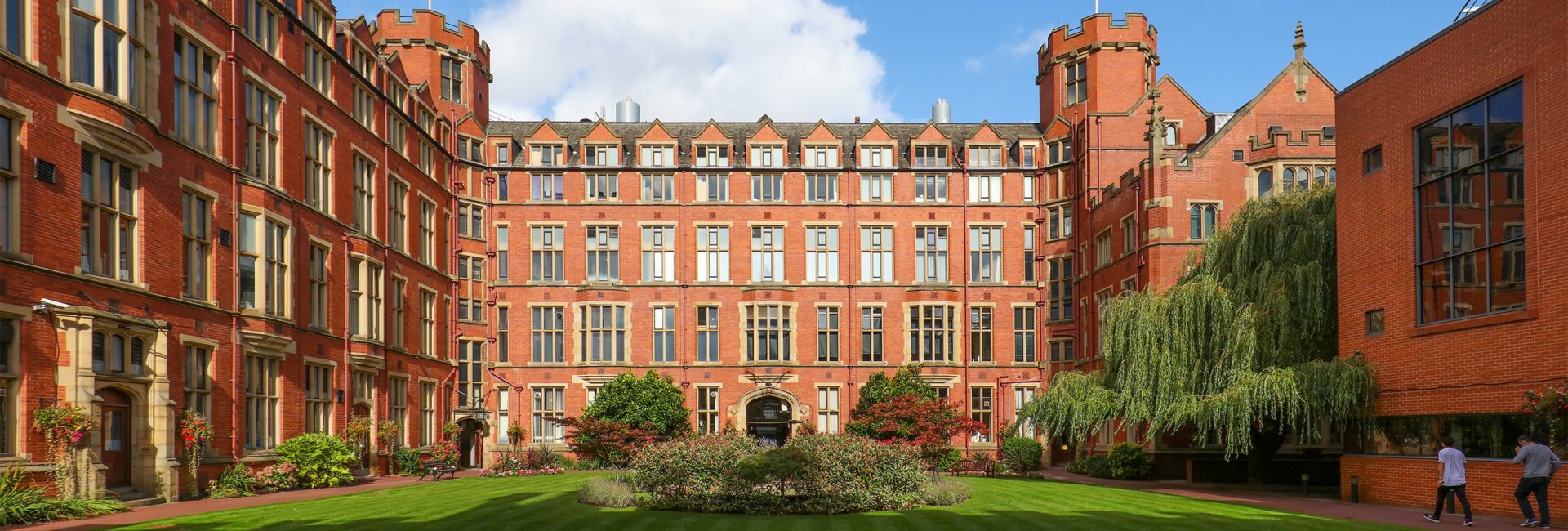
University of Sheffield - undergraduate open day
20 Jun 2026, 09:00
Sheffield

Explore the basis of life at the molecular level, from cells, proteins and DNA, to how these molecules interact to sustain life. Spend a year on a work placement as part of your degree, putting what you've learnt into practice, and testing out a career you're considering.
Our four-year BSc Biochemistry with an Industrial Placement Year course allows you to investigate the structure and function of biological systems at a molecular level.
Bringing together biology and chemistry, you’ll study the science that’s behind many medical discoveries. You'll learn about proteins, enzymes, hormones, and receptors, and explore the various ways that biochemistry can be applied to major challenges affecting humanity today, from how we sustainably feed a global population, to healthy ageing and how new drugs are designed.
You'll also apply what you've learnt and gain real-world experience during a year-long placement as a recognised part of your degree.
At Sheffield, you’ll be encouraged to be creative, think independently, and express your ideas. In the lab you’ll be studying the basis of life right down to the atomic level, completing practicals across molecular genetics, DNA manipulation, and protein structure analysis.
Outside of the lab, you'll get the chance to develop IT solutions to global challenges that could range from how we deliver a sustainable food supply, to how we detect and treat heritable disease.
As you progress through your degree, you'll have the option to specialise in the area of molecular bioscience that interests you across biochemistry, genetics, microbiology, or even biotechnology.
No matter what areas of biochemistry you choose to study at Sheffield, you'll develop practical laboratory and transferable skills that make our graduates attractive to employers, including project management, problem-solving, communication skills, and data analysis.
Your placement year will give you the chance to test out a career path that you're considering. This will take place in year three.
Our students have found placements in science and non-science-based roles with a range of organisations including GSK, Thermofisher, the UK Health Security Agency, and the Institute of Cancer Research. Some students have even been offered graduate-level jobs at the end of their placement.
All this experience will prepare you for your final-year research project, where you could be laboratory based, focus on computer modelling, science education, or even science communication.
This course is accredited by the Royal Society of Biology which shows employers that you've developed the practical skills and scientific knowledge that they're looking for.
Why study this course?
Accredited by the Royal Society of Biology: Shows employers that you've developed the practical skills and scientific knowledge that they're looking for.
Make the course your own: Study the full range of Biochemistry or specialise in areas such as biotechnology, molecular genetics, antibiotic resistance or sustainability.
Build connections and a career: Our students secure placements with organisations including GSK, Thermofisher, Labcorp, the UK Health Security Agency, and the Institute of Cancer Research.
This is the equal consideration deadline. You can still apply after this date, but your application may not receive guaranteed consideration.

University of Sheffield has participated in the Teaching Excellence Framework. These ratings were awarded in 2023, for four years.
See why these ratings were awarded
What does this TEF outcome mean?
The following entry points are available for this course:
including Chemistry and a second science. Second science subjects include Biology/Human Biology, Maths, Further Maths, Physics, Psychology or Geography.
in Applied Science (Basic, Biomedical Science, or Analytical & Forensic Science streams only). Module requirements also apply.
Award of Access to HE Diploma in Science, with 45 credits at Level 3, including 36 at Distinction (to include Chemistry and Biology units), and 9 at Merit
in Applied Science + A in A Level Chemistry
in Chemistry and a second science + AABBB in Scottish Highers
34, with 6,5 (in any order) in HL Chemistry and a second science; 33, with 5 in HL Chemistry and a second science, and B in a science-based Extended Essay
GCSE Maths grade 4/C
To find out if you're eligible for additional consideration or an alternative offer, visit: ww.sheffield.ac.uk/undergraduate/apply/access-sheffield
Find out more about qualification requirements for this course.
English language requirements for undergraduateshttps://www.sheffield.ac.uk/undergraduate/apply/english-language
The entry grades data only represents a proportion of our cohort. We accept a broad range of qualifications on our degrees and we're committed to ensuring all students with the potential to succeed at Sheffield are informed and feel encouraged to apply. If you meet one or more of our Access Sheffield criteria, we may be able to give your application additional consideration when we receive it and when exam results are released.
This section shows the range of grades that students who received offers were previously accepted on to this course with (learn more).
It is designed to support your research but does not guarantee whether you will or won't get a place.
Admissions teams consider various factors, including interviews, subject requirements, and entrance tests. Check all course entry requirements for eligibility.
We are unable to show previous accepted grades for this course. This could be because the course is new, it's a postgraduate course, there isn't enough historical data, or the provider has opted out of sharing their entry grades data for this course - learn more.
No fee information has been provided for this course
Tuition fee status depends on a number of criteria and varies according to where in the UK you will study. For further guidance on the criteria for home or overseas tuition fees, please refer to the UKCISA website.
Tuition fees for 2026 entry have not been confirmed. Please use 2025-26 information as a guide.
Phone:0114 222 8030
Western Bank
Sheffield
S10 2TN
At University of Sheffield