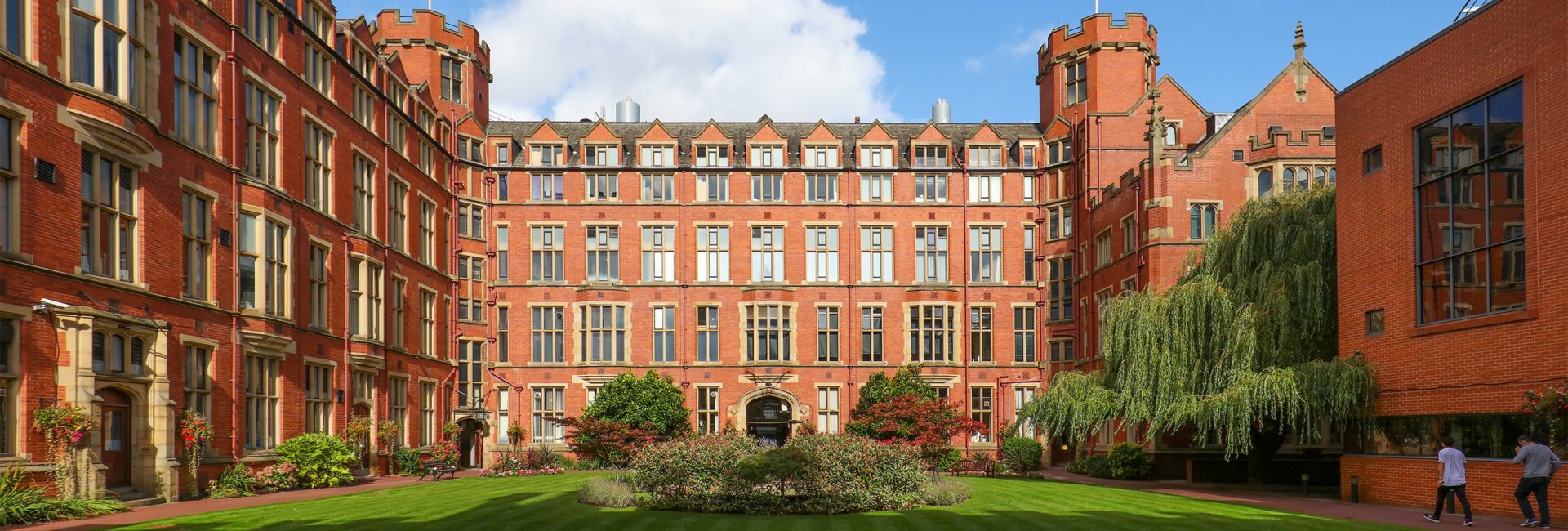
University of Sheffield
Western Bank
Sheffield
S10 2TN
Visit our website Visit our course page
Course contact details
Main Contact
Phone:0114 222 8030

Apply yourself in a wide range of clinical settings, learn from patients and discover how you can provide the best possible care. You can develop the skills, knowledge, attitudes and behaviours to make a real difference in healthcare.
Our MBChB Medicine course is designed to give you the clinical skills, knowledge, professional behaviours and attitudes to become an excellent doctor. It is taught over five years and divided into four phases.
In phase one, you will develop a detailed understanding of the systems of the human body – cardiovascular, musculoskeletal, nervous, reproductive, etc. You will study the normal structure and function of these systems, as well as covering topics such as medical ethics and public health. In practical sessions, you will start to develop key clinical skills and learn how to work with doctors, nurses and other healthcare professionals. Placements begin with a series of ten half-days you will spend in general practice throughout your first year, starting in week two.
Phase two begins with a six-week research project, where you will work with a professional researcher to solve a medical problem. You will then start to build up your medical science knowledge by learning about disease symptoms, diagnosis and treatment, covering topics such as pathology, microbiology, immunology and pharmacology. You will continue to gain clinical skills (for example, taking blood from a patient), develop your understanding of medical law and ethics, and complete another set of ten placements in general practice.
Later in phase two, you will learn how to take patients’ histories and conduct physical examinations, as you begin to spend most of your time in hospital wards, operating theatres and outpatient clinics. You will spend 12 weeks on a longitudinal hospital placement and become part of a clinical team, attending ward rounds, surgical operations, pathology meetings and outpatient clinics. After this, you will have the opportunity to do voluntary work with patient or community groups, to develop your understanding of healthcare issues in wider society.
During phase three, you will continue to work in general practice during community placements, and complete hospital placements based on sub-specialities including children’s health (paediatrics), women’s health (obstetrics and gynaecology), mental health (psychiatry), critical and emergency care, and multiple other specialist areas. We also offer intercalation options that allow you to build up your research skills, develop your knowledge of surgical practice or complete a masters degree in a specialist topic.
Phase four begins with a programme of lectures to consolidate your clinical knowledge, and includes two more longitudinal placements to fully prepare you for a final clinical examination and life as a junior doctor.
Why study this course?
Learn in real clinical settings: Clinical teaching takes place in a wide variety of hospital wards, GP surgeries and clinics, and you’ll complete placements throughout the degree.
State-of-the-art training facilities: You will build up your practical knowledge at our dedicated Clinical Skills Centre, which includes simulated wards, resuscitation suites and theatres.
Practice with patients: On our Patients as Educators programme, students spend time with patients to practice taking histories and conducting examinations, while gaining a deeper understanding of different conditions.
Informed by the latest research: As well as clinicians and teachers, our medical school is home to scientists working on treatments for heart disease, neurodegenerative illnesses and cancer, as well as experts in epidemiology, public health and health economics.
This course is not accepting applications at this time. Please contact the provider to find out more.
This is the equal consideration deadline. You can still apply after this date, but your application may not receive guaranteed consideration.

University of Sheffield has participated in the Teaching Excellence Framework. These ratings were awarded in 2023, for four years.
See why these ratings were awarded
What does this TEF outcome mean?
This course is not accepting applications at this time. Please contact the provider to find out more.
The following entry points are available for this course:
To find out if you're eligible for additional consideration or an alternative offer, visit: ww.sheffield.ac.uk/undergraduate/apply/access-sheffield
Find out more about qualification requirements for this course.
English language requirements for undergraduates https://www.sheffield.ac.uk/undergraduate/apply/english-language
The entry grades data only represents a proportion of our cohort. We accept a broad range of qualifications on our degrees and we're committed to ensuring all students with the potential to succeed at Sheffield are informed and feel encouraged to apply. If you meet one or more of our Access Sheffield criteria, we may be able to give your application additional consideration when we receive it and when exam results are released.
This section shows the range of grades students (with UK A-Levels or Pearson BTEC Level 3 National Extended Diplomas) who received offers were previously accepted with (learn more). It is designed to support your research but does not guarantee whether you will or won't get a place. Admissions teams consider various factors, including interviews, subject requirements, and entrance tests. Check all course entry requirements for eligibility.
We are unable to show previous accepted grades for this course. This could be because the course is new, it's a postgraduate course, there isn't enough historical data, or the provider has opted out of sharing their entry grades data for this course - learn more.
| Location | Fee | Year |
|---|---|---|
| England | £9535 | Year 1 |
| Northern Ireland | £9535 | Year 1 |
| Scotland | £9535 | Year 1 |
| Wales | £9535 | Year 1 |
| International | £45310 | Year 1 |
Tuition fee status depends on a number of criteria and varies according to where in the UK you will study. For further guidance on the criteria for home or overseas tuition fees, please refer to the UKCISA website.
The annual fee for your course includes a number of items in addition to your tuition. If an item or activity is classed as a compulsory element for your course, it will normally be included in your tuition fee. There are also other costs which you may need to consider. Further guidance can be found here: https://www.sheffield.ac.uk/undergraduate/fees-costs
Western Bank
Sheffield
S10 2TN
Visit our website Visit our course page
Phone:0114 222 8030
At University of Sheffield