
Anglia Ruskin University - Undergraduate Open Day - Cambridge
10 Jan 2026, 10:00
Cambridge
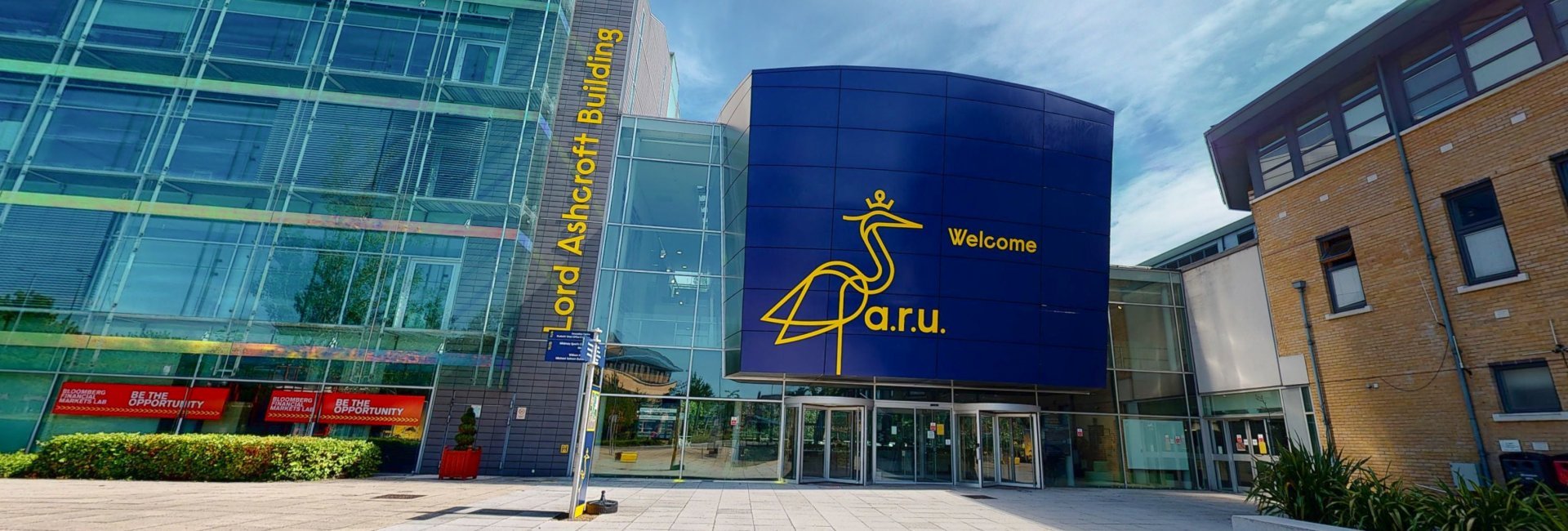
Combine a degree in Education with one of five specialisms: History, English, Sustainability, Inclusive Practice, or Leadership and Management.
Why Education at ARU?
Study at a university with over 20 years’ experience of training education professionals.
Stand out with one of five specialisms: English, History, Sustainability, Inclusive Practice, or Leadership and Management.
Prepare for a wide range of education careers.
Boost your employability with volunteering and work experience.
Shape the future of education while keeping your career options open with this innovative degree that goes beyond traditional classroom learning.
You’ll delve into a variety of subjects including sociology, policy, sustainability, globalisation, technology, and social justice, spanning from early years to adult education, as well as exploring writing and texts that take in a range of time periods and genres.
Prepare to navigate and respond to the evolving landscape of education on a global scale: learn to understand and promote social justice, use technology in education, conduct independent research, build strong educational relationships, and adapt to global trends in education.
Join our education community and:
learn from primary school teachers and leaders with a wealth of experience
work with research-active lecturers who’ll support you carry out your own research in an area of interest
make use of learning facilities including extensive library and IT resources
access support, should you need it, with study skills, careers advice, health and wellbeing, and more.
Careers
Throughout the course you’ll get the support, tools and opportunities you need to succeed as an autonomous, active learner, including on-going feedback, personalised teaching approaches and resources based on your needs, interests, and experiences.
You’ll also gain an understanding of educational systems and policies at local, national, and international levels, and the factors that impact human learning and development and influence educational outcomes and practices.
What can you do with an Education degree?
You’ll develop a broad range of skills and qualities to work in a range of professions associated with education, development and care of children, young people and adults in many different settings that require a necessarily high personal and professional standard of behaviour and ethical values.
With further training you could progress to teaching roles, or other roles within the education sector. You may choose to work in policy or leadership roles or, like us, teach and train our future educators.
You might also want to continue on to a Masters course, such as one of our MA Education degrees, which include options to specialise in leadership and management, SEND, and Montessori settings, or our PGCE. Take advantage of our Alumni Scholarship to get 20% off your fees.
Year 1 Core modules: Journey through Life: Stages of Human Development; Safeguarding Research Foundations; The Power of Connection: Building Strong Educational Relationships; Introduction to the Study of Literature and Writing. Year 2 Core modules:
Equity in Education: Understanding Identity and Social Justice; Ruskin Module; Learning Theories in Education; Educational Research Methods; Digital Stylistics; Bridging Cultures. Year 3 Core modules: Undergraduate Major Project; Neurodiversity and Inclusion: Strategies for Effective Learning; Education in the Digital Age: Policy, Theory and Global Trends; Leadership and Enterprise; Forbidden Stories: Banned Children's Books; Writing and the Present. Modules are subject to change and availability.
You’ll show your knowledge and understanding through a range of creative and innovative methods that allow you to connect your developing understanding in the discipline of your choice to your learning about educational contexts. These include digital scrapbooks, reflective journals and presentation tasks, as well as more traditional forms of assessment such as essays.
This is the equal consideration deadline. You can still apply after this date, but your application may not receive guaranteed consideration.

Anglia Ruskin University has participated in the Teaching Excellence Framework. These ratings were awarded in 2023, for four years.
See why these ratings were awarded
What does this TEF outcome mean?
The following entry points are available for this course:
Find out more about qualification requirements for this course.
ARU operates a policy of making contextualised offers for this course which may be a reduced conditional offer or an unconditional offer, using data from UCAS to make our assessment. We consider that this approach promotes the equality of educational opportunity for applicants from low participation groups in HE. ARU welcomes students from diverse backgrounds and helping them achieve their full potential. The offer of a place through the contextual offer process is at the discretion of ARU.
This section shows the range of grades students (with UK A-Levels or Pearson BTEC Level 3 National Extended Diplomas) who received offers were previously accepted with (learn more). It is designed to support your research but does not guarantee whether you will or won't get a place. Admissions teams consider various factors, including interviews, subject requirements, and entrance tests. Check all course entry requirements for eligibility.
We are unable to show previous accepted grades for this course. This could be because the course is new, it's a postgraduate course, there isn't enough historical data, or the provider has opted out of sharing their entry grades data for this course - learn more.
| Location | Fee | Year |
|---|---|---|
| England | £9535 | Year 1 |
| Northern Ireland | £9535 | Year 1 |
| Scotland | £9535 | Year 1 |
| Wales | £9535 | Year 1 |
| Channel Islands | £9535 | Year 1 |
| Republic of Ireland | £9535 | Year 1 |
Tuition fee status depends on a number of criteria and varies according to where in the UK you will study. For further guidance on the criteria for home or overseas tuition fees, please refer to the UKCISA website.
https://www.aru.ac.uk/student-life/preparing-for-study/help-with-finances/undergraduate
https://www.aru.ac.uk/study/tuition-fees
East Road
Cambridge
CB1 1PT
Visit our website Visit our course page
Email:answers@aru.ac.uk
Phone:01245 68 68 68