Birmingham City University Open Event
8 Jan 2026, 14:00
Birmingham

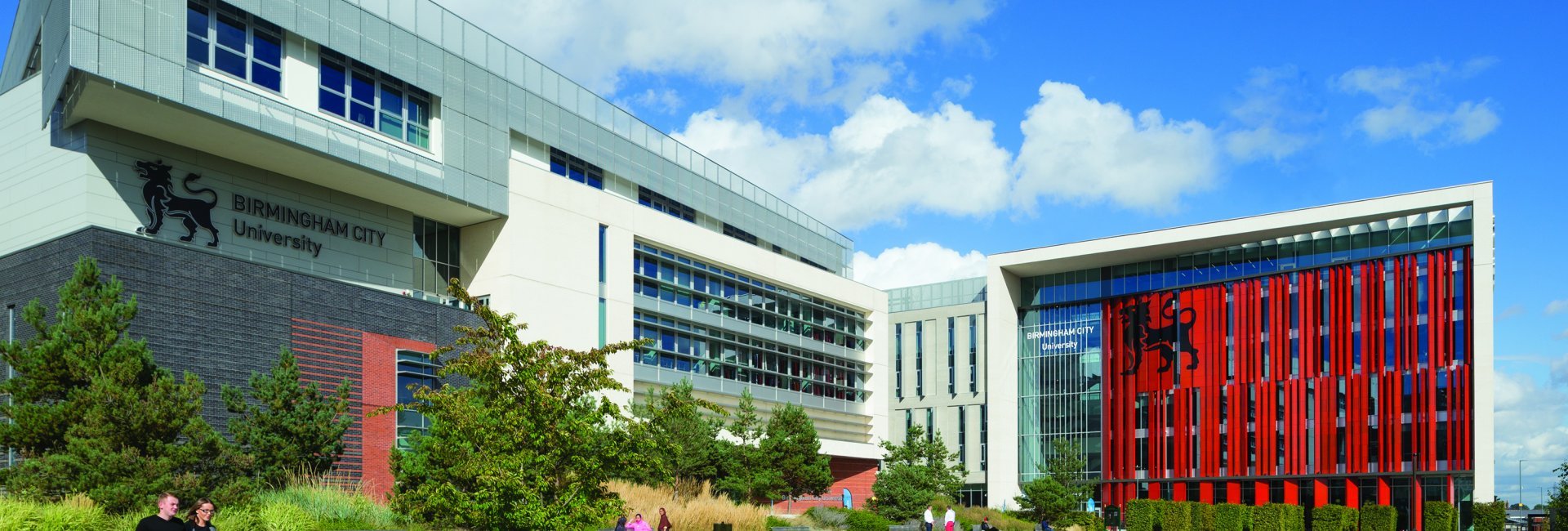
Are you passionate about supporting children to get the very best start in life? Our BA (Hons) Early Childhood Studies course seamlessly combines theory with practical experience, so that you can achieve your career goals and make a positive impact on young lives.
Foundation Year
The BA (Hons) Early Childhood Studies with a Foundation Year course has been specifically designed to support your transition to degree-level study in Education. As a student, you will undertake a foundation year situated at level 3 study, which has been designed as a prelude to your chosen degree course, providing opportunities for you to develop your knowledge, skills and understanding. Your learning journey through your foundation year will provide a secure platform on which you can build throughout your academic career in higher education.
As part of the foundation year, you will explore and develop a number of essential academic, interpersonal and professional skills that will help you succeed in your future degree level studies. Your foundation year includes three core modules and three subject pathway modules.
On successful completion of your foundation year, you are guaranteed to progress on to the first year of the BA (Hons) Early Childhood Studies degree. If you are interested in progressing on to one of our other Education and Social Work degrees, this will be subject to space available on those courses and on meeting the relevant entry requirements, which may include passing an interview.
What's covered in this course?
Gaining knowledge and understanding of babies’ and young children’s developmental, wellbeing and learning needs is a common theme throughout the course. You will build the skills and knowledge necessary to enable you to meet those needs and discover how you can respond in creative, reflective and analytical ways to issues relating to early childhood, being mindful of the need to adopt a resourceful approach. As well as learning about policy, practice, and provision within the field of Early Childhood, we will encourage you to become a graduate who is outward-looking with an awareness of global issues that relate to the field of Early Childhood.
We will support you to develop your personal and professional skills, including your resilience, to become self-assured and assertive so that you can be influential in developing practice, policy, and provision in your future career. We provide you with a supportive and nurturing learning environment, which will enable you to take risks as you explore and find out new things about early childhood, as well as yourself.
Our aim is for you to be confident to meet the challenges of a changing society, and competent as a researcher in gathering and analysing data to evaluate and plan for change. You will have the opportunity to become a graduate who can demonstrate a real commitment to the youngest and sometimes most vulnerable citizens in our society, with the ability to manage change and lead others effectively to make a positive impact on babies, young children, and their families.
If the course start date is before 31 December 2025 and you have already submitted an application, this course can be added. If you have not submitted an application, contact the university or college direct.
If the course start date is between 01 January and 31 July 2026 click the 'Apply' button to make an application.
This is the equal consideration deadline. You can still apply after this date, but your application may not receive guaranteed consideration.

Birmingham City University has participated in the Teaching Excellence Framework. These ratings were awarded in 2023, for four years.
See why these ratings were awarded
What does this TEF outcome mean?
The following entry points are available for this course:
Welsh Baccalaureate: 80 UCAS tariff points. Considered with two A Levels or equivalent level 3 qualifications.
OCR Cambridge Technical qualifications: 80 UCAS tariff points.
NCFE CACHE Level 3 qualifications: 80 UCAS tariff points. Accepted subjects: Childcare and Education; Children's Care, Learning and Development; Children and Young People's Workforce; Health and Social Care; Early Years Education and Care.
WJEC Level 3 qualifications: 80 UCAS tariff points. Considered with two A Levels or equivalent level 3 qualification(s).
Upon completion of your foundation year, you will be required to obtain an Enhanced Disclosure and Barring Service (DBS) clearance via the Faculty and an Occupational Health Check, in order to proceed onto year one of the full degree programme.
| Test | Grade | Additional details |
|---|---|---|
| IELTS (Academic) | 6 | overall with no less than 5.5 in each band |
This section shows the range of grades students (with UK A-Levels or Pearson BTEC Level 3 National Extended Diplomas) who received offers were previously accepted with (learn more). It is designed to support your research but does not guarantee whether you will or won't get a place. Admissions teams consider various factors, including interviews, subject requirements, and entrance tests. Check all course entry requirements for eligibility.
Students aged 17/18 who applied to this course were offered a place.
See how students with your grades have been accepted onto this course in the past.
| Location | Fee | Year |
|---|---|---|
| England | £5760 | Year 1 |
| Northern Ireland | £5760 | Year 1 |
| Scotland | £5760 | Year 1 |
| Wales | £5760 | Year 1 |
| EU | £17690 | Year 1 |
| International | £17690 | Year 1 |
Tuition fee status depends on a number of criteria and varies according to where in the UK you will study. For further guidance on the criteria for home or overseas tuition fees, please refer to the UKCISA website.
Annual and modular tuition fees shown are applicable to the first year of study, which is a foundation year. If you progress to the degree upon completion of your foundation year, the standard undergraduate tuition fee for 2026/27 will apply. Fees for 2025/26 can be found on the relevant course page, but please note that University reserves the right to increase fees in subsequent years in line with increases in inflation (capped at 5%) or to reflect changes in Government funding policies or changes agreed by Parliament.
The minimum fee for regulated courses in 2026/27 is expected to be £9,535.
Curzon Building
4 Cardigan Street
Birmingham
B4 7BD
Visit our website Visit our course page
Email:courseenquiries@bcu.ac.uk
Phone:0121 331 6295