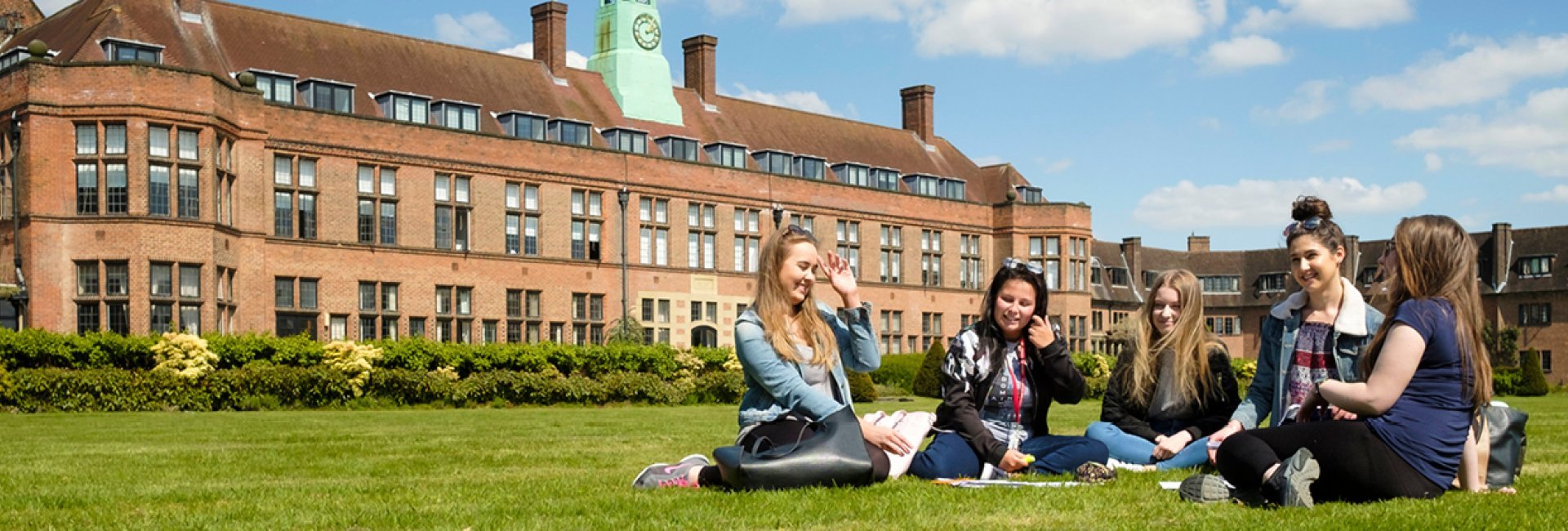
Open Day- Saturday 27th June 2026
27 Jun 2026, 08:00
Liverpool

The lecture series for this course will follow two interdependent, integrated streams. One will develop students’ historical, theoretical and critical awareness of the relationship between arts, cultural entrepreneurship and business management from a variety of viewpoints – film, music, dance, theatre, festival, gallery etc. The other series will be more professionally focused exploring the changing environment with respect to business methods (finance, planning and the law), and marketing and branding strategies within the creative industries.
The practical seminars and workshops for the course will focus around important case studies to highlight different business models within the creative industries from SMEs to national organisations as well as allowing an opportunity to explore important, innovative approaches to marketing and communications strategies within the sector.
The programme will increasingly introduce professionalised; work placement elements from the second part of Level I. So that by the programme’s end, students will have gathered experience of working with external professional creative industries organisations.
Film & Visual Culture
If you want an exciting career in the creative industries, but also want to understand the role that film and visual culture plays in wider society, studying at Liverpool Hope is the right choice for you. Film and Visual Culture is an intellectually stimulating degree that combines theory and practice, and encourages you to explore the way in which cinema represents issues such as gender, race and inequality.
This degree is underpinned by creative and critical practice. It is creative because it gives you the opportunity to develop practical skills in the fields of screenwriting, filmmaking (drama and documentary), photography and animation. It is critical because it involves the in-depth study of film history and theory, including the way in which cinema intersects with a range of social and political issues. You will graduate with a degree underpinned by academic rigour, but with the transferable skills needed to pursue a wide variety of careers in the creative industries.
Please visit our website for information regarding the curriculum content.
Students are assessed via a number of methods. Please go to the course link provided for further information.
To work as a teacher at a state school in England or Wales, you will need to achieve qualified teacher status (QTS). This is offered on this course for the following level:
This is the equal consideration deadline. You can still apply after this date, but your application may not receive guaranteed consideration.

Liverpool Hope University has participated in the Teaching Excellence Framework. These ratings were awarded in 2023, for four years.
See why these ratings were awarded
What does this TEF outcome mean?
The following entry points are available for this course:
At Liverpool Hope University we welcome applicants from international students. Please refer to www.hope.ac.uk/international or contact international@hope.ac.uk if you have any questions or require additional support.
UCAS Tariff points must come from a minimum of two A Levels (or equivalent). Additional points can be made up from a range of alternative qualifications.
Please contact our External Relations team directly for further information on how you can meet our entry requirements and what other qualifications may be accepted.
t: 0151 291 3111
e: enquiry@hope.ac.uk
| Test | Grade | Additional details |
|---|---|---|
| IELTS (Academic) | 6 | For International students, an overall score of 6.0 is required, with 6.0 in both reading and writing and no individual score lower than 5.5. |
This section shows the range of grades students (with UK A-Levels or Pearson BTEC Level 3 National Extended Diplomas) who received offers were previously accepted with (learn more). It is designed to support your research but does not guarantee whether you will or won't get a place. Admissions teams consider various factors, including interviews, subject requirements, and entrance tests. Check all course entry requirements for eligibility.
We are unable to show previous accepted grades for this course. This could be because the course is new, it's a postgraduate course, there isn't enough historical data, or the provider has opted out of sharing their entry grades data for this course - learn more.
Subject Spotlights give you the chance to try a higher education course before you apply. Delivered by the lecturers themselves you will gain insight into what it's like to study the course and give your personal statement a boost.

| Location | Fee | Year |
|---|---|---|
| EU | £9535 | Year 1 |
| England | £9535 | Year 1 |
| Northern Ireland | £9535 | Year 1 |
| Scotland | £9535 | Year 1 |
| Wales | £9535 | Year 1 |
| Channel Islands | £9535 | Year 1 |
| International | £14500 | Year 1 |
Tuition fee status depends on a number of criteria and varies according to where in the UK you will study. For further guidance on the criteria for home or overseas tuition fees, please refer to the UKCISA website.
Please note, some of our courses may have additional costs. Please visit the course webpage for further information.
Hope Park
Liverpool
L16 9JD
Email:courses@hope.ac.uk
Phone:0151 291 3111
Email:schoolcpa@hope.ac.uk
Phone:0151 291 3516
At Liverpool Hope University