
Sheffield Hallam University - applicant open day event
28 Feb 2026, 09:30
Sheffield
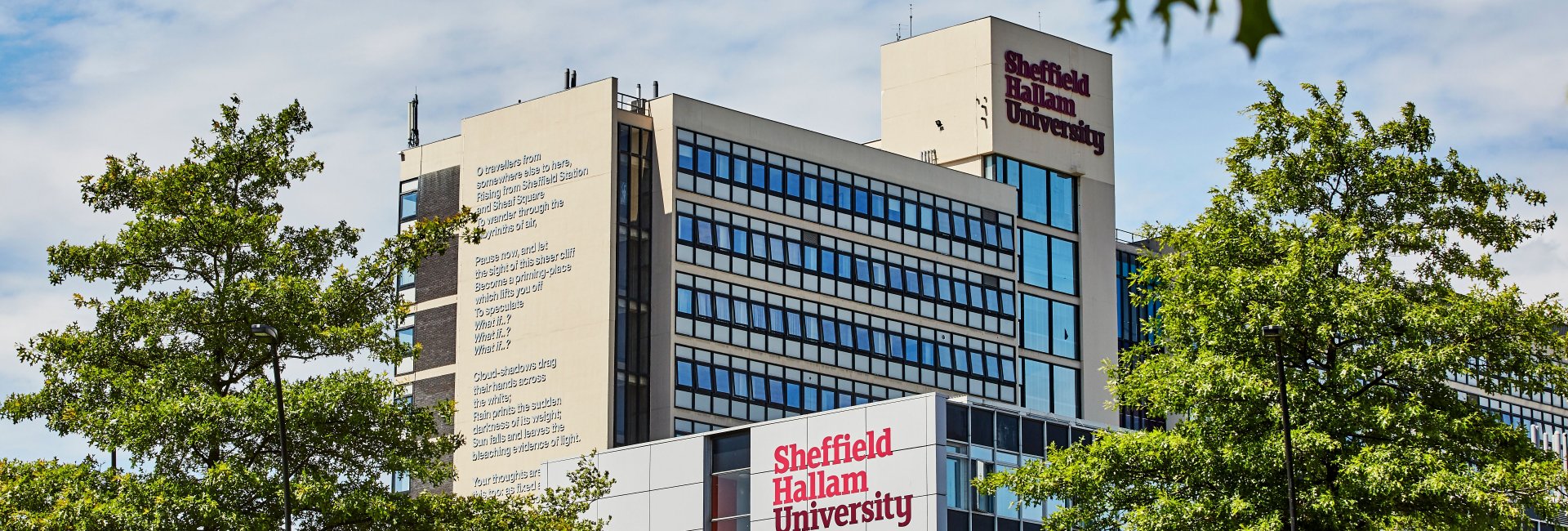
Please check the Sheffield Hallam University website for the latest information
Course summary
Analyse the social, cultural, and political impact of media, communication and cultural productions and industries on a variety of audiences.
Use industry-standard tools to produce creative media content for local, national and global audiences.
Apply your knowledge to professional contexts and scenarios including working with real clients and employers.
Benefit from a year long work placement opportunity, setting you apart from the crowd, boosting your employability.
Learn from and supported by industrial and academic experts among our teaching staff, who possess excellent pedagogic skills in the practice and research of fields within Media and Communication.
You will learn practical and theoretical subjects including creative media production, digital media technologies, audience research, cultural and media policy, industrial analysis, film and television storytelling and production studies.
The BA (Hons) Media and Communications course aims to provide you with well-rounded creative skills and knowledge, allowing you to experience, practice and critically evaluate the development, evolution and operation of local, national and global media, communication and cultural industries.
How you learn
All our courses are designed around key principles: engaging you with the world, collaborating with others, challenging you to think in new ways, and providing you with a supportive environment in which you can thrive.
You will learn to become a creative practitioner and academic researcher, linking theory and practice while discovering more about careers in the cultural and media industries.
You will utilise various tools and technologies in the production of creative media. You will also research and reflect on the social, cultural, political, and environmental impact of those productions. The course will have a combination of unique and shared modules.
The shared modules will be delivered with courses in Digital Media Production and Film Studies to offer you specialised skills in these subjects and industries.
Meanwhile, modules unique to this degree will equip you with transferable, analytical, and critical skills to interconnect your knowledge across sectors. This will open opportunities and routes for your future career and further education choices in the sector and beyond, allowing you to adapt to a dynamic career landscape in a variety of industries. Sharing modules with other courses will also ensure the long-term stability and sustainability of course development and recruitment.
All our teaching staff are industrial and academic experts, with excellent pedagogic skills in the practice and research of fields within Media and Communication. On this course, you will experience effective, friendly, and enjoyable learning environments and creative, challenging, fun learning activities.
You will learn through, for example:
Lectures
Seminars
Workshops
Tutorials
Live projects
Virtual learning environment/resources
Self-directed learning
Course support
You will be supported in your learning journey towards highly skilled, graduate level employment through a number of key areas. These include:
access to specialist support services to help with your personal, academic and career development.
access to our Skills Centre with one-to-ones, webinars, and online resources, where you can get help with planning and structuring your assignments.
industry-specific employability activities such as live projects, learning in simulated environments and networking opportunities.
The structure of this course is periodically reviewed and enhanced to provide the best possible learning experience for our students and ensure ongoing compliance with any professional, statutory and regulatory body standards. Module structure, content, delivery and assessment may change, but we expect the focus of the course and the learning outcomes to remain as described. Following any changes, updated module information will be published on our website.
Year 1
Compulsory modules:
Creative Media Fundamentals
Key Developments In Media And Communications
Media Industries 1
User Experience Design (Ux)
Year 2:
Compulsory modules
Identities, Representations And Politics 1
Identities, Representations And Politics 2
Screen Storytelling
Working In Cultural, Media And Creative Industries
Elective modules:
Study Abroad - Creative Industries
Year 3:
Optional modules
Placement year
Final year:
Compulsory modules
Digital Cultures And Technologies
Independent Project In Culture And Media
Media At The Margins
Media Industries 2
Coursework and practicals.
This is the equal consideration deadline. You can still apply after this date, but your application may not receive guaranteed consideration.

Sheffield Hallam University has participated in the Teaching Excellence Framework. These ratings were awarded in 2023, for four years.
See why these ratings were awarded
What does this TEF outcome mean?
The following entry points are available for this course:
This course may be available at alternative locations, please check if other course options are available.
Course optionsFind out more about qualification requirements for this course.
| Test | Grade | Additional details |
|---|---|---|
| IELTS (Academic) | 6 | IELTS score of 6.0 with a minimum of 5.5 in all skills or equivalent. |
Please click the following link to find out more about English language requirements for this course https://www.shu.ac.uk/courses/media-pr-and-journalism/ba-honours-media-and-communications/full-time/2025
This section shows the range of grades students (with UK A-Levels or Pearson BTEC Level 3 National Extended Diplomas) who received offers were previously accepted with (learn more). It is designed to support your research but does not guarantee whether you will or won't get a place. Admissions teams consider various factors, including interviews, subject requirements, and entrance tests. Check all course entry requirements for eligibility.
We are unable to show previous accepted grades for this course. This could be because the course is new, it's a postgraduate course, there isn't enough historical data, or the provider has opted out of sharing their entry grades data for this course - learn more.
| Location | Fee | Year |
|---|---|---|
| England | £9535 | Year 1 |
| Northern Ireland | £9535 | Year 1 |
| Scotland | £9535 | Year 1 |
| Wales | £9535 | Year 1 |
| Channel Islands | £9535 | Year 1 |
| Republic of Ireland | £9535 | Year 1 |
| EU | £17155 | Year 1 |
| International | £17155 | Year 1 |
Tuition fee status depends on a number of criteria and varies according to where in the UK you will study. For further guidance on the criteria for home or overseas tuition fees, please refer to the UKCISA website.
Our tuition fee for UK students on full-time undergraduate degree courses in 2025/26 is £9,535 per year (capped at a maximum of 20% of this during your placement year). These fees are regulated by the UK government and therefore subject to change in future years.
If you are studying an undergraduate course, postgraduate pre-registration course or postgraduate research course over more than one academic year then your tuition fees may increase in subsequent years in line with Government regulations or UK Research and Innovation (UKRI) published fees. More information can be found at https://www.shu.ac.uk/study-here/terms-and-conditions-and-student-regulations under student fees regulations.
Our tuition fee for International/EU students starting full-time study in 2025/26 is £17,155 per year (capped at a maximum of 20% of this during your placement year).
Please refer to our website for up-to-date information on costs and fees:
https://www.shu.ac.uk/study-here/undergraduate/fees
Scholarships, discounts and bursaries may be available to students who study this course.
City Campus
Howard Street
Sheffield
S1 1WB
Visit our website Visit our course page
Phone:(+44) 0114 225 5533