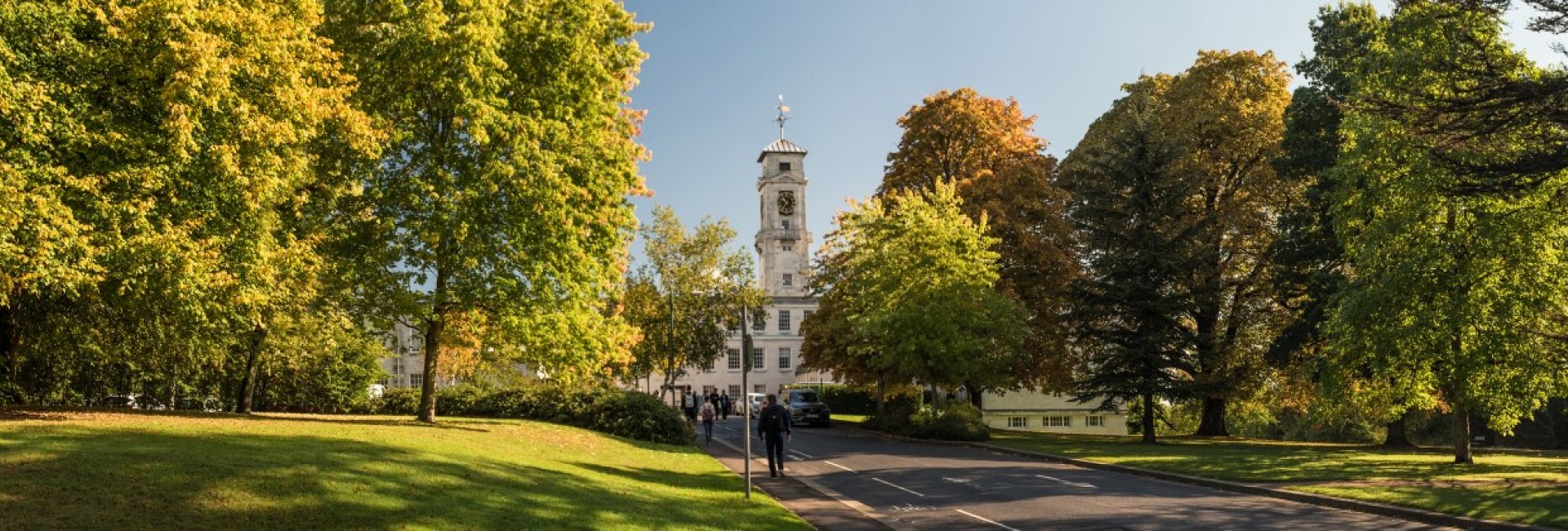
University of Nottingham
University Park
Nottingham
NG7 2RD
Visit our website Visit our course page
Course contact details
Undergraduate admissions
Phone:+44 (0) 115 951 5559

Chemistry plays a significant role in our society. It is central to finding sustainable solutions to global problems. This includes developing new drugs and vaccines, researching clean energy resources, and feeding a growing population.
On this integrated masters degree, the fourth year includes a major research project alongside masters-level modules. This in-depth research project will develop your employability skills such as advanced lab skills, teamwork, leadership, communication, and organisation.
Fourth year research project
You can choose from a wide range of topics in chemistry for your research project, depending on your interests or career aspirations. This could be in green chemistry, medicinal chemistry, nanomaterials, spectroscopy, catalysis, photochemistry and much more. You’llYou will join one of our research groups to work on your chosen project. We offer more than 100 research projects from around 40 different research groups. You will benefit from the active research and latest insight of these groups, as well as state of the artstate-of-the-art facilities and equipment. You'llYou will be taught by experts who will feed your curiosity for this exciting subject. You may even recognise some of our staff from the popular Periodic Videos YouTube channel.
Throughout your degree, you will cover the breadth of chemistry and gain experience in practical synthetic and analytical chemistry.
Optional modules allow you to choose what you study. For example, you can choose to take optional modules in medicinal chemistry where you’llyou will research drug design and development. Or you can choose modules in green and sustainable chemistry that will teach you how chemistry can be used to tackle environmental challenges.
Careers and employability
The University of Nottingham is the second-most targeted university in the UK by leading employers (High Fliers' Graduate Market in 2023). A degree in chemistry will prepare you for a wide range of careers. You will develop the necessary academic and practical skills for a career in industry, whether that be in pharmaceutical, petrochemical, cosmetics, or others. You will also enhance your written and oral communication skills, and develop transferable skills such as problem-solving, numeracy and data analysis. A considerable proportion of our students go onto postgraduate study.
Why choose this course?
Accredited by the Royal Society of Chemistry
Optional modules - Choose from a range of optional modules that interest you
Modern facilities
Put theory into practice in our modern labs and facilities
Flexibility to transfer between most chemistry degrees
Small-group learning - Benefit from small-group tutorials that support your learning.
In the first year you will build up your pre-university studies through modules in core chemistry. If you do not have A level mathematics (or equivalent) then you will take the Mathematical Toolkit module to prepare you for this aspect of the course.
In the second year, theoretical and practical modules further develop your knowledge and understanding. Optional modules will allow you to specialise in an area of chemistry that particularly interests you, such as atmospheric chemistry, and advanced calculus.
In the third year you will study core chemistry in advanced and practical modules. A range of optional modules will allow you to focus on areas of particular interest, such as contemporary drug discovery.
In the fourth year, you will work on an in-depth research project in an area of your choice.
This is the equal consideration deadline. You can still apply after this date, but your application may not receive guaranteed consideration.

University of Nottingham has participated in the Teaching Excellence Framework. These ratings were awarded in 2023, for four years.
See why these ratings were awarded
What does this TEF outcome mean?
The following entry points are available for this course:
European Baccalaureate - 85% overall including 8.5 in Chemistry and 8.0 in a second science.
GCSE requirements - English grade 4 (C), Mathematics grade 4 (C)
We consider applicants solely on the basis of their merits, abilities and potential – we use exam grades to prioritise applicants but look at a range of factors and aim to give everyone an equal opportunity to show their achievements.
We understand that background and personal circumstances can have an impact on academic performance at school or college. Applicants who are eligible under our contextual admissions policies may be considered for a reduced contextual offer.
This section shows the range of grades students (with UK A-Levels or Pearson BTEC Level 3 National Extended Diplomas) who received offers were previously accepted with (learn more). It is designed to support your research but does not guarantee whether you will or won't get a place. Admissions teams consider various factors, including interviews, subject requirements, and entrance tests. Check all course entry requirements for eligibility.
We are unable to show previous accepted grades for this course. This could be because the course is new, it's a postgraduate course, there isn't enough historical data, or the provider has opted out of sharing their entry grades data for this course - learn more.
| Location | Fee | Year |
|---|---|---|
| Republic of Ireland | £9535* | Year 1 |
| EU | £30750* | Year 1 |
| England | £9535* | Year 1 |
| Northern Ireland | £9535* | Year 1 |
| Scotland | £9535* | Year 1 |
| Wales | £9535* | Year 1 |
| International | £30750* | Year 1 |
| Channel Islands | £9535* | Year 1 |
* This is a provisional fee and subject to change.
Tuition fee status depends on a number of criteria and varies according to where in the UK you will study. For further guidance on the criteria for home or overseas tuition fees, please refer to the UKCISA website.
View undergraduate tuition fees for UK and international students: https://www.nottingham.ac.uk/fees/tuitionfees/202526/undergraduate.aspx
University Park
Nottingham
NG7 2RD
Visit our website Visit our course page
Phone:+44 (0) 115 951 5559
At University of Nottingham