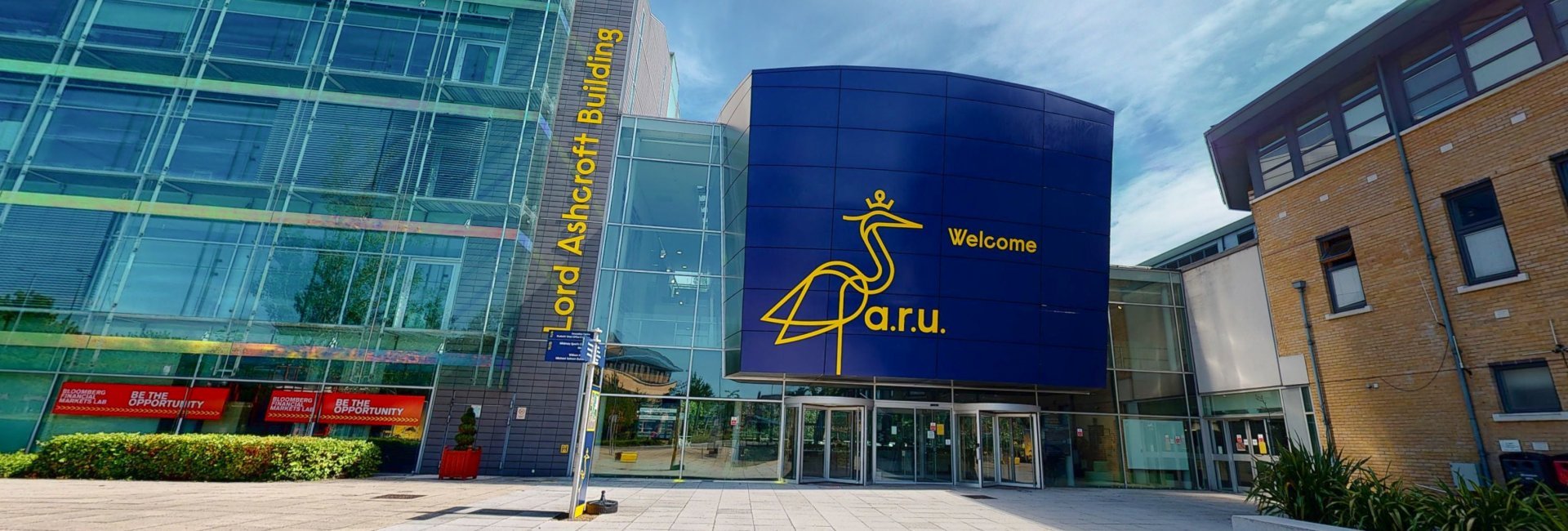
Anglia Ruskin University - Undergraduate Open Day - Cambridge
6 Jun 2026, 09:00
Cambridge

Take a journey into the past and explore what it means for our present and future. Discover epoch-making developments from histories around the world.
Join a course that scored 95% for Teaching on my Course and 91% for Assessment and Feedback in the National Student Survey 2023.
Build skills that can take you into the world of work, with training in research, data analysis, and communicating your research, using formats from the printed page to podcasts, webpages and exhibitions.
Learn from trained historians with an international reputation for the work they publish, and attend talks by leading historians and other experts.
Choose to take a work placement year, to gain invaluable workplace experience.
Get access to award-winning learning facilities, including our on-campus library and digital resources as well many more resources, libraries and institutions in Cambridge and beyond.
On our BA (Hons) History degree we’ll take you on a journey into the past, looking at the histories of Britain, Europe, the United States and other parts of the world from 1500 onwards. You’ll encounter major historical figures from Henry VIII to Martin Luther King, and explore epoch-making transitions in human experience such as the development of empires, industrialisation and new technology.
Together, we’ll explore major themes such as the impact of revolutions, imperialism and democracy at the same timeexploring the history of everyday life, including changes in the home, consumerism and popular culture. You won’t just study Hitler and Stalin, but also topics such as James Bond and popular literature too.
You’ll get the opportunity to study different kinds of history, looking at the past both through chronological surveys but also in thematic terms. Your modules will include subjects like the history of crime (from the early modern period up to the present), the treatment of poverty and the media. We’ll explore the history of social structure too, looking at economic change but also gender and race. Together we’ll discover stories in the past that are sometimes inspiring but also challenging, looking at contemporary figures such as Donald Trump and Vladimir Putin as well as major issues such as climate change, and learning how to place them in a historical perspective.
At the end of your degree, you’ll have an impressive story to tell employers. Our History degree is structured to build up skills that can take you into the world of work. We’ll give you training in research and data analysis, exploring how to gain the most from sources. We’ll also show you how to communicate your research, using formats from the printed page through to podcasts, webpages and exhibitions. You’ll also gain access to museums and archives, where you will meet professionals working in the field, and take part in live briefs for partner organisations. Some of our students recently worked with Churchill Archives Centre, curating an online exhibition to coincide with a two-day conference.
You can choose to take a work placement as well as a sandwich year, where you can gain important experience of employment, helping to propel you into jobs that are fulfilling and rewarding. Our past students have gone on to a variety of careers from business, administration, the media and the Civil Service through to teaching at all levels. Some have also gone on to work in museums and archives.
You’ll have access to award-winning learning facilities, including our on-campus library and a huge range of digital resources to sustain your research. Studying in the ancient university city of Cambridge will also give you access to many more resources, libraries and institutions both in the city and beyond.
Our graduates now work in the civil service, teaching, museums and heritage management, the police and armed forces, and other rewarding careers.You’ll become skilled in data analysis, research, critical thinking and complex problem solving.
Year 1 core modules: The Growth of the USA: Race, Politics and Conflict, 1776-1900; Faiths and Fury: The Early Modern Age in Britain and the Western World; A History of Now; Writing European History. Year 2 core modules: Britain in the 19th century; Welfare State to European State: Britain 1906-1975; From World War to Cold War; Ruskin Module. Year 2 optional modules: The British Empire 1783-1919; The United States in the 20th Century; Hanging, Prisons and Community Service: Crime and Punishment in Britain throughout the Ages; Professional Placement; Battles Barricades and Ideas - Historians and Europe's Age of Revolution; Leisure and Popular Culture in Britain, 1800 to the Present; Anglia Language Programme. Year 3: Placement. Year 4 core modules: Undergraduate Major Project - History; From Workhouses to Universal Credit: The Past, Present and Future of the British Welfare State; Research Communication. Year 4 optional modules: The Era of Thatcher and Blair; From Communism to Consumerism: Russia since 1917; Gender and Sexuality in Britain: 1880-2000; Hitler to the Hashtag: Political Communication in Peace and War; A Global History of Government and Society, 1945-1999; The Making of Modern Media; Anglia Language Programme. Modules are subject to change and availability.
Our History degree has a strong focus on employability and your future career, and that’s mirrored in our approach to assessment. You’ll get hands-on with historical research and develop your professional skills so, as well as exams and essays, we’ll be looking at your field trip reports, internet search reports, document analyses, case studies, book reviews and geography tests. Assessment is ongoing so you can be sure you’re receiving structured, insightful feedback throughout your degree course.
This is the equal consideration deadline. You can still apply after this date, but your application may not receive guaranteed consideration.

Anglia Ruskin University has participated in the Teaching Excellence Framework. These ratings were awarded in 2023, for four years.
See why these ratings were awarded
What does this TEF outcome mean?
The following entry points are available for this course:
Find out more about qualification requirements for this course.
ARU operates a policy of making contextualised offers for this course which may be a reduced conditional offer or an unconditional offer, using data from UCAS to make our assessment. We consider that this approach promotes the equality of educational opportunity for applicants from low participation groups in HE. ARU welcomes students from diverse backgrounds and helping them achieve their full potential. The offer of a place through the contextual offer process is at the discretion of ARU.
This section shows the range of grades students (with UK A-Levels or Pearson BTEC Level 3 National Extended Diplomas) who received offers were previously accepted with (learn more). It is designed to support your research but does not guarantee whether you will or won't get a place. Admissions teams consider various factors, including interviews, subject requirements, and entrance tests. Check all course entry requirements for eligibility.
We are unable to show previous accepted grades for this course. This could be because the course is new, it's a postgraduate course, there isn't enough historical data, or the provider has opted out of sharing their entry grades data for this course - learn more.
| Location | Fee | Year |
|---|---|---|
| England | £9535 | Year 1 |
| Northern Ireland | £9535 | Year 1 |
| Scotland | £9535 | Year 1 |
| Wales | £9535 | Year 1 |
| Channel Islands | £9535 | Year 1 |
| Republic of Ireland | £9535 | Year 1 |
Tuition fee status depends on a number of criteria and varies according to where in the UK you will study. For further guidance on the criteria for home or overseas tuition fees, please refer to the UKCISA website.
In the 2025/26 academic year, the placement year fee will be £1,500.
https://www.aru.ac.uk/student-life/support-and-facilities/careers-and-employability/placements
https://www.aru.ac.uk/study/tuition-fees
https://www.aru.ac.uk/student-life/preparing-for-study/help-with-finances
East Road
Cambridge
CB1 1PT
Visit our website Visit our course page
Email:answers@aru.ac.uk
Phone:01245 68 68 68
At Anglia Ruskin University