
Sheffield Hallam University - applicant open day event
28 Feb 2026, 09:30
Sheffield
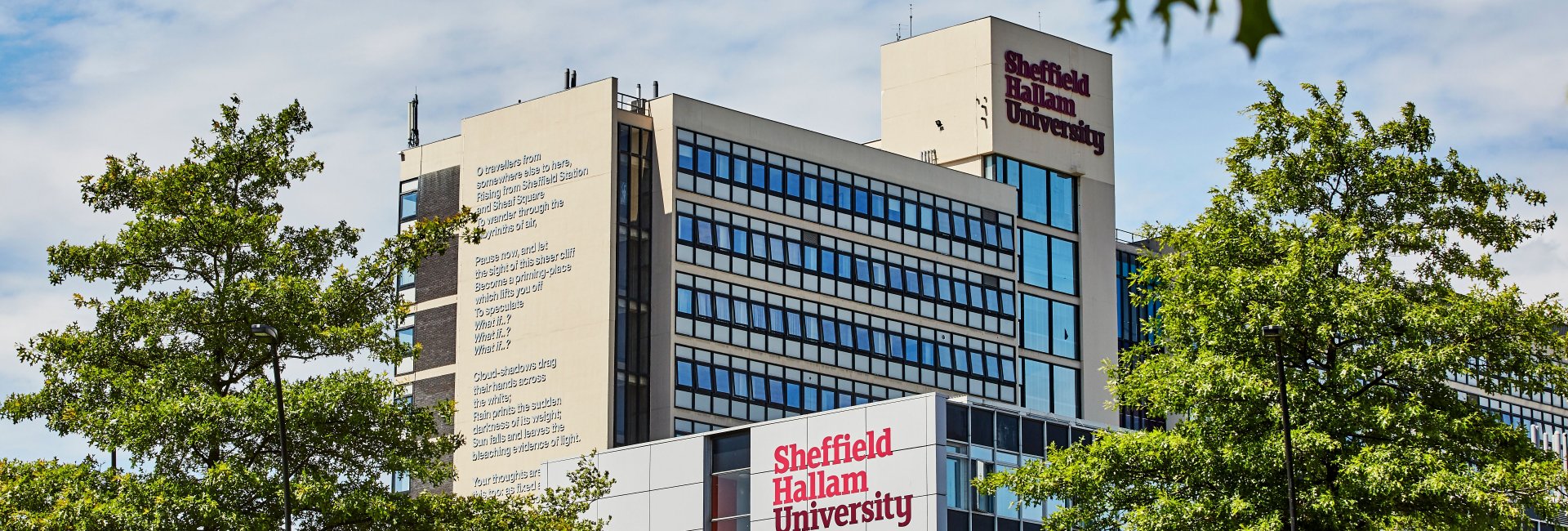
Please check the Sheffield Hallam University website for the latest information
Course summary
Convert your existing qualifications into a civil engineering honours degree.
Learn how to use artificial intelligence (AI) on structures and transportation.
Apply holistic design to industry projects, solving complex engineering challenges.
Explore civil engineering’s impact on our economy, society and surroundings.
Understand the techniques to design, construct and maintain our built environment.
This course prepares you for a dynamic career in the civil engineering sector. You’ll explore the planning and design of construction and transportation systems – from roads and highways to railways and broader infrastructure projects. You’ll consider sustainability and environmental factors, emerging as a highly skilled civil engineer ready to navigate the future challenges of the industry.
This top-up award is suitable for students who have a Level 5 degree (Fd, HND, DipHE) and would like to gain a recognised BEng degree to enhance their career prospects.
How you learn
All our courses are designed around a set of key principles based on engaging you with the world, collaborating with others, challenging you to think in new ways, and providing you with a supportive environment in which you can thrive.
On this course you’ll benefit from the latest academic research and industrial practice – your course material is regularly updated to the latest standards and needs of the industry. You’ll learn from industry experts with research experience in their relevant fields.
You learn through:
Diverse lectures emphasising peer collaboration
Tutorials to practise and apply your knowledge ahead of assessments
Hands-on lab experience in computational modelling and simulation
Q&A and discussions for self-assessment and understanding
Support sessions for receiving feedback and preparing for assessments
Teamwork activities for collaboration in an innovative environment
Project-based learning to apply knowledge, creativity, design, critical analysis and professional skills to real-world projects.
Course topics
The course combines theoretical knowledge with practical hands-on experience. Core modules cover the main areas of specialisation for civil engineers – including structures, geotechnics, hydraulics, transportation and project management.
The project module will provide you with the opportunity to showcase your learning as an independent learner. You’ll be able to focus on a topic that helps you establish the foundation of your future career.
You’ll receive feedback in a variety of ways throughout the course – from written comments on a piece of work, to informal face-to-face feedback from lecturers and peers.
Applied learning
Live projects
The course enables you to apply your learning to real-world examples. You’ll undertake an applied project to show your civil engineering knowledge and project management skills. There’s also an emphasis on group work and problem-based learning.
Networking opportunities
Guest lecturers from the industry and academia will be invited to provide a talk on their field of expertise, allowing you to become familiar with a wide range of industry contexts.
You’ll be able to explore the industry through site visits, guest lectures, project work, potential placements, and visits by professional bodies such as Institution of Civil Engineers (ICE), Institution of Structural Engineers (IStructE) and Institution of Engineering and Technology (IET).
Competitions
We support and encourage you to enter national and international competitions such as the young structural engineering international design competition, the ICE civil engineer of the year award and the British construction industry awards.
Important notice: The structure of this course is periodically reviewed and enhanced to provide the best possible learning experience for our students and ensure ongoing compliance with any professional, statutory and regulatory body standards. Module structure, content, delivery and assessment may change, but we expect the focus of the course and the learning outcomes to remain as described above. Following any changes, updated module information will be published on this page.
Year 1
Compulsory modules
Project: Implementation
Project: Management And Scoping
Structural Engineering And Foundation Design
Water And Transportation Engineering
Coursework, exams.
If the course start date is before 31 December 2025 and you have already submitted an application, this course can be added. If you have not submitted an application, contact the university or college direct.
If the course start date is between 01 January and 31 July 2026 click the 'Apply' button to make an application.
This is the equal consideration deadline. You can still apply after this date, but your application may not receive guaranteed consideration.

Sheffield Hallam University has participated in the Teaching Excellence Framework. These ratings were awarded in 2023, for four years.
See why these ratings were awarded
What does this TEF outcome mean?
The following entry points are available for this course:
Foundation degree or HND in a relevant discipline and aiming to develop your qualification to degree level.
Find out more about qualification requirements for this course.
Please click the following link to find out more about English language requirements for this course https://www.shu.ac.uk/courses/Engineering/BEng-Honours-Civil-Engineering-1-year-topup/Full-time
When you apply to Hallam, we consider your personal circumstances as well as your grades, experience and personal statement. In some cases, we will make you a contextual offer. Contextual offers ensure that all applicants have a fair chance of getting a place, regardless of their background.
This section shows the range of grades students (with UK A-Levels or Pearson BTEC Level 3 National Extended Diplomas) who received offers were previously accepted with (learn more). It is designed to support your research but does not guarantee whether you will or won't get a place. Admissions teams consider various factors, including interviews, subject requirements, and entrance tests. Check all course entry requirements for eligibility.
We are unable to show previous accepted grades for this course. This could be because the course is new, it's a postgraduate course, there isn't enough historical data, or the provider has opted out of sharing their entry grades data for this course - learn more.
| Location | Fee | Year |
|---|---|---|
| England | £9535 | Year 1 |
| Northern Ireland | £9535 | Year 1 |
| Scotland | £9535 | Year 1 |
| Wales | £9535 | Year 1 |
| Channel Islands | £9535 | Year 1 |
| Republic of Ireland | £9535 | Year 1 |
| EU | £17155 | Year 1 |
| International | £17155 | Year 1 |
Tuition fee status depends on a number of criteria and varies according to where in the UK you will study. For further guidance on the criteria for home or overseas tuition fees, please refer to the UKCISA website.
Our tuition fee for UK students on full-time undergraduate courses in 2025/26 is £9,535 per year. These fees are regulated by the UK government and therefore subject to change in future years.
If you are studying an undergraduate course, postgraduate pre-registration course or postgraduate research course over more than one academic year then your tuition fees may increase in subsequent years in line with Government regulations or UK Research and Innovation (UKRI) published fees. More information can be found at www.shu.ac.uk/study-here/terms-and-conditions-and-student-regulations.
Our tuition fee for International/EU students starting full-time study in 2025/26 is £17,155 per year.
Scholarships, discounts and bursaries may be available to students who study this course.
City Campus
Howard Street
Sheffield
S1 1WB
Visit our website Visit our course page
Phone:(+44) 0114 225 5533