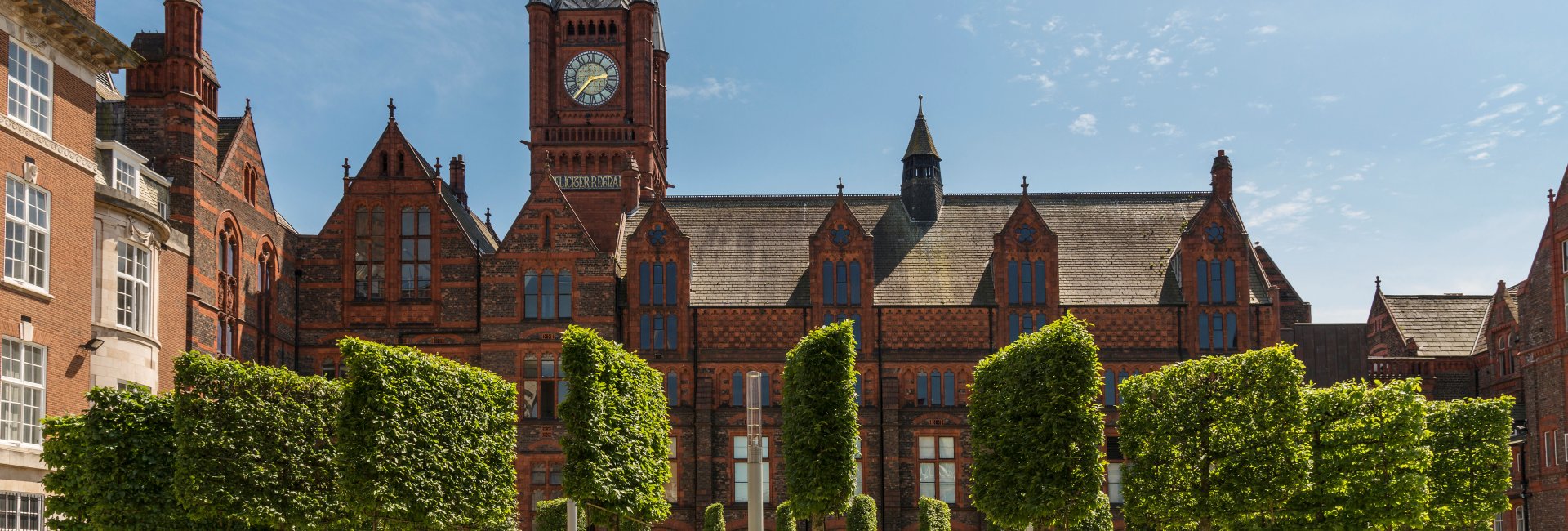
University of Liverpool
The Foundation Building
765 Brownlow Hill
Liverpool
L69 7ZX
Visit our website Visit our course page
Course contact details
External Relations
Email:ugrecruitment@liverpool.ac.uk
Phone:0151 794 5927

The Orthoptics programme aims to develop your knowledge of how the vision system works, binocular vision involving how the eyes work together, and eye movement systems including the importance of assessing ocular motility. In addition, you will focus on the fundamentals of the nervous system, neuro-anatomy and physiology, and where it relates to the practice of orthoptics. This background knowledge will enable a graduate orthoptist to perform as a competent and reflective practitioner and be a valuable member of the eye care team.
The Orthoptic programme will equip a graduate with the skills to diagnose and manage conditions which may present in a range of patients from newborns to the elderly, eg strabismus (eye misalignments), amblyopia (sometimes called lazy eye), traumatic injuries, tumours, head injuries, diabetes and strokes.
This programme is approved by the Health and Care Professions Council (HCPC) for the purpose of providing eligibility to apply for registration with the HCPC as an orthoptist.
This is the equal consideration deadline. You can still apply after this date, but your application may not receive guaranteed consideration.

University of Liverpool has participated in the Teaching Excellence Framework. These ratings were awarded in 2023, for four years.
See why these ratings were awarded
What does this TEF outcome mean?
The following entry points are available for this course:
Profession-specific knowledge and skills required
Candidates must show evidence, in their UCAS Personal Statement, of a good understanding of the profession. It is highly recommended that a candidate should observe a state registered Orthoptist, but where this is not possible a visit to a clinical department involving discussion with the Orthoptist is required. The experience gained should be discussed in their UCAS Personal Statement, and the applicant must show evidence of a good understanding.
Candidates should be able to discuss in lay terms the conditions/examination procedures etc observed. They must also be aware of the differences between Orthoptics and Optometry.
Candidates should have experience of working with the general public and especially children, people with special needs and the elderly.
Careers conventions, information leaflets, and websites may also provide helpful background information.
Declaration of Criminal Background
You will understand that as a health sciences student, and when you qualify, you will be asked to treat children and other vulnerable people. We therefore need information about any criminal offences of which you may have been convicted, or with which you have been charged. The information you provide may later be checked with the police. Please complete the Declaration of Criminal Background form.
Health screening
The University and the School of Health Sciences has an obligation to undertake health screening on all prospective healthcare students. Any offer of a place to study is conditional on completion of a health questionnaire and a satisfactory assessment of fitness to train from the University’s Occupational Health Service. This will include some obligatory immunisations and blood tests.
Disability information
If you have, or think you have dyslexia or a long term health condition or impairment that may have the potential to impact upon your studies and/or your Fitness to Practice duty, please complete the Disability form. We will contact you to discuss your support needs.
Important information
The academic profile, reference and personal statement of each candidate are given equal consideration. Due to the large number of applications it is advised that candidates ensure that they present with the strongest possible application.
Additional essential requirements
Additional requirements include:
Knowledge/understanding of the profession
Evidence of care/compassion for others
Evidence of teamwork and personal achievement
Evidence of verbal/written communication skills
Please download Orthoptics entry criteria 2017 for full details.
The University of Liverpool is committed to supporting talented applicants from all backgrounds to succeed. One of the ways we support students and fair access to higher education is through making reduced offers as part of our contextual admissions strategy, the Liverpool Scholars programme, Realising Opportunities national collaboration of universities and Sutton Trust Pathways. Additional consideration may be given to applicants with disrupted education or extenuating circumstances.
This section shows the range of grades students (with UK A-Levels or Pearson BTEC Level 3 National Extended Diplomas) who received offers were previously accepted with (learn more). It is designed to support your research but does not guarantee whether you will or won't get a place. Admissions teams consider various factors, including interviews, subject requirements, and entrance tests. Check all course entry requirements for eligibility.
We are unable to show previous accepted grades for this course. This could be because the course is new, it's a postgraduate course, there isn't enough historical data, or the provider has opted out of sharing their entry grades data for this course - learn more.
No fee information has been provided for this course
Tuition fee status depends on a number of criteria and varies according to where in the UK you will study. For further guidance on the criteria for home or overseas tuition fees, please refer to the UKCISA website.
Tuition fees for Home undergraduates
If this is your first degree and you are a Home student applying for entry in 2024, you do not have to pay your fees upfront. Instead, you can take out a tuition fee loan which is paid straight to the University. This is available to most students, no matter what their household income.
For UK students applying for 2024 entry the Tuition Fees are £9,250.
Check tuition fees for our undergraduate degrees. Select a course and go to the fees and funding section on the course page: Https://www.liverpool.ac.uk/paying-for-your-studies/
Some of our programmes charge less than the full £9,250 fee:
• Foundation programmes: the fee for the foundation year of specified programmes at Carmel College
• Programmes with a Foundation element: Psychology BSc (Hons) (2+2 programme with Foundation element) is run in collaboration with Wirral Metropolitan College.
• Programmes with a year in industry or a year abroad:
Some programmes which include compulsory fieldwork or additional elements such as the Pilots Licence in Aerospace Engineering may incur additional costs. Where this is the case, those costs will be outlined at on-campus events such as the University Open Days or Post Application Visit Days
The Foundation Building
765 Brownlow Hill
Liverpool
L69 7ZX
Visit our website Visit our course page
Email:ugrecruitment@liverpool.ac.uk
Phone:0151 794 5927
At University of Liverpool