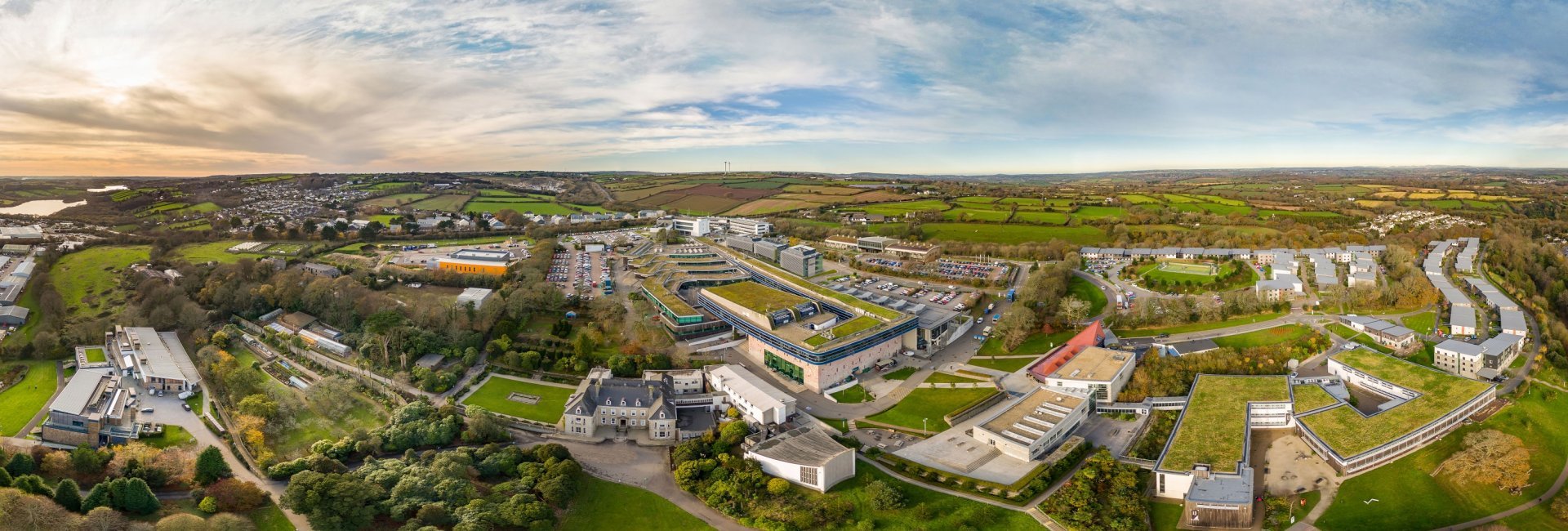
Falmouth University
Woodlane
Falmouth
TR11 4RH
Visit our website Visit our course page
Course contact details
Falmouth Online
Email:online.study@falmouth.ac.uk
Phone:01326 213827

Discover your unique illustrative voice.
Learning from experienced academics and connecting with an impressive programme of guest speakers, you’ll be challenged to test boundaries, explore new approaches and apply your illustration practice to a diverse range of industries.
On this online Illustration degree, you’ll be immersed in a global studio culture, and will gain the professional practice and entrepreneurial skills needed to turn your talent into a successful career as an illustrator.
Why study this course at Falmouth?
Join a global community of illustrators and build a diverse network of collaborators
Master visual problem-solving and refine your authentic visual language through working on industry-informed projects and briefs
Gain feedback on your work and build relationships with a wide range of professional practitioners
Explore multiple creative pathways to help prepare for a sustainable career
Experiment with a range of media and practices – including established and emerging technologies - to realise your own authentic visual language and style.
You'll be encouraged to push your creative limits and enhance your technical and practical skills through project work and industry-informed briefs. You'll also gain valuable professional practice experience through a combination of lectures, webinars, guest talks and discussion forums, while expanding your critical analysis and visual problem-solving skills
Stage One:
You'll begin the online Illustration course by exploring the art of visual problem-solving, identifying a range of strategies for research and idea development. Through practical work and critical theory sessions, you'll discover and experiment with varying media and processes, using established and emerging technologies to explore your own visual language. You'll also investigate the wider contextual, ethical and professional environments of the industry, focusing on Editorial and Narrative applications.
Modules:
Innovate
Apply
Explore
Communicate
Stage Two:
Through critical theory lectures, workshops in life drawing, digital skills, colour and composition and print-making, you’ll refine your practice and expand your industry knowledge. Embarking on project briefs independently and in collaboration with your peers, you’ll investigate information illustration and then move on to an advertising project. Collaborative work will build your project management, communication and team-working skills, which are vital in industry.
Modules:
Shape
Evolve
Refine
Share
Stage Three:
Through self-negotiated projects, you’ll continue to refine your creative practice and visual problem-solving skills, formulating a range of strategies to best communicate ideas to audiences. In ambitious live projects, working with clients and/or your peers, you’ll showcase your honed team-working and professional practice skills. You’ll also evidence your strategic critical and analytical skills, choosing to take an entrepreneurial, educational or illustrative pathway.
The final Employability module is all about launching your illustration career. You’ll gain real feedback from leading international designers, publishers, editors and art directors and have the opportunity to participate in a self-organised work placement.
Modules:
Define
Reflect
Reach
Connect
The modules above are those being studied by our students, or proposed new ones. Programme structures and modules can change as part of our curriculum enhancement and review processes. If a certain module is important to you, please discuss it with the Course Leader.
The online Illustration degree employs a variety of assessment strategies over the course of the year. These can include submission of portfolios, reviews and reports, pitches, reflective journals, competition analysis and final projects.
Your summative (final) assessments occur at the end of each module, usually at the end of the study block. You may also have interim formative assessments part way through a module as well. These assessments help ensure that you remain on track with your work.
You will receive continuous written and/or verbal feedback on all your work throughout the year. At the end of the module, you will receive detailed feedback in written form.
You'll be able to check in with your online tutor to discuss your progress and ask any questions you have about your course.
This is the equal consideration deadline. You can still apply after this date, but your application may not receive guaranteed consideration.

Falmouth University has participated in the Teaching Excellence Framework. These ratings were awarded in 2023, for four years.
See why these ratings were awarded
What does this TEF outcome mean?
The following entry points are available for this course:
If English is not your first language, you will need to demonstrate English language skills that are sufficiently developed for successful completion of your studies. We accept a range of recognised English language qualifications that are equivalent to the International English Language Testing System (IELTS) Academic minimum score of 6.0 overall, with a minimum of 5.5 in Reading, Writing, Speaking and Listening.
If you are able to demonstrate relevant, current, equivalent experience instead of formal qualifications, we encourage you to apply. Please contact our Applicant Services team before applying, for advice regarding your individual experience and eligibility.
If you are an international applicant and require a Student visa to study in the UK, you must have a recognised English language test approved and vouched for by the University at the appropriate level. Our Applicant Services team can help you with any general questions you may have about study visas or suitable language tests. For more specific advice, we recommend you also consult UKCISA http://www.ukcisa.org.uk/
This section shows the range of grades students (with UK A-Levels or Pearson BTEC Level 3 National Extended Diplomas) who received offers were previously accepted with (learn more). It is designed to support your research but does not guarantee whether you will or won't get a place. Admissions teams consider various factors, including interviews, subject requirements, and entrance tests. Check all course entry requirements for eligibility.
We are unable to show previous accepted grades for this course. This could be because the course is new, it's a postgraduate course, there isn't enough historical data, or the provider has opted out of sharing their entry grades data for this course - learn more.
No fee information has been provided for this course
Tuition fee status depends on a number of criteria and varies according to where in the UK you will study. For further guidance on the criteria for home or overseas tuition fees, please refer to the UKCISA website.
No additional fees or cost information has been supplied for this course, please contact the provider directly.
Woodlane
Falmouth
TR11 4RH
Visit our website Visit our course page
Email:online.study@falmouth.ac.uk
Phone:01326 213827
At Falmouth University