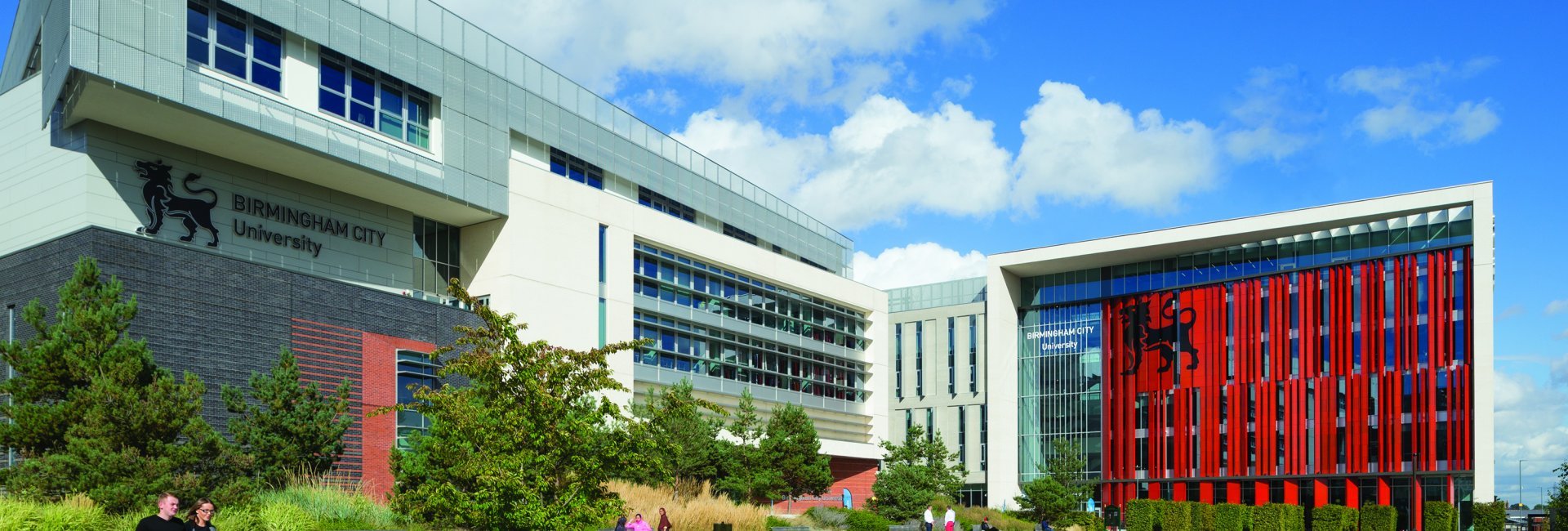
Birmingham City University Undergraduate Open Day, Friday 26 June 2026
26 Jun 2026, 08:00
Birmingham

As a diagnostic radiographer you play a valuable part in a service user’s pathway by providing the imaging needed to support their diagnosis, treatment, and recovery. This is done through the use of highly specialist technology. A career in diagnostic radiography combines science, technology, patient care and an eye for detail. As well as being a rewarding field to work in, it offers a diverse career pathway with a variety of options to progress to advanced practice.
Our Diagnostic Radiography course here at BCU is approved by the College of Radiographers and will support you to develop the skills and knowledge you need to prepare you to become a fully qualified diagnostic radiographer once you have graduated. On successful completion of all course requirements, you will be entitled to apply for registration with the regulator, the Health and Care Professions Council (HCPC), to gain registered practitioner status and be able to practice in the UK either within the NHS or the private sector.
Our West Midlands based Diagnostic Radiography course provision is well-established and will offer you a mixture of education in academic and clinical environments. When on campus, as well as classroom delivery, you will have access to our specialist teaching spaces, including a well-equipped x-ray suite, image viewing facilities, ward, and operating theatre. You will also develop your specialist skills as you spend time on placements within a variety of imaging departments supported by our clinical partners in the Midlands region.
Your academic studies include subjects which form the core of diagnostic radiography practice, including the study of human anatomy, physiology and pathology, principles of radiation and imaging, and how to deliver exacting standards of patient care in the context of varying social and psychological needs. You will also develop a strong understanding of what it means to be a registered professional. The purpose of this is to ensure that you are prepared for practice with all the skills and knowledge you need to be a competent and confident diagnostic radiographer. This course will also support you with your employability skills so that you are ready to make the move into the working world as you complete your studies.
As you advance your knowledge of diagnostic radiography practice and the application of imaging technology to differing pathologies, you will develop academic and analytical skills and will explore the research evidence that forms the bases of current and emergent practices. You will also develop your ability to apply research strategies to health and care practice and will consolidate your clinical skills and knowledge to support your transition to registered practitioner status.
Professionally accredited courses provide industry-wide recognition of the quality of your qualification.
This is the equal consideration deadline. You can still apply after this date, but your application may not receive guaranteed consideration.

Birmingham City University has participated in the Teaching Excellence Framework. These ratings were awarded in 2023, for four years.
See why these ratings were awarded
What does this TEF outcome mean?
The following entry points are available for this course:
If your level 3 qualifications do not meet the UCAS tariff for this course, you may be offered a place on our Foundation Year instead. You do not need to submit a separate application but will automatically be considered for this if your predicted grades fall below the UCAS entry tariff.
120 UCAS tariff points from three A Levels. Grades BBB (or equivalent). Required subjects: Science subject at A Level or level 3 equivalent, at Grade B or above. Excluded subjects: General Studies; Critical Thinking; Extended Project. Please note that A Level Psychology does not count as a Science A Level for entry to this course.
120 UCAS tariff points. Diploma accepted with one A Level or equivalent level 3 qualifications. Extended Certificate accepted with two A Levels or equivalent level 3 qualifications. Extended Diploma - accepted subjects: Science. National Diploma/Extended Certificate - accepted subjects: Either this qualification or the accompanying A Level / level 3 equivalent must be in a relevant Science subject (e.g. Applied Science, Biology, Chemistry, Physics). Science subject must be at grade B or Distinction.
Pass with 60 credits. At least 45 credits at level 3 with 30 credits at Merit or Distinction. Accepted subjects: Science-related pathway.
Excluded subjects: Health and Social Care.
120 UCAS tariff points from three Advanced Highers (CCC) or two Advanced Highers (CC) plus two Highers (CC). Required subjects: Science subject at Higher level or above.
120 UCAS tariff points. Diploma accepted with one A Level or equivalent level 3 qualifications. Extended Certificate accepted with two A Levels or equivalent level 3 qualifications. Extended Diploma - accepted subjects: Science. National Diploma/Extended Certificate - accepted subjects: Either this qualification or one of the accompanying A Levels / level 3 equivalents must be in a relevant Science subject (e.g. Applied Science, Biology, Chemistry, Physics). Science subject must be at Grade B or Distinction.
120 UCAS tariff points. Diploma accepted with one A Level or equivalent level 3 qualifications. Extended Certificate accepted with two A Levels or equivalent level 3 qualifications. Extended Diploma - accepted subjects: Science. National Diploma/Extended Certificate - accepted subjects: Either this qualification or one of the accompanying A Levels / level 3 equivalents must be in a relevant Science subject (e.g. Applied Science, Biology, Chemistry, Physics). Science subject must be at Grade B or Distinction.
120 UCAS tariff points from three Advanced Highers (CCC) or two Advanced Highers (CC) plus two Highers (CC). Required subjects: Science subject at Higher level or above.
Obtain a minimum of 30 points overall. Required subjects: One of Biology, Chemistry or Physics at Higher level. For students who do not already hold a GCSE in Mathematics at grade C/4 or above, grade 5 in Maths (Standard level) from the IB Diploma will be accepted. For students who do not already hold a GCSE in English Language at grade C/4 or above, English Language (Standard level) from the IB Diploma will be accepted. For English A, this must be grade 4 or above; for English B, this must be grade 5.
Minimum of 120 UCAS tariff points, achieved in five Higher level subjects. Required subjects: Science related subject at Higher level.
GCSE English Language or English Literature and GCSE Maths at grade C/4 or above. If you do not have these or are not undertaking them, we accept other level 2 equivalents, or we may ask you to pass BCU's GCSE equivalency tests.
Merit overall. Accepted subjects: Science.
Welsh Baccalaureate: 120 UCAS tariff points. Considered with two A Levels or equivalent level 3 qualifications. Required subjects: Either this qualification or an accompanying A Level / level 3 equivalent must be in a relevant Science subject (e.g. Applied Science, Biology, Chemistry, Physics, at grade B or Distinction). Science subject must be at grade B or Distinction.
OCR Cambridge Technical qualifications: 120 UCAS tariff points. Extended Diploma - accepted subjects: Science. Diploma - accepted subjects: Either this qualification or the accompanying A Level / level 3 equivalent must be in a relevant Science subject (e.g. Applied Science, Biology, Chemistry, Physics). Science subject must be at grade B or Distinction.
| Test | Grade | Additional details |
|---|---|---|
| IELTS (Academic) | 7 | overall with no less than 6.5 in each band. |
This section shows the range of grades that students who received offers were previously accepted on to this course with (learn more).
It is designed to support your research but does not guarantee whether you will or won't get a place.
Admissions teams consider various factors, including interviews, subject requirements, and entrance tests. Check all course entry requirements for eligibility.
We are unable to show previous accepted grades for this course. This could be because the course is new, it's a postgraduate course, there isn't enough historical data, or the provider has opted out of sharing their entry grades data for this course - learn more.
| Location | Fee | Year |
|---|
Tuition fee status depends on a number of criteria and varies according to where in the UK you will study. For further guidance on the criteria for home or overseas tuition fees, please refer to the UKCISA website.
Email:courseenquiries@bcu.ac.uk
Phone:0121 331 6295
Curzon Building
4 Cardigan Street
Birmingham
B4 7BD
At Birmingham City University