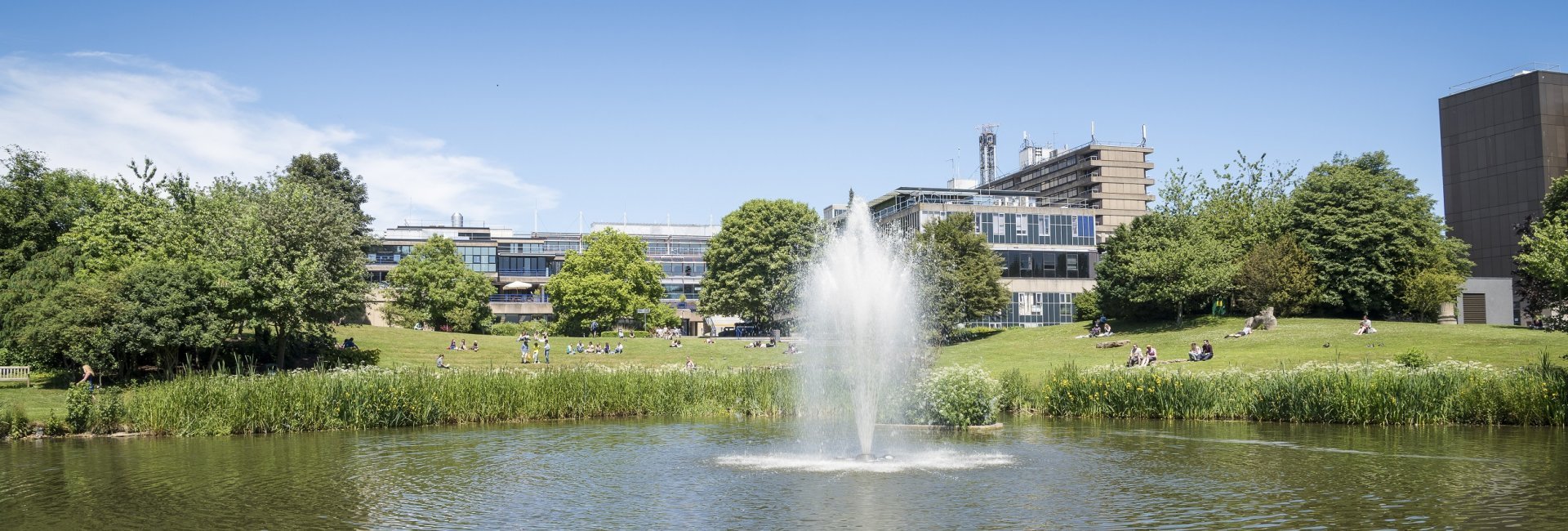
University of Bath - open day event
12 Jun 2026, 08:30
Bath

How we can get people more active and making healthy choices? Prepare yourself for a range of careers, promoting health at an individual or population level.
This course combines science, social science and public health. Through learning about how the human body works, you will understand the impact that physical activity, diet and other lifestyle choices have on health and wellbeing.
This degree has three core themes running throughout the course:
Exercise Science provides a fundamental, interdisciplinary understanding of human function
Behavioural Medicine explores how we can use the principles of exercise science to promote health, or treat and prevent disease
Public Health investigates the determinants of population health, focusing particularly on the role of physical activity and lifestyle in the health of a population
Through these core themes, you will apply your knowledge to health and exercise settings. This will help you to understand their relevance in current practice.
Some of the topics you will cover include:
epidemiology
exercise prescription
health technologies
nutrition
social health inequalities
sports medicine
research methods
In Year 1, you’ll build on your knowledge of human physiology, biomechanics and psychology, and develop your understanding of the role of physical activity on public health. You’ll develop skills in research design and statistics.
In Year 2, you'll gain more in-depth understanding of exercise, health and nutrition at different stages of life, for various clinical groups, and at the individual, community and population level. You’ll explore how we communicate these health messages to different audiences.
In your final year, you’ll carry out a year-long research project and study advanced units in areas such as nutrition, health technologies, sociology and exercise prescription.
This course will prepare you for a range of careers including public health, rehabilitation, physician’s assistant, community sports, health promotion, health policy and exercise science.
Use specialist facilities
You'll have access to facilities that support your learning, including laboratories with specialist equipment and the latest technology, including:
Applied Biomechanics Laboratory
Applied Physiology Laboratory
Biochemistry Laboratory
Metabolic Research Laboratory
A dedicated movement analysis suite
Develop your professional skills
We work to provide you with the skills and support to prepare you for employment and further study, such as:
communication and interview skills
CV and cover letter writing
networking
career planning
Informed teaching to advance your learning
You’ll learn from experts in sports performance and sports science. Their passion, knowledge and research shape their teaching to enhance your learning experience.
Staff across our Department for Health have specialisms in areas such as:
sport and exercise science
nutrition and metabolism
sport management, marketing and media
coaching and sport performance
sport policy and international development
health and physical activity
research methods
Prepare for your future
Many of our sport, exercise and health graduates have gone on to work in sport science, public health, exercise medicine and rehabilitation, sports management and sports coaching.
They've worked for organisations such as:
BUPA
Cambridge Medical Robotics
Coaches Voice
Hawk-Eye Innovations
MoveGB
Department of Health & Social Care
professional rugby union and football clubs
Find out what our graduates go on to do
Specialist facilities for your learning and training
Our £35 million Sports Training Village contains some of the UK’s best sport and exercise facilities, accommodating more than 50 sports. We regularly host major international competitions and provide a dedicated sports training space.
You’ll have access to our biomechanics and physiology labs, containing:
gas analysers
blood lactate monitors
performance analysis systems
force platforms
jump mats
This is the equal consideration deadline. You can still apply after this date, but your application may not receive guaranteed consideration.

University of Bath has participated in the Teaching Excellence Framework. These ratings were awarded in 2023, for four years.
See why these ratings were awarded
What does this TEF outcome mean?
The following entry points are available for this course:
GCSE Mathematics grade 4 or C
GCSE in one of Combined Science, Biology, Chemistry or Physics grade 4 or C
GCSE English Language or Literature grade 4 or C (or equivalent from English language category C)
This section shows the range of grades students (with UK A-Levels or Pearson BTEC Level 3 National Extended Diplomas) who received offers were previously accepted with (learn more). It is designed to support your research but does not guarantee whether you will or won't get a place. Admissions teams consider various factors, including interviews, subject requirements, and entrance tests. Check all course entry requirements for eligibility.
We are unable to show previous accepted grades for this course. This could be because the course is new, it's a postgraduate course, there isn't enough historical data, or the provider has opted out of sharing their entry grades data for this course - learn more.
| Location | Fee | Year |
|---|---|---|
| England | £9535 | Year 1 |
| Northern Ireland | £9535 | Year 1 |
| Scotland | £9535 | Year 1 |
| Wales | £9535 | Year 1 |
| Channel Islands | £9535 | Year 1 |
| Republic of Ireland | £9535 | Year 1 |
Tuition fee status depends on a number of criteria and varies according to where in the UK you will study. For further guidance on the criteria for home or overseas tuition fees, please refer to the UKCISA website.
Tuition fees can be found on our web pages and are liable to increase annually. UK and Islands fees are regulated by the UK government and are subject to parliamentary approval.
For information on tuition fees visit our web pages: http://www.bath.ac.uk/topics/tuition-fees/
For information about our scholarships and bursaries visit:
https://www.bath.ac.uk/topics/undergraduate-scholarships-bursaries-and-other-funding/
Claverton Down
Bath
BA2 7AY
Visit our website Visit our course page
Email:admissions@bath.ac.uk
Phone:01225 383019
At University of Bath