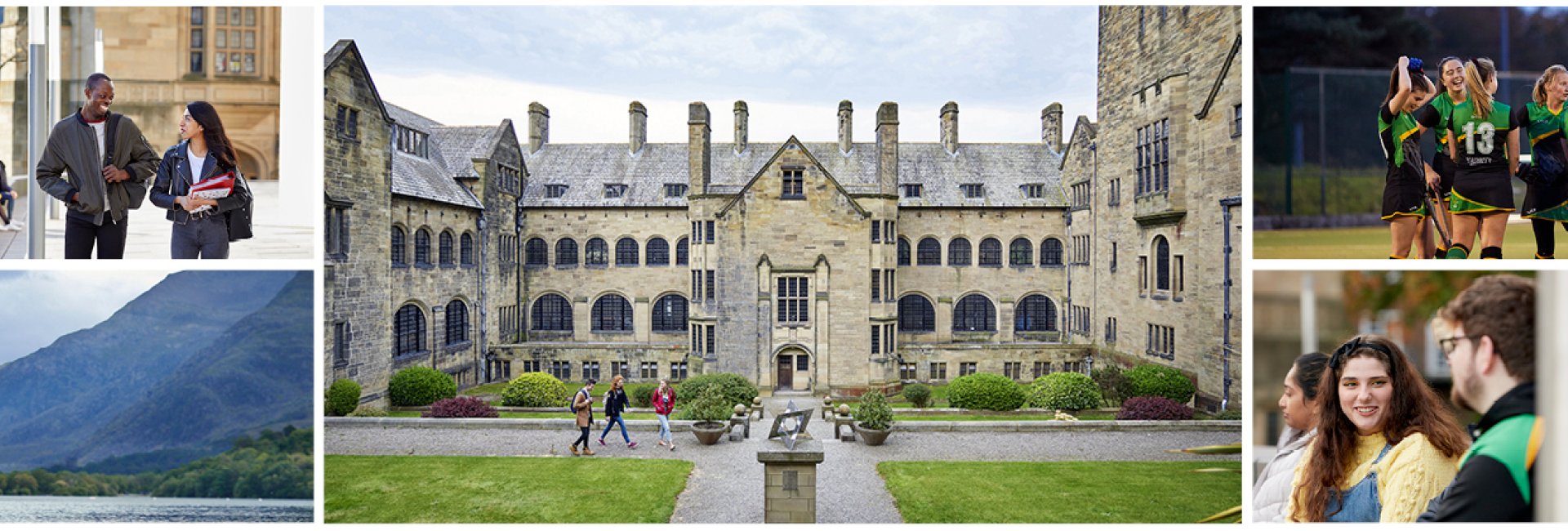
Bangor University
Bangor (Wales)
LL57 2DG
Visit our website Visit our course page
Course contact details
The Admissions Office
Email:admissions@bangor.ac.uk
Phone:01248 383717
Fax: 01248 370451

Biotechnology is the application of biology to improve quality of life, and the health of our planet, via the innovative use of cellular and molecular processes to develop beneficial technologies and products. Historically, biotechnology has had a significant impact upon human life, with the earliest biotechnologists harnessing the fermentative capabilities of microorganisms to produce food products such as bread, cheese, beer and wine. In today’s world, modern biotechnology offers breakthrough products and technologies to combat disease, reduce our impact on the environment, feed the hungry, reduce our energy demands, provide cleaner energy, and produce safer, cleaner and more efficient industrial processes. This degree will empower the next generation of scientists to address global issues in an innovative manner to heal, fuel and feed the world. You will receive training that covers evolutionary, ecological, environmental, molecular and cellular aspects of biology, and there is opportunity to follow applied aspects of biology as well as learn about fundamental processes and mechanisms. Our teaching is underpinned by internationally recognised research. Academic staff in the School of Biological Sciences have a well-founded expertise in biotechnology research, derived from a number of biological disciplines covering medical and environmental microbiology, plant biology, marine biotechnology, fisheries genetics, and cell and genome biology. We also provide a diversity of practical, laboratory and field biology experience, enabling you to acquire transferable skills (data analysis, group work, writing and presentational skills, IT skills). Extensive use is made of the exceptional range of local terrestrial and aquatic habitats during field courses and practical classes. We are unusual among British Universities in having our own botanical gardens with various habitats for biological studies. We are also part of the Environment Centre Wales, which is a partnership venture between Bangor University and the Natural Environment Research Council’s Centre for Ecology & Hydrology (CEH).
‘Placement Year’ and 'International Experience Year’ options are available for this course. You will have the opportunity to fully consider these options when you have started your course at Bangor and can make an application for a transfer onto such a pathway at the appropriate time. You can find more information about these options on our website and if you have any questions, please get in touch.
For details of the modular structure, please see the course description on Bangor University's website.
The following entry points are available for this course:
Discover what it's like to study Biology with Biotechnology at Bangor University: insights on the course, making friends, personal statement tips, uni prep, and recommended books, podcasts, and videos.

We allow you flexibility in meeting our entry requirements and accept a broad range of qualifications. We are happy to accept combinations of the qualifications listed above, as well as alternative Level 3 qualifications such as City & Guilds, Access and Cambridge Technical Diplomas. We also welcome applications from mature learners and/or those with other qualifications are considered on individual merit. If you cannot find the qualifications that you are studying (or have completed) listed above, please contact us for advice: applicantservices@bangor.ac.uk
If you don't think you'll meet the entry requirements specified, you may be able to gain entry to this course via a Foundation Year route. Please see: Biology with a Foundation Year UCAS Code: C10F.
International Candidates: school leaving qualifications that are equivalent to A levels/Level 3 and/or college diplomas are accepted from countries worldwide (subject to minimum English Language requirements), details at: www.bangor.ac.uk/international/applying/entryrequirements
For the most up-to-date information on acceptable English Language proficiency qualifications, please visit our webpage below. https://www.bangor.ac.uk/international/future/englishlanguage
This section shows the range of grades students (with UK A-Levels or Pearson BTEC Level 3 National Extended Diplomas) who received offers were previously accepted with (learn more). It is designed to support your research but does not guarantee whether you will or won't get a place. Admissions teams consider various factors, including interviews, subject requirements, and entrance tests. Check all course entry requirements for eligibility.
We are unable to show previous accepted grades for this course. This could be because the course is new, it's a postgraduate course, there isn't enough historical data, or the provider has opted out of sharing their entry grades data for this course - learn more.
| Location | Fee | Year |
|---|---|---|
| England | £9535* | Year 1 |
| Northern Ireland | £9535* | Year 1 |
| Scotland | £9535* | Year 1 |
| Wales | £9535* | Year 1 |
| Channel Islands | £9535* | Year 1 |
| Republic of Ireland | £9535* | Year 1 |
* This is a provisional fee and subject to change.
Tuition fee status depends on a number of criteria and varies according to where in the UK you will study. For further guidance on the criteria for home or overseas tuition fees, please refer to the UKCISA website.
On 4 December 2024 the Welsh Government confirmed that the tuition fee cap (the maximum tuition fee that regulated providers can charge to certain students on full-time undergraduate courses) will increase to £9,535 per year, subject to changes in the regulations by the Welsh Government.
Tuition fees and scholarship information for International applicants can be found here:
https://www.bangor.ac.uk/international/tuition
Bangor (Wales)
LL57 2DG
Visit our website Visit our course page
Email:admissions@bangor.ac.uk
Phone:01248 383717
Fax: 01248 370451
At Bangor University