Skip navigation
You are viewing our beta course page.

Pharmacology and Drug Discovery

Course details
  • Msci (Hon)
  • 4 Years
  • Full-time
  • 22/09/2025
  • Undergraduate
Course location
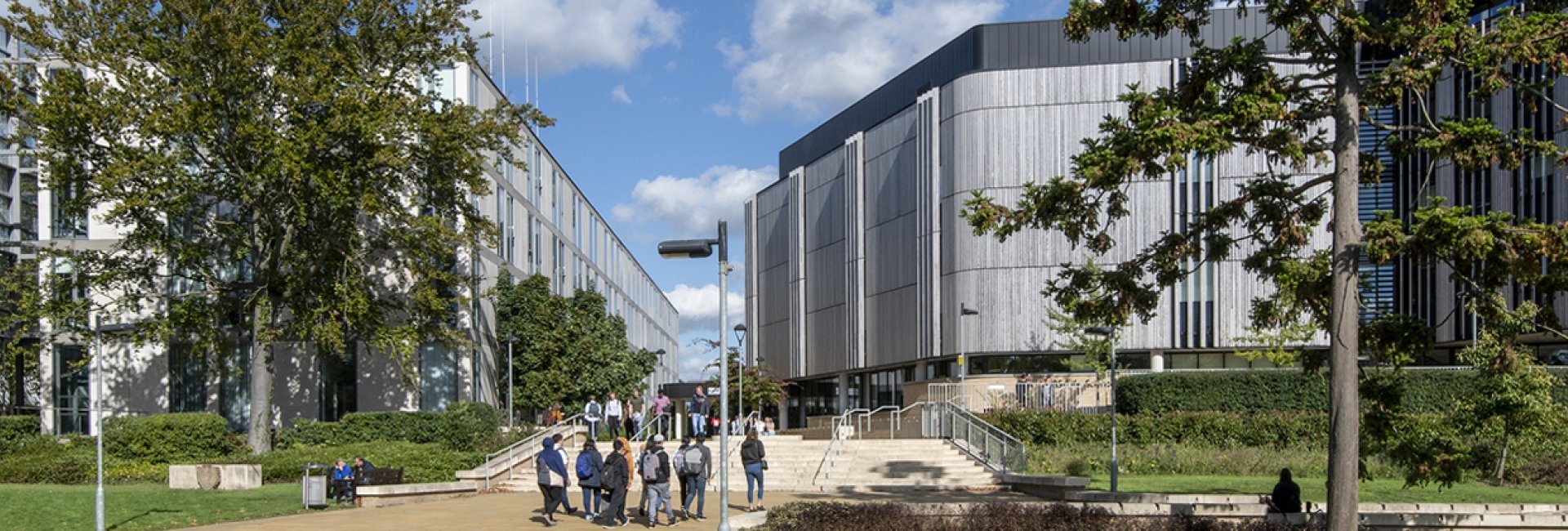
Main Site - Highfield Campus

Course summary

Gain an advanced understanding of how drugs interact with receptors, cells, tissues, and whole organisms.

Your four-year integrated masters, based in our multi-million pound, state-of-the-art Life Sciences building, will equip you with a sound scientific knowledge base in pharmacology to FHEQ level 7 and in biochemistry and physiology to at least FHEQ Level 5.

You will graduate with the research skills vital for further study and the tools needed for a broad variety of professions* including laboratory-based research, jobs in the pharmacology and neuroscience sector, and the media.

You will have the opportunity to select a year in employment placement, to gain experience in an industrial setting.

You will also gain extensive experience from a variety of field trips in possible locations like the New Forest, Spain, and Belize and will become a part of our research community, spending your final year embedded alongside one of our leading research groups.

You will complete extended projects in a specialised area of your choice and work alongside, and be taught by, leading academics in their research fields. They will support you in developing a knowledge of life at different levels - from molecules and cells, to whole communities and global ecosystems.

*99% of Biological Sciences graduates were in employment or further study 15 months after graduation (Graduate Outcomes 2020/2021).

Modules

We have a varied range of modules for all years, to offer you the opportunity to tailor your studies to your passions and to equip you with the skills and experiences needed for success as a graduate. Examples of modules include:

Year 1: Chemistry of life, Fundamentals of Biochemistry,
Fundamentals of Cell Biology & Physiology, How to Think Like a Scientist, Human Genome & Disease.

Year 2: Exploring Proteins: Structure & Function, Flow of Genetic Information, Medical Microbiology.

Year 3: Molecular Pharmacology, Biomedical Parasitology, Cancer & Chromosome Biology, Cell Signalling in Health & Disease.

Year 4:
Current Research, Advanced Research Project, Neurodegenerative Disease, Biomedical Parasitology,

Please visit the course page for more information.

Please note: information included was correct at time of publication, March 2024.

Assessment method

You'll learn, and be assessed, through a range of methods designed to equip you with the skills you need for success after graduating.

The learning activities include lectures, classes and tutorials, coursework, individual and group projects, and independent learning.

The assessment methods include coursework, laboratory reports and essays, individual and group projects, oral presentations, written and practical exams.

How to apply

Apply by
29 January

This is the deadline for applications to be completed and sent for this course. If the university or college still has places available you can apply after this date, but your application is not guaranteed to be considered.

Application codes

Course code:
B215
Institution code:
S27
Campus name:
Main Site - Highfield Campus
Campus Code:
-

Points of entry

The following entry points are available for this course:

  • Year 1

Entry requirements

Qualification requirements

UCAS Tariff - Not accepted

A level - AAA

AAA to include Chemistry and one further science subject. A level science subjects considered include Human Biology, Biology, Physics, Maths, Statistics, Psychology, Environmental Studies, Geography and Geology. Science practical components must be passed. General Studies, Critical Thinking and Use of Mathematics are excluded for entry.

Pearson BTEC Level 3 National Extended Diploma (first teaching from September 2016) - DDD

We do not accept the BTEC Level 3 National Extended Diploma without two A-levels to include Chemistry and one further science subject. If you are studying this qualification a typical offer would be DDD + AA at A-Level (or equivalent), to include Chemistry and one further science subject. Science practical components must be passed.

Access to HE Diploma - D: 45 credits

60 credits with a minimum of 45 credits at Level 3 of which 45 credits must be at Distinction. A core science Access to HE Diploma must be studied.

Scottish Higher

We normally consider applicants who offer at least 1 Advanced Higher. Applicants presenting with only Highers will be considered on a case by case basis. Where Highers are taken over two years it might be expected that higher grades are achieved, particularly in any specific subjects required. For example, S5 – S6 (2 years): AABBB (A in specific subject) or S6 (1 year): ABBBB (A in specific subject). Unless a more advanced level (Higher or Advanced Higher) is specified in the stated entry requirements, all applicants will be required to have achieved a pass in Mathematics and English at Standard Grade, Grade 3 or National 5, Grade C, the equivalent of GCSE Grade C/ Grade 4.

Pearson BTEC Level 3 National Diploma (first teaching from September 2016) - DD

We do not accept the BTEC Level 3 National Extended Diploma without two A-levels to include Chemistry and one further science subject. If you are studying this qualification a typical offer would be DD + AA at A-Level (or equivalent), to include Chemistry and one further science subject. Science practical components must be passed.

Pearson BTEC Level 3 National Extended Certificate (first teaching from September 2016) - D

D+ AA at A-Level (or equivalent), to include Chemistry and one further science subject. Science practical components must be passed.

Scottish Advanced Higher

Offers will be based on exams being taken at the end of S6. Subjects taken and qualifications achieved in S5 will be reviewed. Careful consideration will be given to an individual’s academic achievement, taking in to account the context and circumstances of their pre-university education. Please see the University of Southampton’s Curriculum for Excellence Scotland Statement for further information. Applicants are advised to contact their Faculty Admissions Office for more information. Applicants are also required to have achieved a pass in Maths and English at Standard Grade Grade 3 or National 5 Grade C, the equivalent of GCSE Grade C/Grade 4.

International Baccalaureate Diploma Programme - 36 points

Pass with overall score of 36 points, with 18 points at Higher Level, including 6 points at Higher Level in Chemistry and one further science subject Science subjects considered include Biology, Physics, Maths (Analysis and Approaches or Applications and Interpretation at HL6) , Psychology, Environmental Studies, Geography and Geology. International Baccalaureate Career-related Programme (IBCP): The University of Southampton accepts the IBCP for entry to their degree programmes, recognising the value of combining academic skills with practical skills, providing a solid preparation for university level work. Offers will be made on the individual components of the IBCP. Applicants not taking the full IBCP but presenting with a combination of a Level 3 vocational qualification and IB Certificates may still be considered. Offers will be made on the individual Diploma Course subject(s) and the career-related study qualification. The CP core will not form part of the offer. Where there is a subject pre-requisite(s), applicants will be required to study the subject(s) at Higher Level in the Diploma course subject and/or take a specified unit in the career-related study qualification. Applicants may also be asked to achieve a specific grade in those elements. Please see the University of Southampton International Baccalaureate Career-Related Programme (IBCP) Statement for further information. Applicants are advised to contact their Faculty Admissions Office for more information.

Welsh Baccalaureate - Advanced Skills Challenge Certificate (last awarded Summer 2024) - A

AA from two A levels including Chemistry and one further a science subject and A from the Advanced Welsh Baccalaureate Skills Challenge Certificate.

Extended Project - A

Grades AAB from 3 A-levels to include Chemistry and one further science subject plus Grade A in the EPQ. Science practical components must be passed.

Leaving Certificate - Higher Level (Ireland) (first awarded in 2017) - H1, H1, H2, H2, H2, H2

H1, H1, H2, H2, H2, H2 to include Chemistry and one further science subject. Science subjects considered include Biology, Maths, Physics, Psychology, Environmental Studies, Geography and Geology. Applicants will be required to have achieved a pass in Mathematics and English at ILC Grade C or 04, the equivalent of GCSE grade C/grade 4.

Cambridge International Pre-U Certificate - Principal - D3, D3, D3

D3, D3, D3 to include Chemistry and one further science subject. Science subjects considered include Biology, Maths, Physics, Psychology and Geography. Cambridge Pre-U's can be used in combination with other qualifications such as A Levels to achieve the equivalent of the typical offer, where D3 can be used in lieu of A Level grade A or grade M2 can be used in lieu of grade B.

Applicants must hold GCSE English Language (or GCSE English), Mathematics and Science (minimum grade C/4).

Find out more about qualification requirements for this course.

English language requirements

TestGradeAdditional details
IELTS (Academic)6.5Band C: 6.5 with 6.0 in each component
All programmes at the University of Southampton are taught and assessed in the medium of English (other than those in modern foreign languages). Therefore, all applicants must demonstrate they possess at least a minimum standard of English language proficiency.

Find out more about the University’s English Language requirements https://www.southampton.ac.uk/studentadmin/admissions/admissions-policies/language.page

Contextual admissions

Universities and colleges consider more than grades when assessing applications and may make offers based on a range of criteria. Learn more about contextual offers.

Most of the students who previously enrolled on this course joined us with grades lower than our published entry criteria. After receiving their grades, we carefully considered each students’ individual circumstances before confirming their place on their chosen course.

We encourage everyone with the potential to succeed to apply, regardless of their background. Applicants who qualify for contextual admissions will be made an offer lower than the typical offer for that programme.

Learn more on the University of Southampton website

Historical entry grades data BETA

This section shows the range of grades students (with UK A-Levels or Pearson BTEC Level 3 National Extended Diplomas) who received offers were previously accepted with (learn more). It is designed to support your research but does not guarantee whether you will or won't get a place. Admissions teams consider various factors, including interviews, subject requirements, and entrance tests. Check all course entry requirements for eligibility.

Not enough data available

We are unable to show previous accepted grades for this course. This could be because the course is new, it's a postgraduate course, there isn't enough historical data, or the provider has opted out of sharing their entry grades data for this course - learn more.

Fees and funding

Tuition fees

LocationFeeYear
England£9535Year 1
Northern Ireland£9535Year 1
Scotland£9535Year 1
Wales£9535Year 1
Channel Islands£9535Year 1
Republic of Ireland£9535Year 1
EU£28800Year 1
International£28800Year 1

Tuition fee status depends on a number of criteria and varies according to where in the UK you will study. For further guidance on the criteria for home or overseas tuition fees, please refer to the UKCISA website.

Additional fee information

Please see our website for further details and updates: www.southampton.ac.uk/uni-life/fees-funding.page

Like this page