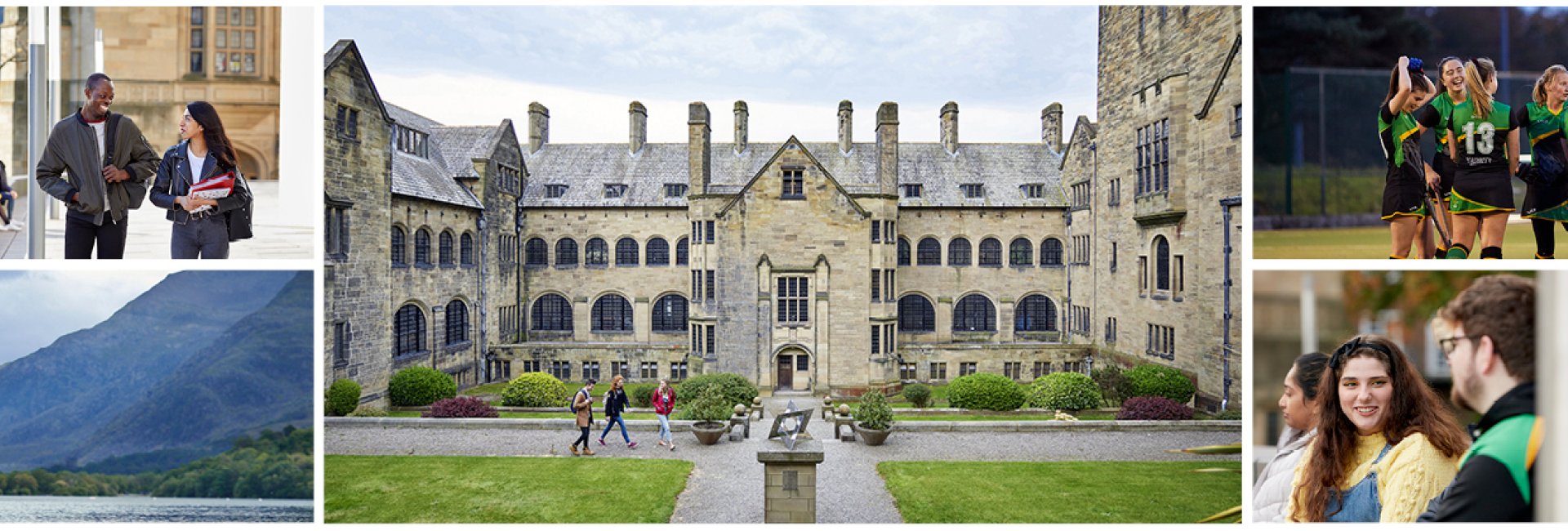
Bangor University
Bangor (Wales)
LL57 2DG
Visit our website Visit our course page
Course contact details
Contact Bangor University
Email:admissions@bangor.ac.uk
Phone:01248 383717

This Professional Policing degree draws on established experience, evidence and theory. It prepares you to prevent and respond to crime, building trust within local communities.
Licensed by the College of Policing, it meets all the core requirements of the Policing Education Qualifications Framework (PEQF). This means that, on graduation, you can apply to join the police anywhere in England or Wales. Completing the Degree does not give automatic entry and the usual application process has to be completed.
This course utilise a combination of lectures, seminars and workshop delivered at Bangor University. You will benefit from our combined expertise – in research into policing, the causes of crime and crime control, and practical policing skills. In addition to legislative, policy and procedural knowledge, you will gain insight into current police practice.
This hands-on Policing degree will equip you with the right skills and knowledge to adapt to the professional complexity of modern-day policing, including the changing nature of crime and demands on police services.
You will be prepared for the emotional, physical and mental demands of a rewarding career in the police and related fields. Your in-depth knowledge of policing and criminal justice, coupled with excellent communication, leadership, persuasion, diplomacy and research skills, will prove highly attractive to future employers. Not just in other areas of the criminal justice system, but also any civil service or public sector roles.
This degree delivered at Bangor University and licensed by the College of Policing has been developed in partnership with Grŵp Llandrillo Menai (GLLM). You will be taught wholly at Bangor University.
For details of the modular structure, please see the course description on Bangor University's website.
The following entry points are available for this course:
Please note: Completion of this degree does not guarantee the opportunity for recruitment into the police service. Those planning a career in the police are advised to check eligibility criteria as set out by individual police services.
We allow you flexibility in meeting our entry requirements and accept a broad range of qualifications. We are happy to accept combinations of the qualifications listed above, as well as alternative Level 3 qualifications such as City & Guilds, Access and Cambridge Technical Diplomas. We also welcome applications from mature learners and/or those with other qualifications are considered on individual merit. If you cannot find the qualifications that you are studying (or have completed) listed above, please contact us for advice: applicantservices@bangor.ac.uk
International Candidates: school leaving qualifications that are equivalent to A levels/Level 3 and/or college diplomas are accepted from countries worldwide (subject to minimum English Language requirements), details at: www.bangor.ac.uk/international/applying/entryrequirements
For the most up-to-date information on acceptable English Language proficiency qualifications, please visit our webpage below. https://www.bangor.ac.uk/international/future/englishlanguage
Bangor University is committed to widening participation in Higher Education (HE) and accepts students from a broad range of backgrounds.
To support students into Higher Education, we use a number of indicators to identify students who may be at a disadvantage in their ability to access Higher Education, in order to provide additional support.
Our admissions process involves assessing the entire application to make an assessment based on your grades and individual circumstances.
This section shows the range of grades students (with UK A-Levels or Pearson BTEC Level 3 National Extended Diplomas) who received offers were previously accepted with (learn more). It is designed to support your research but does not guarantee whether you will or won't get a place. Admissions teams consider various factors, including interviews, subject requirements, and entrance tests. Check all course entry requirements for eligibility.
We are unable to show previous accepted grades for this course. This could be because the course is new, it's a postgraduate course, there isn't enough historical data, or the provider has opted out of sharing their entry grades data for this course - learn more.
| Location | Fee | Year |
|---|---|---|
| England | £9535* | Year 1 |
| Northern Ireland | £9535* | Year 1 |
| Scotland | £9535* | Year 1 |
| Wales | £9535* | Year 1 |
| Channel Islands | £9535* | Year 1 |
| Republic of Ireland | £9535* | Year 1 |
* This is a provisional fee and subject to change.
Tuition fee status depends on a number of criteria and varies according to where in the UK you will study. For further guidance on the criteria for home or overseas tuition fees, please refer to the UKCISA website.
On 4 December 2024 the Welsh Government confirmed that the tuition fee cap (the maximum tuition fee that regulated providers can charge to certain students on full-time undergraduate courses) will increase to £9,535 per year, subject to changes in the regulations by the Welsh Government.
Tuition fees and scholarship information for International applicants can be found here:
https://www.bangor.ac.uk/international/tuition
Bangor (Wales)
LL57 2DG
Visit our website Visit our course page
Email:admissions@bangor.ac.uk
Phone:01248 383717
At Bangor University