Course contact details
Student Recruitment Operations Team
Phone:(+44) 0114 225 5533
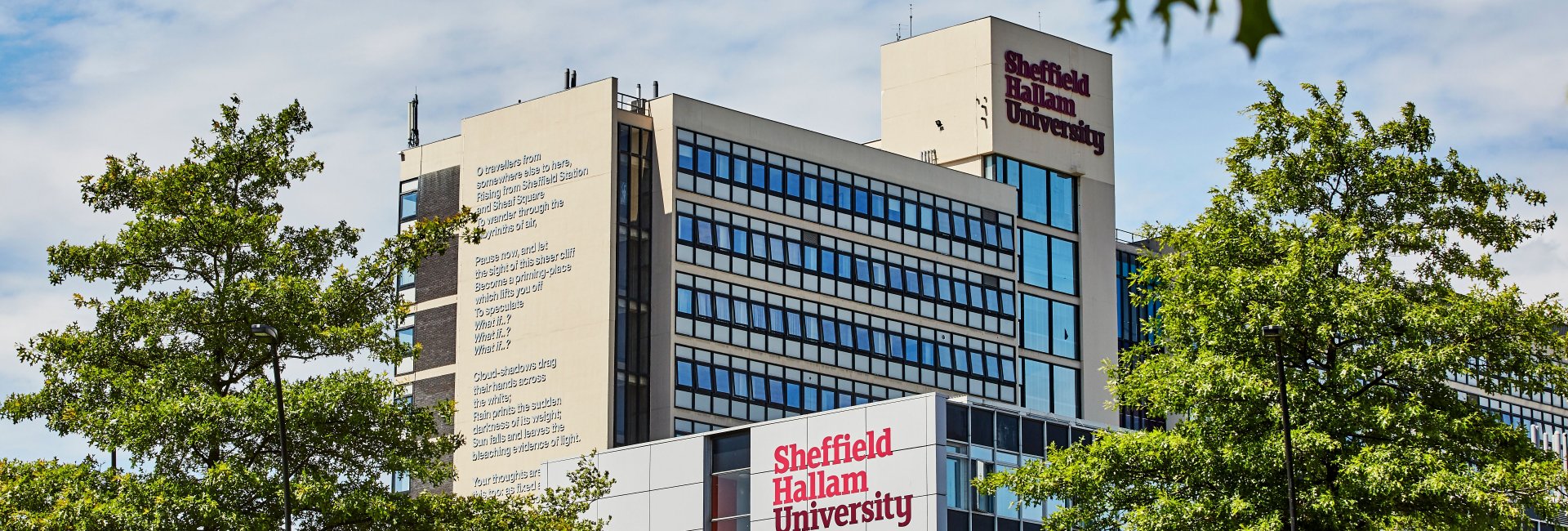
Sheffield Hallam University
City Campus
Howard Street
Sheffield
S1 1WB

Please check the Sheffield Hallam University website for the latest information.
Course summary
Develop your understanding of the role of occupation for health and wellbeing.
Explore how occupational engagement is shaped environmentally and personally.
Deliver person-centred occupational therapy inclusively and collaboratively.
Apply your learning in a range of stimulating practice-based placements.
Employ creative adaptations of everyday activities to enhance health, wellbeing and quality of life.
Aligned with professional and ethical standards, this course trains you as an occupational therapist who meets the contemporary needs of diverse populations. You’ll support people to take part in what they want, need, and are expected to do – modifying occupation and environment to maximise health and wellbeing. You’ll connect with their lived experiences, collaborating to enhance occupational performance and recommend meaningful activities.
How you learn
Our course is designed around a set of key principles, enabling you to engage with the world and collaborate with others. We’ll challenge you to think in new ways and provide you with a supportive environment in which you can thrive.
Teaching and learning is enriched by research, meaning you’ll develop research and inquiry skills over the programme. You’ll be supported to develop academically and professionally throughout the course, building your learning, assessment and practice skills.
You’ll also have opportunities to learn with other health and social care students, understanding how to work collaboratively with other professions. We’ll provide you with the knowledge, skills and values to enhance your employability so you’ll be ready for future practice.
Key Themes
The curriculum is designed to scaffold and develop your knowledge, skills and confidence as you progress through the course.
In your first year you’ll build a strong knowledge base of occupational therapy. In your second year you’ll be able to apply your learning to practice-based learning experiences while embracing more complexity and criticality. Then in your final year you’ll advance into practice and prepare to work as a colleague.
Applied learning
Live Projects
You’ll apply the theory you study to practice-based learning experiences. These will help you to develop critical and ethical approaches to your practice, preparing you to become a life-long, competent professional. These experiences are compulsory to achieve the course’s practice-based learning outcomes. They’ll help you build your skills, confidence, creativity, resilience, integrity and curiosity.
You’ll have a range of experiences linked to the Royal College of Occupational Therapists’ pillars of practice: professional practice, facilitation of learning, leadership and evidence, research and development. These will prepare you to be a confident practitioner.
Work Placements
You’ll have mandatory placements at all levels of study. They’ll take place in various practice-based learning environments, reflecting the diverse ways occupational therapy services are currently delivered. This might include blended learning experiences, real-world experiences of services delivered face-to-face to service users, and be connected to the aforementioned pillars of practice.
We’ll ensure that the practice-based learning element of your course complies with the requirements of the Professional and Statutory Regulatory Body (PSRB) governing the occupational therapy profession. By the end of your course, you’ll have the opportunity to demonstrate that you meet the requirements to register as an occupational therapist.
Important notice: The structure of this course is periodically reviewed and enhanced to provide the best possible learning experience for our students and ensure ongoing compliance with any professional, statutory and regulatory body standards. Module structure, content, delivery and assessment may change, but we expect the focus of the course and the learning outcomes to remain as described above. Following any changes, updated module information will be published on this page.
Year 1
Compulsory modules
Developing The Fundamentals Of A Healthcare Professional | Coursework (60%) , Exam (40%)
Promotion Of Contemporary Issues In Healthcare | Coursework (100%)
Year 2
Compulsory modules
Collaboration For Individual And Community Wellbeing | Practical (100%)
Foundations Of Occupational Therapy Practice | Coursework (100%)
Introduction To Occupational Therapy Practice | Coursework (100%)
Occupational Therapy Practice Based Learning 1
Personal And Professional Development | Coursework (100%)
Year 3
Compulsory modules
Assessing And Addressing Complexity In Practice | Practical (100%)
Clinical Reasoning In Occupational Therapy Practice | Coursework (100%)
Evidence And Enquiry For Practice | Coursework (100%)
Expanding Occupational Therapy Practice | Coursework (100%)
Occupational Therapy Practice Based Learning 2
Occupational Therapy Practice Based Learning 3
Final year
Compulsory modules
Complexity & Leadership In Professional Practice | Coursework (100%)
Leading Occupational Therapy Practice | Coursework (100%)
Occupational Therapy Practice Based Learning 4
The Advancing Professional | Coursework (100%)
Transition To Occupational Therapy Practice | Coursework (100%)
Coursework | Exam | Practical
This is the equal consideration deadline. You can still apply after this date, but your application may not receive guaranteed consideration.

Sheffield Hallam University has participated in the Teaching Excellence Framework. These ratings were awarded in 2023, for four years.
See why these ratings were awarded
What does this TEF outcome mean?
The following entry points are available for this course:
This must include at least 24 (Grade D) from one A level or equivalent BTEC National qualifications. For example: DDE at A Level, MPP in BTEC Extended Diploma, Pass overall from a T level qualification with D or E from core, or a combination of qualifications (which may include AS levels and EPQ).
An Access to HE Diploma from a QAA recognised Access to HE course in a science based subject. Normally we require 15 credits at level 2 and 45 at level 3.
Science at grade C or 4 or equivalent, Maths at grade D or 4 or equivalent, and English Language or Literature at grade C or 4 or equivalent. Information on equivalents is provided on the course page: https://www.shu.ac.uk/courses/occupational-therapy/bsc-honours-occupational-therapy-with-foundation-year/full-time
Find out more about qualification requirements for this course.
| Test | Grade | Additional details |
|---|---|---|
| IELTS (Academic) | 7 | If English is not your first language, you will need an IELTS score of 7.0 or above, with a minimum score of 6.5 in each skill. |
Please click the following link to find out more about English language requirements for this course https://www.shu.ac.uk/Courses/Occupational-therapy/BSc-Honours-Occupational-Therapy-with-Foundation-Year/Full-time/
When you apply to Hallam, we consider your personal circumstances as well as your grades, experience and personal statement. In some cases, we will make you a contextual offer. Contextual offers ensure that all applicants have a fair chance of getting a place, regardless of their background.
This section shows the range of grades that students who received offers were previously accepted on to this course with (learn more).
It is designed to support your research but does not guarantee whether you will or won't get a place.
Admissions teams consider various factors, including interviews, subject requirements, and entrance tests. Check all course entry requirements for eligibility.
We are unable to show previous accepted grades for this course. This could be because the course is new, it's a postgraduate course, there isn't enough historical data, or the provider has opted out of sharing their entry grades data for this course - learn more.
| Location | Fee | Year |
|---|
Tuition fee status depends on a number of criteria and varies according to where in the UK you will study. For further guidance on the criteria for home or overseas tuition fees, please refer to the UKCISA website.
Our tuition fee for UK students on full-time undergraduate degree courses in 2025/26 is £9,535 per year. These fees are regulated by the UK government and therefore subject to change in future years.
If you are studying an undergraduate course, postgraduate pre-registration course or postgraduate research course over more than one academic year then your tuition fees may increase in subsequent years in line with Government regulations or UK Research and Innovation (UKRI) published fees. More information can be found at https://www.shu.ac.uk/study-here/terms-and-conditions-and-student-regulations under student fees regulations.
Our tuition fee for International/EU students starting full-time study in 2025/26 is £18,655, which includes an annual placement supplement of £1,500.
Please refer to our website for up-to-date information on costs and fees:
https://www.shu.ac.uk/study-here/undergraduate/fees
Scholarships, discounts and bursaries may be available to students who study this course.
Phone:(+44) 0114 225 5533
City Campus
Howard Street
Sheffield
S1 1WB
At Sheffield Hallam University