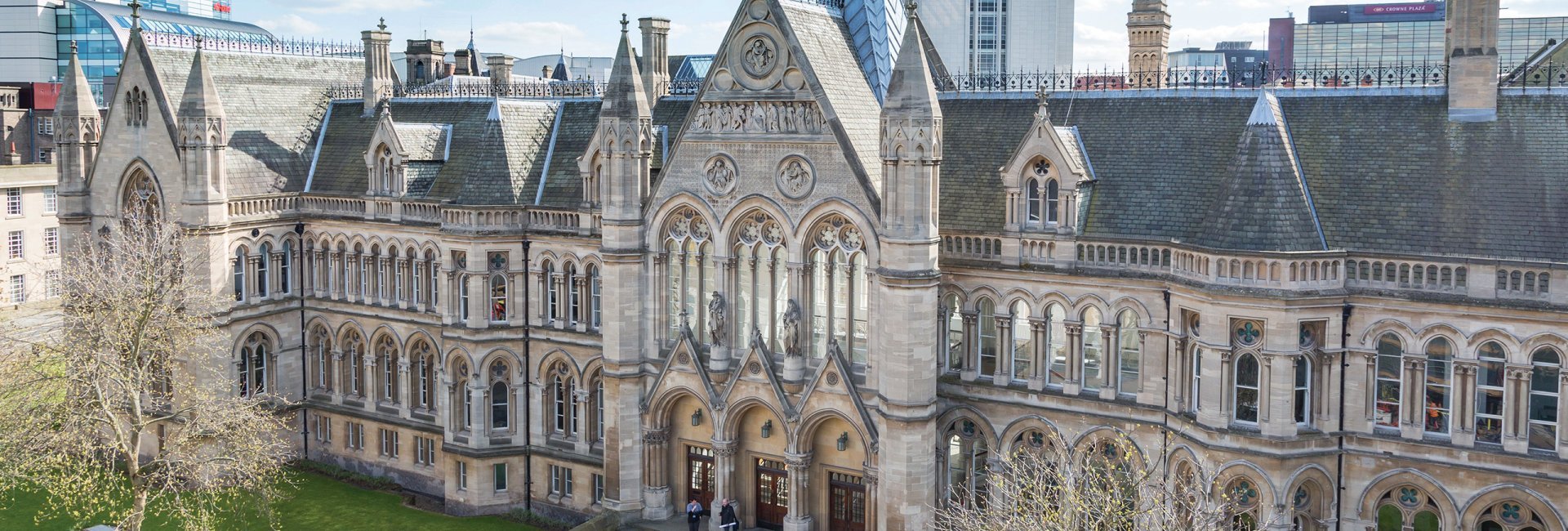
Nottingham Trent University - 25 April Open Day
25 Apr 2026, 08:00
Nottingham

Civil engineers find creative ways to solve real-world problem by developing the physical infrastructure needed for society to exist – from bridges to houses, and from roads to hospitals and train stations. This course will develop your understanding of engineering principles, together with the ability to apply them to solve real-world practical problems.
You'll develop high-quality technical abilities alongside key people management skills. Through hands-on study you'll develop an advanced mathematical understanding, which combined with theory, practical projects and work placement opportunities, will develop your skill set and professional networks. You'll gain an understanding of design, sustainability, health and safety and be ready to take on all of the challenges you'll face as a professional Civil Engineer.
Key Features
Industry-Standard Facilities | Experience hands-on learning in our specialist facilities and workshops, including dedicated concrete, materials, hydraulics, geotechnical labs and structural testing equipment.
Applied Projects | Engage with our industry network through applied briefs set by major organisations. Students have previously worked with nmcn, Severn Trent Water and Nottingham City Council on project work.
Professional Progression | Take the first step in gaining Incorporated or Chartered status – this course is accredited as fully satisfying the educational base for an Incorporated Engineer (IEng) and partially satisfying the educational base for a Chartered Engineer (CEng).*
Placement Year | Gain vital skills and experience in the workplace by undertaking a one-year placement on our sandwich route. Previously, students have spent placements at companies such as VolkerFitzpatrick, BAM Nuttall and Buckingham Group Contracting Ltd.
*A programme of accredited Further Learning, such as our MSc or MEng Civil Engineering courses will be required to complete the educational base for CEng. The JBM website provides further information and details of Further Learning programmes for CEng status.
Key Statistics
Top 2 Ranking | NTU is the 2nd most sustainable university in the world (UI GreenMetric World University Rankings 2023)
National Student Survey | 100% of BEng (Hons) Civil Engineering full-time students are positive that their course has developed their knowledge and skills needed for the future (NSS, 2024).
Outstanding Employability | NTU are ranked 1st in the UK for employability (Uni Compare 2025).
Throughout the course, modules will cover a variety of subjects, a few examples include: Civil Engineering Design Projects, Sustainable Engineering Materials, Construction Practice and the Environment, Structural Design and Detailing, Infrastructure Engineering 1, and Professional Responsibilities and Development in Civil Engineering.
To view the full list of modules, visit the course page: https://www.ntu.ac.uk/course/architecture-design-and-the-built-environment/ug/beng-hons-civil-engineering
You will be assessed through a mix of coursework, practical exercises and exams. The coursework will make up the majority of your assessment and will consist of group and individual projects, reports, presentations, and essays. You will receive feedback throughout each module.
Professionally accredited courses provide industry-wide recognition of the quality of your qualification.
This is the equal consideration deadline. You can still apply after this date, but your application may not receive guaranteed consideration.

Nottingham Trent University has participated in the Teaching Excellence Framework. These ratings were awarded in 2023, for four years.
See why these ratings were awarded
What does this TEF outcome mean?
The following entry points are available for this course:
A lower offer may be made based on a range of factors, including your background (such as where you live and the school or college you attended), your experiences and individual circumstances (you may have been in care, for example). This is called a contextual offer and we get data from UCAS to make these decisions. NTU offers a student experience like no other, and this approach helps us to find students who have the potential to succeed here, but may have faced barriers that can make it more difficult to access university.
We also consider equivalent qualifications and combinations. Please contact Nottingham Trent University Admissions team for further information.
NTU makes contextual offers for this course to give everyone a fair chance to access their chosen degree.
Contextual offers are lower than our standard entry criteria or may be an unconditional offer for courses that require a portfolio. We also take individual circumstances into account when we receive results and may accept grades lower than our published criteria.
We use a range of data from UCAS to make our offers and more information on our approach is available at the link below.
This section shows the range of grades students (with UK A-Levels or Pearson BTEC Level 3 National Extended Diplomas) who received offers were previously accepted with (learn more). It is designed to support your research but does not guarantee whether you will or won't get a place. Admissions teams consider various factors, including interviews, subject requirements, and entrance tests. Check all course entry requirements for eligibility.
We are unable to show previous accepted grades for this course. This could be because the course is new, it's a postgraduate course, there isn't enough historical data, or the provider has opted out of sharing their entry grades data for this course - learn more.
No fee information has been provided for this course
Tuition fee status depends on a number of criteria and varies according to where in the UK you will study. For further guidance on the criteria for home or overseas tuition fees, please refer to the UKCISA website.
Tuition fees for 2026 entry are yet to be confirmed. As a guide and to enable you to plan your finances, the fees for Home undergraduate students for 2025 are £9535 .The current expectation is that the University may increase this for future and subsequent years of study in line with inflation and as specified by the Government.
50 Shakespeare Street
Nottingham
NG1 4FQ
Visit our website Visit our course page
Phone:+44(0)115 848 4200
At Nottingham Trent University