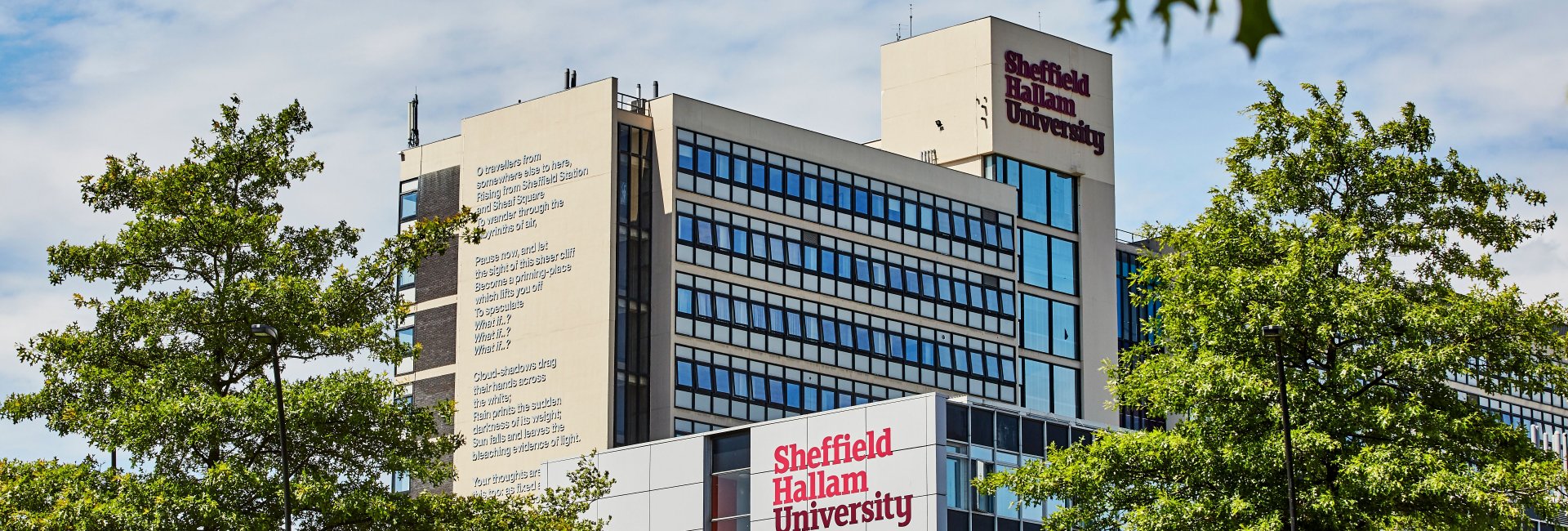
Sheffield Hallam University - applicant open day event
26 Apr 2026, 08:30
Sheffield

Please check the Sheffield Hallam University website for the latest information.
Course summary
Learn how to use software such as SAS, R and Python.
Gain the skills and knowledge to statistically model data.
Learn how to use the Bloomberg portal to access live industry data.
Develop an understanding of investment skills and risk management.
Understand portfolio management to achieve financial goals.
Our Data Analytics with Banking and Finance course shows you how to address business challenges by using analytics tools to manipulate and investigate live industry datasets. You’ll further develop your skills in areas such as investment management, finance stability, sustainability and strategy.
How you learn
All our courses are designed around a set of key principles based on the application of knowledge. You’ill engage with the Hallam community and beyond, collaborating with experts in your areas of interest, and being challenged to think in new ways – all in a supportive environment in which you can thrive.
This course focuses on developing core competencies in data management and analytics while integrating key financial principles. You’ll use industry-standard software and packages – including the Bloomberg portal – to access live industry data for further analysis. Through this dataset, you’ll be tackling real-world challenges as part of the course.
The combination of teaching methods applied across the course will allow you to develop a range of skills – from practical implementation to problem-solving activities and teamwork.
You’ll also develop your research skills so you can undertake a significant piece of work related to the discipline. You get to choose your dissertation project – which allows you to further specialise in an area you might like to pursue as a career – while being supported by a dedicated academic supervisor.
You learn through:
Lectures
Hands-on tutorial sessions and seminars
Regular feedback
Teamwork
Group/project-based learning
Critical thinking and problem-solving
Practice-based applied learning
Discussions
Self-study
Key themes
The course starts by teaching you core skills across data analytics, including your skills in programming across languages such as R and Python. Using SAS, you’ll also develop an understanding of statistical modelling – covering areas such as supervised and unsupervised machine learning, and principal component analysis (PCA). The aim is to reduce large volumes of data into more digestible insights.
You’ll then progress your understanding of investment management and financial stability, creating and critically evaluating investment opportunities and strategies. You’ll examine and manage their risks using financial derivatives – asset exchanges and contract agreements such as futures, options and swaps. This is all underpinned by exploration of regulatory financial policies and strategies for managing environmental and social risks.
You’ll practise these skills through hands-on projects, use of the Bloomberg portal for live data, and your research-led dissertation project – preparing you for diverse roles in the finance sector.
Work Experience
This course also has a work experience route that offers a placement in industry of up to 12 months. For further information, please see MSc Data Analytics with Banking and Finance (Work Experience)
Networking Opportunities
You’ll have numerous networking opportunities and ways to develop your career, from career fairs and workshops to employer presentations and visits. You’ll also be able to seek guidance from professional advisers.
The course provides a unique blend of academic and practical exposure by integrating guest lecture talks and networking opportunities within the curriculum. These offer insights into the practical application of cutting-edge technologies and best practices.
Important notice: The structure of this course is periodically reviewed and enhanced to provide the best possible learning experience for our students and ensure ongoing compliance with any professional, statutory and regulatory body standards. Module structure, content, delivery and assessment may change, but we expect the focus of the course and the learning outcomes to remain as described above. Following any changes, updated module information will be published on this page.
Final year
Compulsory modules
Computing Research Project
Data Analytics: Tools And Techniques
Financial Stability, Regulation And Sustainability
Introduction To Programming For Big Data
Investment Management And Derivatives
Research Skills For Computing
There are no specific entry requirements for this course.
Choose a specific option to see funding information.
Course optionsScholarships, discounts and bursaries may be available to students who study this course.
City Campus
Howard Street
Sheffield
S1 1WB
Phone:(+44) 0114 225 5533
At Sheffield Hallam University