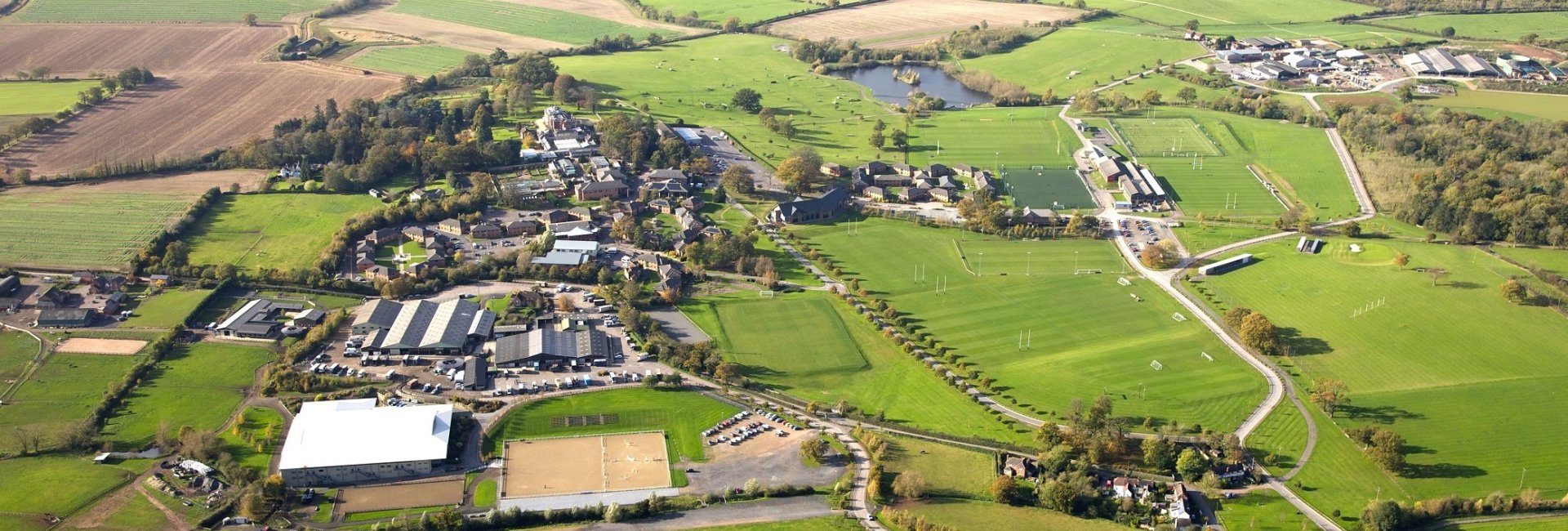
Hartpury University
Hartpury House
Hartpury
Gloucester
GL19 3BE
Course contact details
Admissions
Email:admissions@hartpury.ac.uk
Phone:01452 702333

Develop the skills and expertise to transform your passion for training animals into a fulfilling career with this Animal Behaviour and Training (Clinical) degree. Access our 70-species animal collection and benefit from our connections with animal trainers, scientists and behaviourists across the UK.
Around 57% of all UK households (16.2 million) are home to pets, numbering up to 38 million animals*. With around 12 million dogs and 11 million cats, as well as many more animals, including those held in zoological collections, skills and expertise in animal behaviour and training are in high demand.
You’ll gain an in depth understanding of the key topics in the field of animal behaviour and training. Core subjects will range from management and training of the animal, to the physiology of animal behaviour. Engagement with practical activities, industry placements and real-world case studies throughout the course will prepare you for a future career in a diverse sector - from routine training for husbandry right through to managing animals with problematic behaviours.
This course and its training are underpinned by the strictest ethics and supported by the latest scientific evidence. You’ll learn from the latest advances in the field and use industry-standard technologies.
*UK Pet Food 2023
Recognised by the Animal Behaviour and Training Council (ABTC)
This programme has been formally recognised with the Animal Behaviour & Training Council (ABTC) Programme Recognition Committee to deliver the academic elements necessary for an individual to achieve ABTC recognition as:
o Animal Trainer (AT) – during year 1
o Animal Training Instructor (ATI) – during year 2
o Animal Behaviour Technician (ABT) – during year 2
o Clinical Animal Behaviourist (CAB) – during year
An individual who has met the ABTC knowledge and understanding (academic) requirements, and who wishes to be ABTC registered will then need to undertake an assessment of the performance criteria via an ABTC Practitioner Organisation. Students will be supported with this process throughout their study.
Our modules are developed regularly to reflect student and industry demands, ensuring you’re well prepared to enter skilled employment on graduation. Most courses also include work placement learning, to help you gain essential experience for your future.
Modules include: Introduction to Animal Learning and Training, Animal Health and Disease, Professional and Academic Skills in Animal Biology, Anatomy and Physiology, Animals in Society, Professional Practice in the Animal Sector, Management and Training of the Animal, Physiology of Animal Behaviour, Understanding and Preventing Problematic Animal Behaviour, Professional Skills for Veterinary Paraprofessionals, Research Methods for Agricultural and Animal Scientists, Dissertation, Advanced Animal Training, Anthrozoology, Cognitive Ethology, Clinical Case Studies for Veterinary Paraprofessionals
Modules are sometimes subject to change.
Optional modules change each year - you can attend introductory sessions before deciding which ones to study. For more information, please visit https://www.hartpury.ac.uk/university/courses/undergraduate/bsc-hons-animal-behaviour-and-training-clinical/

Hartpury University has participated in the Teaching Excellence Framework. These ratings were awarded in 2023, for four years.
See why these ratings were awarded
What does this TEF outcome mean?
This course may be available at alternative locations, please check if other course options are available.
Course optionsThere are no specific entry requirements for this course.
This section shows the range of grades students (with UK A-Levels or Pearson BTEC Level 3 National Extended Diplomas) who received offers were previously accepted with (learn more). It is designed to support your research but does not guarantee whether you will or won't get a place. Admissions teams consider various factors, including interviews, subject requirements, and entrance tests. Check all course entry requirements for eligibility.
We are unable to show previous accepted grades for this course. This could be because the course is new, it's a postgraduate course, there isn't enough historical data, or the provider has opted out of sharing their entry grades data for this course - learn more.
Choose a specific option to see funding information.
Course optionsStudying a degree is a worthwhile investment, providing opportunities and experiences to help you to carve out a rewarding and successful future. We know that accessing funding, in the form of loans, grants, bursaries and scholarships, can make studying a degree possible for many students. Alongside government loans, Hartpury University and our partners offer a range of financial support packages to eligible students applying for our courses. Please visit our student finance page for more information on what’s on offer to help you with your study costs: http://www.hartpury.ac.uk/university/facilities/life-at-hartpury/finance/
Hartpury House
Hartpury
Gloucester
GL19 3BE
Email:admissions@hartpury.ac.uk
Phone:01452 702333
At Hartpury University