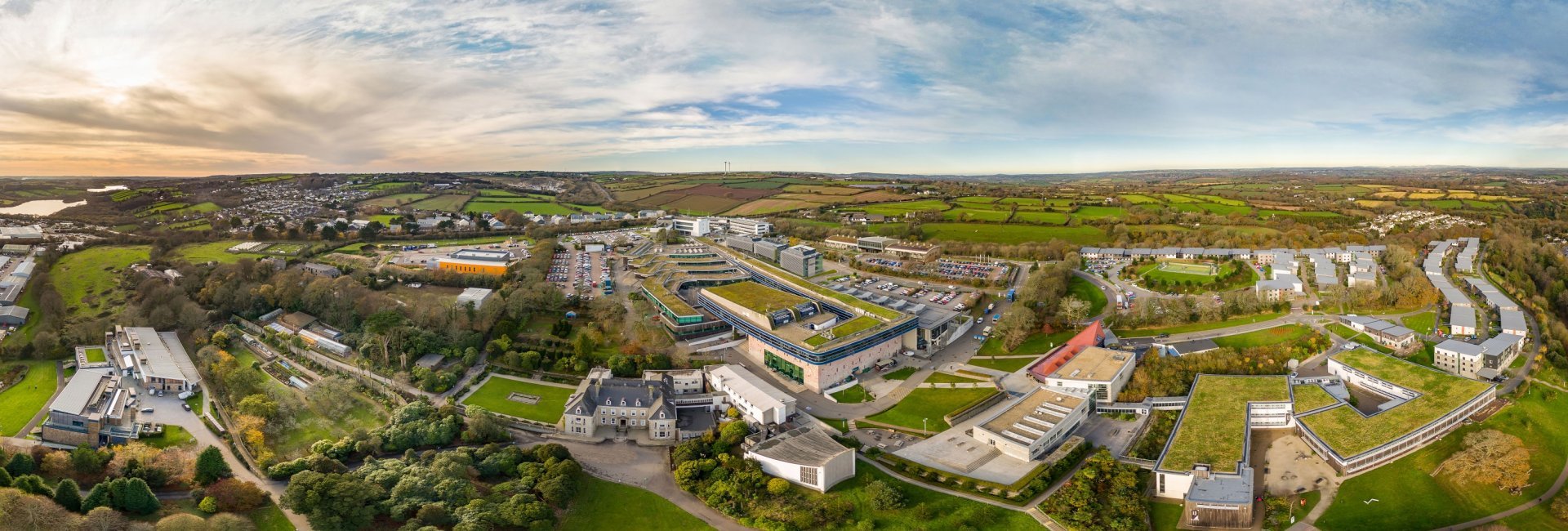
Falmouth University
Woodlane
Falmouth
TR11 4RH
Visit our website Visit our course page
Course contact details
Admissions
Email:applicantservices@falmouth.ac.uk
Phone:01326 213730

Shape future tourism on this innovative, sustainability-led course.
Shape the tourism landscape of tomorrow on this innovative, sustainability-led course, designed in partnership with the visionary and pioneering Eden Project – a top UK visitor attraction. This tourism management degree offers a unique approach with sustainability at its core, offering you the opportunity to learn about the industry’s environmental, social and economic impacts. You’ll be encouraged to manage tourism in a more responsible manner and contribute to a more sustainable future.
Through real-world projects, you’ll learn how to balance the needs of a business with the needs of sustainable practice; minimising the sector’s impact on delicate environmental and social ecosystems while also developing successful commercial and communication strategies.
You will:
Develop a sustainable approach to management in the globally expanding tourism industry
Join a university that’s recognised by the Institute of Travel and Tourism
Explore the moral and political pressures of tourism and how to manage them sustainably
Have the chance to work on a consultancy project at an international tourism destination, with a dedicated budget for travel and accommodation funded as part of the course
Spend time working on live briefs at the Eden Project, a leading UK venue and host of the Eden Sessions
Develop your ability to affect positive change that benefits tourism organisations, tourists, host communities, the environment and society
Study on a course that’s accredited by A Greener Future, Attitude is Everything, and the Tourism Management Institute
This Sustainable Tourism Management course is accredited by A Greener Future, Attitude is Everything, and the Tourism Management Institute.
You’ll explore the future of sustainable tourism management with a focus on understanding and managing tourism impacts, learning to design quality tourism experiences which are sustainable, accessible and inclusive.
You’ll study a range of topics in destination management, crisis management, wellbeing, destination storytelling and marketing and communication.
Through taking part in a number of live projects, you’ll develop project management and leadership skills that are essential for the fast-moving and ever-changing contemporary tourism industry.
Year one:
During the first year of your degree, you’ll develop a knowledge of the nature, scope and scale of the tourism industry as well as the sustainability challenges the sector faces. You’ll explore the different experiences of tourists and understand the importance of wellbeing within the context of experience management. You’ll also gain key skills in marketing and communications.
Modules:
The Visitor Economy
The Tourist Experience
Niche Tourism
Wellbeing
Exploring Sustainability
Promotional Communications
Year two:
You’ll gain more specialist, operational knowledge of sustainable tourism management and apply developed techniques to your practice. Working both individually and collaboratively with your peers, you’ll develop an innovate tourism product, building skills in problem solving, personal responsibility and decision-making.
Modules:
Tourism Product Innovation
Project Management
Research Methods
Tourism Operations
Financial Management
Collaborative Working
Year three:
In your final year, you’ll develop an in-depth understanding of leadership and crisis management. You’ll gain practical skills by taking part in a residential experience and explore destination storytelling in detail before developing your own sustainable destination strategy. You will continue to develop as a reflective, independent practitioner and further enhance your ability to communicate in a confident and persuasive style.
Modules:
Crisis Management
Storytelling and Destination Image
Professional Development
Strategic Destination Management
Futures Research
Leadership
As part of our process of continuous improvement, we routinely review course content to ensure that all our students benefit from a high-quality and rewarding academic experience. As such, there may be some changes made to your course which are not immediately reflected in the content displayed on our website. Any students affected will be informed of any changes made directly.
100% of your assessment will be coursework.
Assessment methods:
Practical assessments include crisis management simulation, digital and in-person presentations, and the development of your own tourism destination strategy
Coursework assignments that reflect real world outputs, including a portfolio of promotional communications, a grant funding bid and project initiation document (PID)
Continuous assessment through visual, verbal and written assignments
This is the equal consideration deadline. You can still apply after this date, but your application may not receive guaranteed consideration.

Falmouth University has participated in the Teaching Excellence Framework. These ratings were awarded in 2023, for four years.
See why these ratings were awarded
What does this TEF outcome mean?
The following entry points are available for this course:
If English is not your first language, you will need to demonstrate English language skills that are sufficiently developed for successful completion of your studies. We accept a range of recognised English language qualifications that are equivalent to the International English Language Testing System (IELTS) Academic minimum score of 6.0 overall, with a minimum of 5.5 in Reading, Writing, Speaking and Listening. Through the award of international scholarships, we aim to support academic enrichment by encouraging diversity and excellence at Falmouth. For details of our international scholarships, and how to apply for them, please visit our website at www.falmouth.ac.uk.
If you are able to demonstrate relevant, current, equivalent experience instead of formal qualifications, we encourage you to apply. Please contact our Applicant Services team before applying, for advice regarding your individual experience and eligibility.
If you are an international applicant and require a Student visa to study in the UK, you must have a recognised English language test approved and vouched for by the University at the appropriate level. Our Applicant Services team can help you with any general questions you may have about study visas or suitable language tests. For more specific advice, we recommend you also consult UKCISA http://www.ukcisa.org.uk/
This section shows the range of grades students (with UK A-Levels or Pearson BTEC Level 3 National Extended Diplomas) who received offers were previously accepted with (learn more). It is designed to support your research but does not guarantee whether you will or won't get a place. Admissions teams consider various factors, including interviews, subject requirements, and entrance tests. Check all course entry requirements for eligibility.
We are unable to show previous accepted grades for this course. This could be because the course is new, it's a postgraduate course, there isn't enough historical data, or the provider has opted out of sharing their entry grades data for this course - learn more.
No fee information has been provided for this course
Tuition fee status depends on a number of criteria and varies according to where in the UK you will study. For further guidance on the criteria for home or overseas tuition fees, please refer to the UKCISA website.
No additional fees or cost information has been supplied for this course, please contact the provider directly.
Woodlane
Falmouth
TR11 4RH
Visit our website Visit our course page
Email:applicantservices@falmouth.ac.uk
Phone:01326 213730
At Falmouth University