Course contact details
Admissions Service
Email:admissions@uea.ac.uk
Phone:01603 591515
University of East Anglia UEA
Norwich Research Park
Norwich
NR4 7TJ

Overview
This is an exciting opportunity for you to study BSc Ecology and Conservation with a Foundation Year UEA, even if you don’t have the standard entry qualifications for these courses or feel you need a more supported start to your university life.
You’ll begin with a foundation year studying a range of core subjects on the science of life on Earth. About 60% of this year will be spent studying biology modules, which will take you from the very small, cellular level through to aspects of whole organisms, ecosystems and how the interactions between the two are key to living healthily and sustainably. The remaining 40% of your foundation year will be comprised of training in research skills, mathematics and environmental sciences, the exact combination of which will be based on your previous studies and your intended future course. Once you’ve successfully completed your foundation year, you’ll progress on to one of the Ecology and Conservation degrees within the School of Biological Sciences.
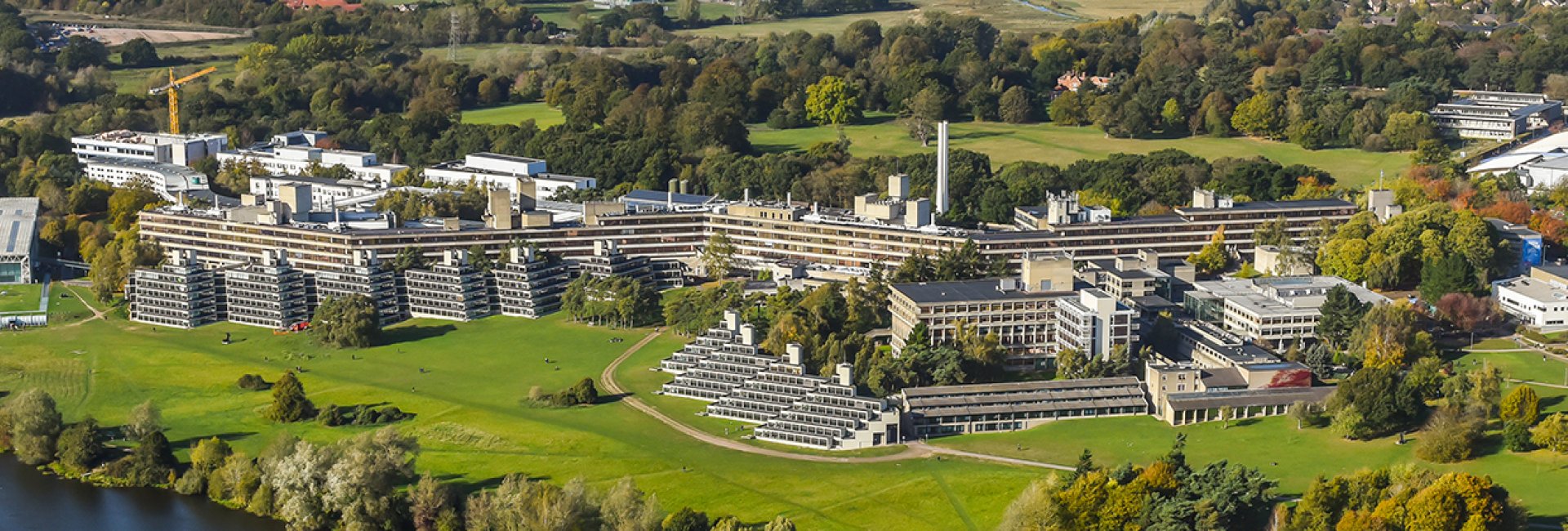
You’ll be taught by world-class academics in the School of Biological Sciences and Environmental Sciences, which is proud to be one of the most developed schools of our kind in Europe. You’ll have access to some of the best facilities in the country, including our new £34 million undergraduate STEM teaching laboratories. You’ll also benefit from our enviable position within the Norfolk Broads National Park, an area of outstanding natural beauty that plays a key role in ecological conservation efforts. In addition, we’re an integral partner of the Norwich Research Park, which is also home to world-renowned research institutes such as the John Innes Centre (for plant sciences and microbiology), the Sainsbury Laboratory (for plant disease and resistance) , the Earlham Institute (a genomics centre), and the new £75-million Quadram Institute (a food and health research centre).
You’ll benefit from our collective expertise which will help you to foster a deep understanding of ecology and conservation in the context of field work and laboratory investigation for improved monitoring, amelioration and safe-guarding of organisms and their environments.
Disclaimer
Course details are subject to change. You should always confirm the details on the provider's website: www.uea.ac.uk
This is the equal consideration deadline. You can still apply after this date, but your application may not receive guaranteed consideration.

University of East Anglia UEA has participated in the Teaching Excellence Framework. These ratings were awarded in 2023, for four years.
See why these ratings were awarded
What does this TEF outcome mean?
The following entry points are available for this course:
Discover what it's like to study Ecology and Conservation with a Foundation Year at University of East Anglia UEA: insights on the course, making friends, personal statement tips, uni prep, and recommended books, podcasts, and videos.

Contextual Offer: CDD
Where applicable Science A levels awarded by an English Exam board require a pass in the practical element.
Critical Thinking and General Studies are not accepted.
Contextual Offer: MMP
Principal subjects and A-level combinations are considered - please contact us.
GCSE Requirements: GCSE English Language Grade C or 4 and GCSE Mathematics Grade C or 4
UEA are committed to ensuring that Higher Education is accessible to all, regardless of their background or experiences. One of the ways we do this is through our contextual admissions schemes – please see our website www.uea.ac.uk/apply/undergraduate/contextual-admissions for further information.
We welcome a wider range of qualifications - for further information please visit our website www.uea.ac.uk.
| Test | Grade | Additional details |
|---|---|---|
| IELTS (Academic) | 6.5 | IELTS: 6.5 overall (minimum 5.5 in all components) |
English Language Equivalencies https://www.uea.ac.uk/apply/our-admissions-policy/english-language-equivalencies
This course may make contextual offers. This means that we use additional information to understand and recognise your potential to succeed at UEA. Using this insight, we could provide you with an offer with reduced entry requirements to study at UEA. You don’t need to do anything to be considered – if eligible we will process your contextual offer automatically, based on the data we hold in your application. We do not make contextual offers during clearing. Check our website for eligibility.
This section shows the range of grades that students who received offers were previously accepted on to this course with (learn more).
It is designed to support your research but does not guarantee whether you will or won't get a place.
Admissions teams consider various factors, including interviews, subject requirements, and entrance tests. Check all course entry requirements for eligibility.
We are unable to show previous accepted grades for this course. This could be because the course is new, it's a postgraduate course, there isn't enough historical data, or the provider has opted out of sharing their entry grades data for this course - learn more.
| Location | Fee | Year |
|---|
* This is a provisional fee and subject to change.
Tuition fee status depends on a number of criteria and varies according to where in the UK you will study. For further guidance on the criteria for home or overseas tuition fees, please refer to the UKCISA website.
Tuition fees are reviewed annually and subject to increase. Some fees are regulated by the UK government and will be changed in line with advice from them. Fees for continuing students (i.e. those on courses of greater than one year in length) will normally increase annually. This increase will not exceed 4% or the % increase of the UK Government regulated fee whichever is higher. The fee increase is based on the fee for the year that you register. For further information about additional costs for your course and information on fee status please see our website.
Email:admissions@uea.ac.uk
Phone:01603 591515
Norwich Research Park
Norwich
NR4 7TJ
At University of East Anglia UEA