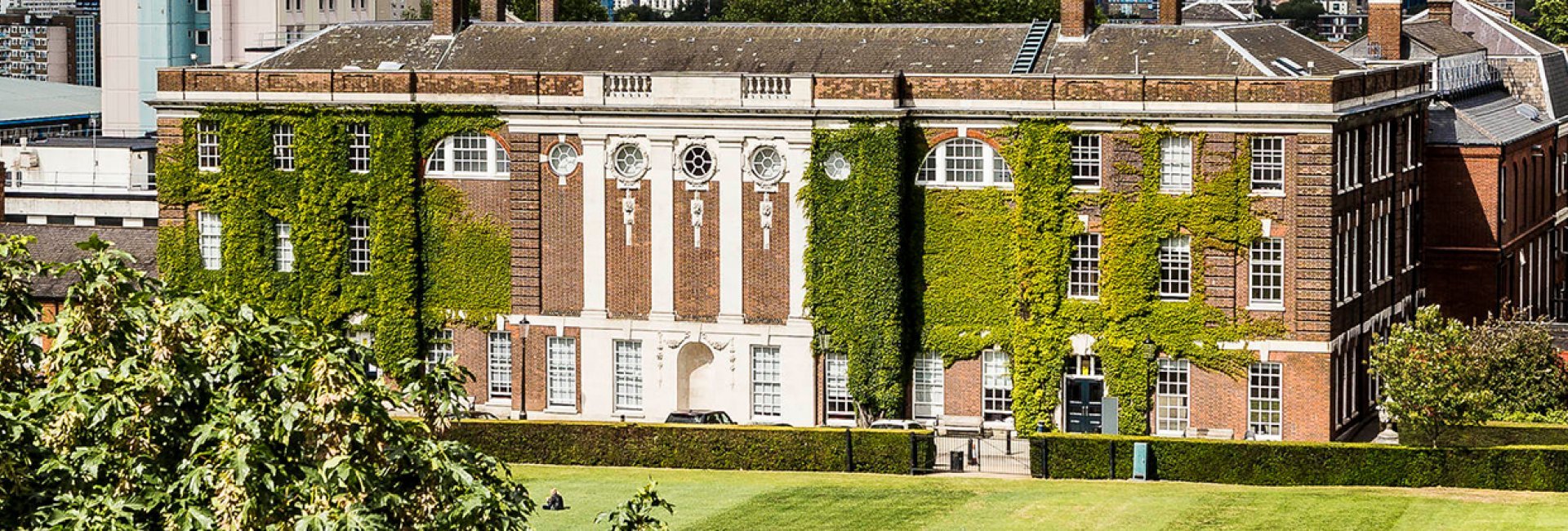
Goldsmiths, University of London - Virtual Campus Tour
25 Nov 2025, 12:00
London

Why study the BA Promotional Media: PR, Advertising and Branding (with Integrated Foundation Year) at Goldsmiths
This programme will give you a theoretical and practical insight into today's media landscape, driven by the growing industries of advertising, branding, and PR.
This is a four-year degree. If you successfully achieve the progression requirements of the Foundation Year, you can continue onto one of our full-time three-year undergraduate degrees in Media & Communications, Journalism or Promotional Media.
There are no formal entry requirements for this programme, you just need to demonstrate a lively interest in the world of the media – so it's an ideal choice if you're returning to education or don't have the qualifications to apply directly to the BA Promotional Media: PR, Advertising and Branding .
During the foundation year:
You'll develop an understanding of media theory and media practice, and the confidence, skills and creative foundation to thrive at undergraduate level.
You'll be introduced to a broad spectrum of critical perspectives on the media and a range of contemporary media practices.
You'll develop your skills in creative approaches to media and communications.
The programme includes a study skills module, where you'll get to develop your academic writing and research skills.
You'll be taught by highly experienced tutors and technicians in studio settings, using the same industry-standard facilities as the undergraduate degrees.
On successful completion of the foundation year, you'll progress onto Year 1 of the degree
Rated third in the UK by the QS World University Rankings by Subject (2024), you'll study in one of the top media, communications and cultural studies departments in the world.
You’ll explore the relationship between new technology, consumer culture and promotional practices in a changing media landscape.
You’ll discover how different media such as art and video relate to promotional media, and examine the development of promotional media in both historical and contemporary contexts.
This degree is interdisciplinary, and you'll evaluate the impact of promotional activity culturally, sociologically economically and politically.
Thanks to our strong links with industry, you'll have the opportunity to complete a work placement and develop skills to help with your future career.
You’ll balance theoretical learning with practical skills through the production of creative work.
You’ll learn in small groups from industry experts in media, communications, brand, advertising and more. Our series of talks and debates from world-renowned guest lectures will enrich your academic experience.
You’ll benefit from studying in one of the world’s greatest centres for media – London – and have the chance to visit media organisations to further your knowledge.
Inclusivity and engagement are guiding principles within the Department and we aim to take our students' lived experience into account. We’ve strived to decolonise our teaching both intellectually and culturally.
Year 0 (Foundation Year)
You will study the following modules:
Media Theory
Photography
TV & Video
Radio
Writing for the Media
Year 1
You will produce a written portfolio, design your own website and become versed in promotional media and marketing theory.
Compulsory modules
You'll complete the following compulsory modules:
Introduction to Promotional Media: Histories, Contexts, Theories
Introduction to Marketing
Writing For The Media
Media Arts
Culture and Cultural Studies
Web Design
Year 2
You’ll work to live promotional briefs, and develop visual storytelling through moving images and photography.
Compulsory modules
You'll complete the following compulsory modules:
The Promotional Industries: Convergence and The Digital
Visual Storytelling
Understanding Advertising
Creative Collaborations
Option modules
You'll also complete 2 option modules from a list provided annually by the department. Option modules may include the following:
The Goldsmiths Elective
The Goldsmiths Project
Future of Media Work
Television and After
Media, Memory and Conflict
The Neoliberal Self and Society
Moving Image Spectatorship
Psychology, Subjectivity and Power
Media, Modernity and Social Thought
Journalism and Society
Year 3
In your final year, you’ll undertake work experience and develop your own promotional campaign.
Compulsory modules
You'll complete the following compulsory modules:
Visualising and Analysing Data
Work Placement
Final Project
Option modules
You'll also complete 2-4 option modules from a list provided annually by the department. Option modules may include the following:
Structure of Contemporary Political Communications
Race, Empire and Nation
Music as Communication and Creative Practice
Contemporary Feminist Media Cultures
Digital Audiovisual Media: New Aesthetics and Practices
Theorising Celebrity
Political Economy of the Media
Embodiment and Experience
Promotional Culture
Politics of the Audiovisual
Social Media in Everyday Life: A global perspective
Mediating Violence: Feminist, Queer, Decolonial Perspectives
Virtual and immersive media experience
Race and Technology
Photo-journalism
Arts and Fashion Journalism
Tutored Personal Research
Please note that due to staff research commitments not all of these modules may be available every year.
The pass mark for this Foundation Year is 50%. However, students must achieve 60% in all sections of the programme to proceed onto the BA Promotional Media, PR, Advertising and Branding. Students achieving between 50%-60% will be awarded the Goldsmiths Foundation Certificate in Media and Communications.
You’ll be assessed by a variety of methods, depending on your module choices. These may include coursework assignments such as extended essays, reports, presentations, practice-based projects or essays/logs, group projects and reflective essays, as well as seen and unseen written examinations.
This is the equal consideration deadline. You can still apply after this date, but your application may not receive guaranteed consideration.

Goldsmiths, University of London has participated in the Teaching Excellence Framework. These ratings were awarded in 2023, for four years.
See why these ratings were awarded
What does this TEF outcome mean?
The following entry points are available for this course:
There are no formal entry requirements for this programme, but you should demonstrate an interest in and aptitude for the subject in your personal statement.
| Test | Grade | Additional details |
|---|---|---|
| IELTS (Academic) | 6 | With a 6.0 in writing and no element lower than 5.5 |
English Language Requirements https://www.gold.ac.uk/apply/english-language-requirements/
We pay careful attention to your personal statement which is your opportunity to demonstrate your interest in your desired subject. Referees are also welcome to include any relevant contextual comments around your academic achievements. We consider all these things when making a decision as well as your qualifications and grades. If you are unsure about applying, we would be happy to advise you.
This section shows the range of grades students (with UK A-Levels or Pearson BTEC Level 3 National Extended Diplomas) who received offers were previously accepted with (learn more). It is designed to support your research but does not guarantee whether you will or won't get a place. Admissions teams consider various factors, including interviews, subject requirements, and entrance tests. Check all course entry requirements for eligibility.
We are unable to show previous accepted grades for this course. This could be because the course is new, it's a postgraduate course, there isn't enough historical data, or the provider has opted out of sharing their entry grades data for this course - learn more.
No fee information has been provided for this course
Tuition fee status depends on a number of criteria and varies according to where in the UK you will study. For further guidance on the criteria for home or overseas tuition fees, please refer to the UKCISA website.
To find out more about fees and funding, please check our undergraduate fees guidance or contact the Fees Office https://www.gold.ac.uk/ug/fees-funding/
New Cross
Lewisham
SE14 6NW
Visit our website Visit our course page
Email:course-info@gold.ac.uk
Phone:020 7078 5300
Email:cshub@gold.ac.uk
Phone:020 8228 5550
At Goldsmiths, University of London