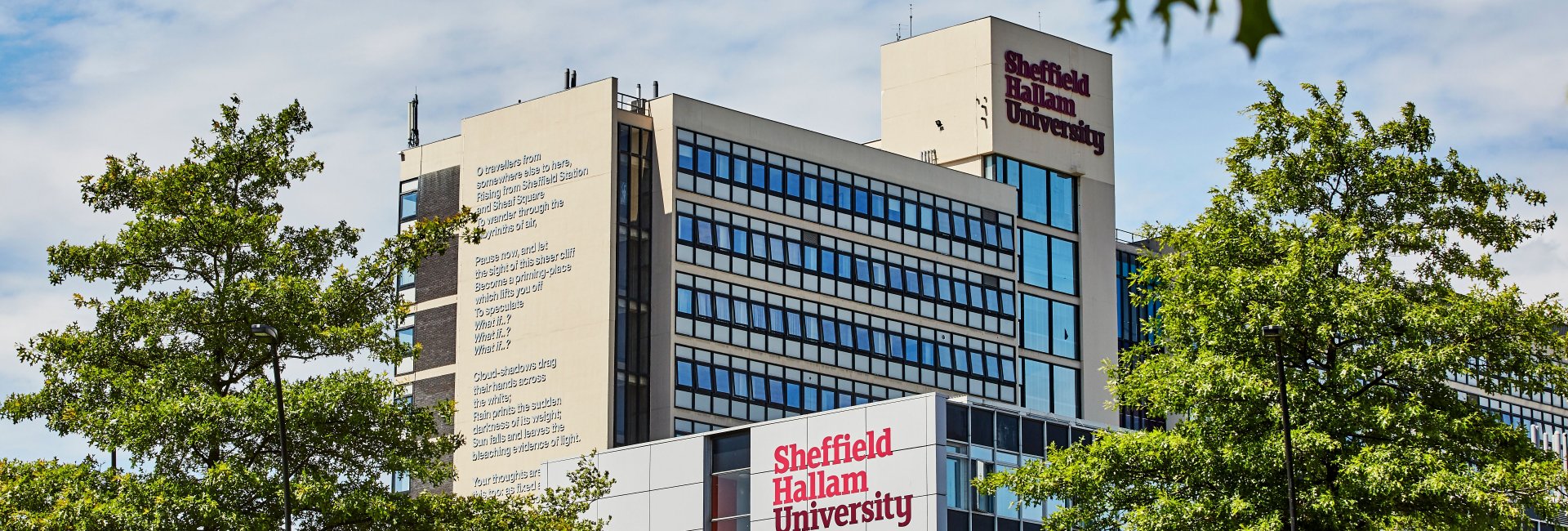
Sheffield Hallam University - applicant open day event
26 Apr 2026, 08:30
Sheffield

Please check the Sheffield Hallam University website for the latest information.
Course Summary
Study life at cellular, molecular and chemical levels.
Combine biological and chemical modules, ranging from Cellular and Molecular Biochemistry to Medical Chemistry and Drug Synthesis.
Tailor your degree structure to your interests and career ambitions.
Learn how the latest scientific innovations are being used to have a positive impact on the world.
Work with our expert staff to complete your own cutting-edge research projects in our award-winning labs using industry standard equipment.
Take an optional placement year, enabling you to gather priceless hands-on experience in an industrial setting.
Our BSc Biochemistry course provides a theoretical and practical knowledge of biochemistry. As well as the option to take a year-long placement, you can adapt the degree to your career ambitions – choosing a biological or chemical focus. You can also transfer to the MSci route for a specialist year of research-intensive study.
If you don't meet the entry requirements for this course, or you’d like extra preparation before starting degree-level study, we recommend you join the foundation year.
How you learn
All our courses are designed around a set of key principles based on engaging you with the world, collaborating with others, challenging you to think in new ways, and providing you with a supportive environment in which you can thrive.
You’ll be taught by active researchers and scientific experts with a history of working in the pharmaceutical industry. We encourage a hands-on approach, with your learning linked to departmental research themes to make sure you’re learning at the forefront of science.
You’ll also have opportunities to undertake research projects at the end of each year, culminating in a final year 6-week project. This could be a lab-based biochemical or chemistry project, or focus on bioinformatics, big data, computational modelling, systematic reviews, educational development or scientific communication.
You learn through:
In-person seminars and lectures
Independent study
Tutorials and academic adviser sessions
Practical lab experiences with industry-standard equipment
Placements and research opportunities
Real life research projects
The latest scientific software and data analysis tools
Problem solving and group activities
Key themes
In your first year, you’ll learn fundamental life sciences before moving onto applied modules such as biochemistry and genetics, using the latest technologies including PCR, genome sequencing, and bioinformatics software. You’ll be trained in organic and physical chemistry and analytical techniques.
In your second year, you’ll study molecular and cellular biochemistry – training in the latest analytical and bioanalytical technologies and undertaking a laboratory project. You’ll get to choose a more chemical or biological focus too.
In your third year, you’ll study applied biochemistry and advanced analytical techniques, with elective choices such as advanced therapeutics and personalised medicine, medical chemistry and drug discovery, neuroscience and neurophysiology, and genetics. You’ll also work with staff to complete an independent research project.
Course support
Throughout your learning journey, you’ll experience a range of dedicated support, such as:
Access to specialist support services to help with your personal, academic and career development.
Access to our Skills Centre with one to ones, webinars and online resources to help you to plan and structure your assignments.
Work placements
You’ll have the opportunity to complete a year-long placement between your second and third year. This gives you valuable work experience to prepare you for your future career and allows you to graduate with an Applied Professional Diploma to add to your CV.
Module and assessment information for future years is displayed as currently validated and may be liable to change. When selecting electives, your choices will be subject to the core requirements of the course. As a result, selections may be limited to a choice between one of two or more specified electives in some instances.
You will be able to complete a placement year as part of this course. See the modules table below for further information.
**Year 1 **
**Compulsory modules **
Concepts In Biology And Chemistry
Developing Skills For Science
Foundation Skills For Science
Foundations Of Biology And Chemistry
**Year 2 **
**Compulsory modules **
Biochemistry And Genetics
Demonstrating Professional Skills For Scientists
Fundamentals Of Life Sciences
Introducing Professional Skills For Scientists
Principles Of Chemical Analysis
Year 3
Compulsory modules
Applications Of Analytical Science
Applying Professional Skills For Scientists
Developing Professional Skills For Scientists
Molecular And Cellular Biochemistry
**Elective modules **
Immunology And Microbiology
Organic And Biosynthetic Chemistry
**Year 4 **
**Compulsory modules **
Placement Year For Biosciences And Chemistry
Final year
**Compulsory modules **
Advanced Analytical Science
Advanced Professional Skills For Scientists
Applied Biochemistry
Research Project
**Elective modules **
Advanced Chemical Synthesis
Advanced Genetics
Advanced Therapeutics And Personalised Medicine
Applications Of Data Science
Medicinal Chemistry And Drug Discovery
Neurobiology And Neurophysiology
Pharmacology

Sheffield Hallam University has participated in the Teaching Excellence Framework. These ratings were awarded in 2023, for four years.
See why these ratings were awarded
What does this TEF outcome mean?
This course may be available at alternative locations, please check if other course options are available.
Course optionsThere are no specific entry requirements for this course.
This section shows the range of grades students (with UK A-Levels or Pearson BTEC Level 3 National Extended Diplomas) who received offers were previously accepted with (learn more). It is designed to support your research but does not guarantee whether you will or won't get a place. Admissions teams consider various factors, including interviews, subject requirements, and entrance tests. Check all course entry requirements for eligibility.
We are unable to show previous accepted grades for this course. This could be because the course is new, it's a postgraduate course, there isn't enough historical data, or the provider has opted out of sharing their entry grades data for this course - learn more.
Choose a specific option to see funding information.
Course optionsScholarships, discounts and bursaries may be available to students who study this course.
City Campus
Howard Street
Sheffield
S1 1WB
Phone:(+44) 0114 225 5533
At Sheffield Hallam University