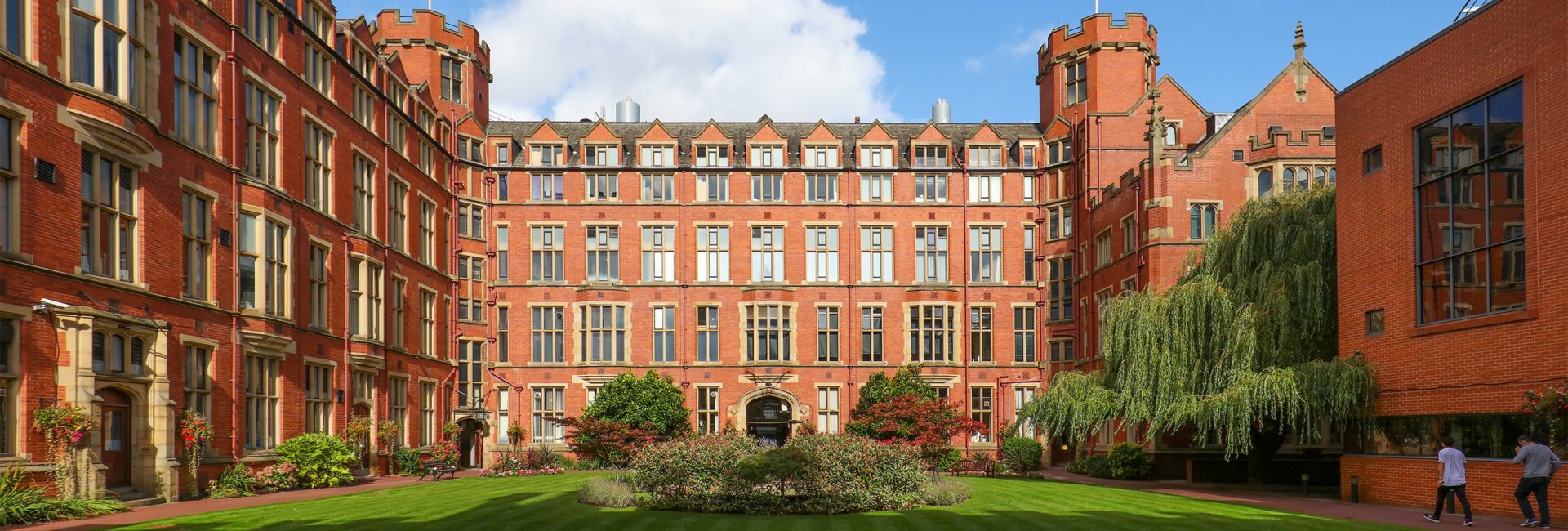
University of Sheffield
Western Bank
Sheffield
S10 2TN
Visit our website Visit our course page
Course contact details
Main Contact
Phone:0114 222 8030

This course is about the design and operation of processes for making products such as fuels, medicines, plastics, food and materials for high technology industries. You'll also learn about the production and use of energy. Years one to three are the same as for the BEng (H810). Year four allows further specialisation and study with the emphasis on an individual research project which may be carried out in association with industry.
Sustainable manufacturing, clean energy, and innovative healthcare are just a few of the pressing challenges that need the creativity and expertise of chemical engineers.
At Sheffield, we’ll equip you with the skills to tackle global challenges and make a real impact in industries shaping the future. Chemical engineering plays a key role in essential sectors such as energy, food production, and pharmaceuticals.
A Chemical Engineering MEng from Sheffield opens the door to a diverse and rewarding career in industries that shape our world.
We emphasise learning through practical experience, incorporating lab work, projects, and open-ended problem-solving into the course. Our state-of-the-art pilot plant allows you to apply your knowledge by experimenting with large-scale process equipment, providing hands-on experience with industry-standard tools. This practical approach is integrated throughout the course, ensuring you develop real-world skills from day one.
Alongside a diverse range of core and optional modules, you’ll have the opportunity to choose a specialism in energy, pharmaceutical, or biological engineering. In your third year, you’ll take part in a process design project, applying your skills to design an entire real-world process from start to finish.
By your fourth year, you’ll take on an independent research project, diving into cutting-edge research in a field of your choice.
Chemical engineering is rapidly evolving, and we’ll make sure you’re ahead of the curve. You’ll gain essential skills for an increasingly digital manufacturing world, including advanced computer modelling techniques. These skills are critical for future-proofing your career in a tech-driven, sustainable economy.
*We are accredited by the Institution of Chemical Engineers on behalf of the Engineering Council for the purposes of fully meeting the academic requirement for registration as a Chartered Engineer.
Why study this course?
Tailor your course to your interests: In your third year, you’ll have a choice of modules and in your fourth year, you’ll be able to specialise in what interests you most and complete an independent research project, helping you stand out to future employers as an expert in your field.
Prepare for a sustainable future: Sustainability is at the core of our course, equipping you to address global challenges such as climate change and resource management. Learn how chemical engineers lead the transition to green energy, reduce emissions, and create sustainable processes.
World-class facilities, practical training: Gain invaluable experience using industrial-scale equipment in energy, pharmaceutical, and biological engineering. The Diamond Pilot Plant, featuring the UK's first university powder processing line, mirrors the systems and processes used in industry, ensuring you graduate with real-world skills that employers value.
Pursue your dream career: Our course is designed with your future in mind, with employability embedded at every stage. Our dedicated chemical engineering employability team hosts an annual careers and employability conference, featuring guest speakers from leading companies such as Nestlé, Pepsico, GTC, and Reckitt.
Learn from experts in the field: You’ll be taught by academics who are at the forefront of their fields, contributing to cutting-edge research that shapes the future of chemical engineering. From energy systems to advanced materials, you’ll benefit from their expertise and industry connections.
This is the equal consideration deadline. You can still apply after this date, but your application may not receive guaranteed consideration.

University of Sheffield has participated in the Teaching Excellence Framework. These ratings were awarded in 2023, for four years.
See why these ratings were awarded
What does this TEF outcome mean?
The following entry points are available for this course:
To find out if you're eligible for additional consideration or an alternative offer, visit: ww.sheffield.ac.uk/undergraduate/apply/access-sheffield
Find out more about qualification requirements for this course.
English language requirements for undergraduates https://www.sheffield.ac.uk/undergraduate/apply/english-language
The entry grades data only represents a proportion of our cohort. We accept a broad range of qualifications on our degrees and we're committed to ensuring all students with the potential to succeed at Sheffield are informed and feel encouraged to apply. If you meet one or more of our Access Sheffield criteria, we may be able to give your application additional consideration when we receive it and when exam results are released.
This section shows the range of grades students (with UK A-Levels or Pearson BTEC Level 3 National Extended Diplomas) who received offers were previously accepted with (learn more). It is designed to support your research but does not guarantee whether you will or won't get a place. Admissions teams consider various factors, including interviews, subject requirements, and entrance tests. Check all course entry requirements for eligibility.
We are unable to show previous accepted grades for this course. This could be because the course is new, it's a postgraduate course, there isn't enough historical data, or the provider has opted out of sharing their entry grades data for this course - learn more.
No fee information has been provided for this course
Tuition fee status depends on a number of criteria and varies according to where in the UK you will study. For further guidance on the criteria for home or overseas tuition fees, please refer to the UKCISA website.
Tuition fees for 2026 entry have not been confirmed. Please use 2025-26 information as a guide.
Western Bank
Sheffield
S10 2TN
Visit our website Visit our course page
Phone:0114 222 8030
At University of Sheffield