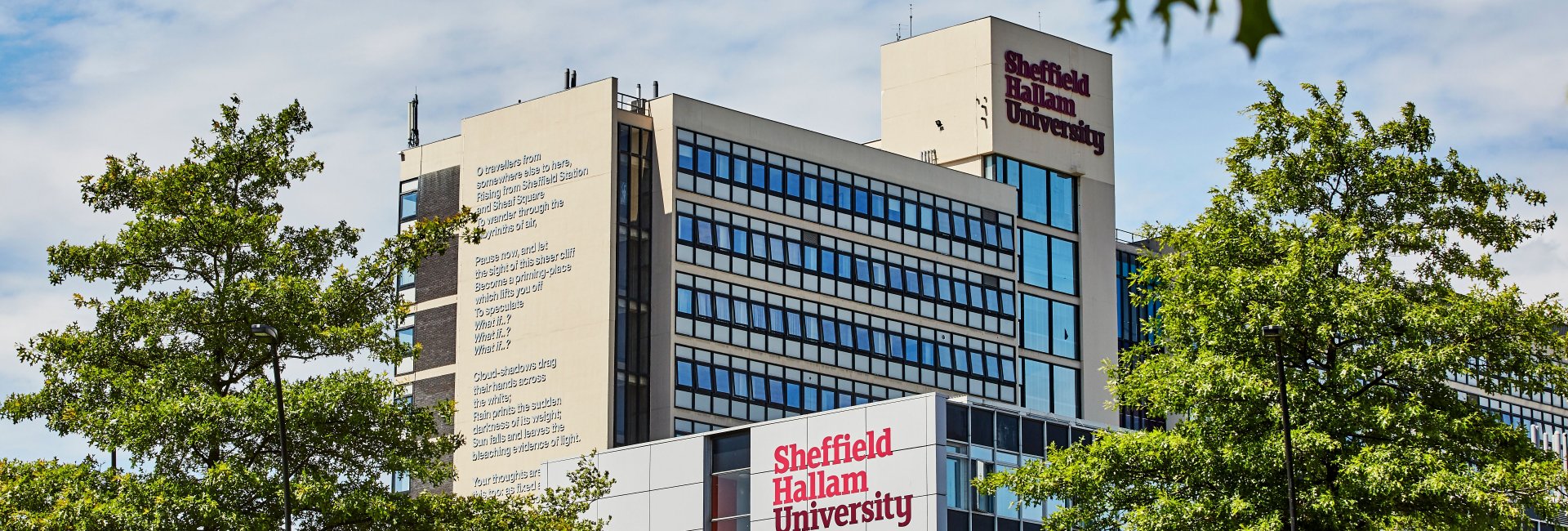
Sheffield Hallam University - applicant open day event
21 Mar 2026, 09:30
Sheffield

Please check the Sheffield Hallam University website for the latest information.
Course summary
Build your professional knowledge of oncology, anatomy and physiology.
Learn how to deliver highly technical and accurate radiotherapy treatments.
Develop your communication, research and health promotion skills.
Learn essential practical skills, including radiation safety and patient care.
Understand the impact of environmental factors on cancer patients.
Study and practise the key principles of radiotherapy, oncology, physics and technology – guided by national and local legislation and policies. You’ll provide inclusive person-centred care throughout the course, ensuring you can effectively support people living with and beyond cancer. When you graduate you’ll be eligible to register with the Health and Care Professions Council (HCPC) as a therapeutic radiographer.
If you don't meet the entry requirements for our BSc Radiotherapy and Oncology course, or you’d like extra preparation before starting degree-level study, we recommend you join the foundation course.
How you learn
Therapeutic radiographers are the only health care professionals registered to deliver radiotherapy treatment to patients who primarily have cancer – while also providing excellent care to all patient groups. On this challenging and supportive course you’ll develop core professional knowledge, practical skills, clinical reasoning, professionalism and leadership abilities.
You'll be taught by professionals who are active in their field of practice and research, providing cutting-edge, inter-professional practice knowledge and experiences. Through a blended approach to learning – on campus, online and on placement – you’ll develop key research skills and undertake projects to evaluate and develop health services. You’ll be able to work within new care models that support the integration of health and social care.
Key Themes
You’ll start by developing your knowledge and understanding of anatomy, imaging, radiation science and cancer. You’ll also explore radiotherapy techniques, their impact on patients and the principles of safe radiotherapy practice.
You’ll then learn to evaluate the management of cancer within the body systems studied – plus the role of imaging and radiotherapy planning. You’ll synthesise knowledge of the impact of cancer and its management on wellbeing to evaluate the role of information and support strategies – appraising oncology pathways that ensure a person-centred approach to care.
Finally you’ll critically evaluate the management of cancer with contemporary technologies in the body systems studied – exploring developments in treatment delivery and verification. Throughout this you’ll learn to appraise and evaluate practices aimed at improving the personalised care and survivorship experiences of those affected by cancer.
We’ll ensure the practice-based learning element of your course complies with the requirements of the Professional and Statutory Regulatory Body (PSRB) which governs the therapeutic radiography profession.
Applied learning
You'll gain real-world skills through simulated practice workshops using our state-of-the-art simulation suite – as well as through practice placements both in a radiotherapy department and the wider oncology setting.
There are also opportunities to gain experiences within the NHS. This may also include the voluntary and charity sector, hospices or equipment manufacturers. These learning experiences are designed to help you apply theory to practice – developing critical and ethical approaches to become life-long, competent professionals.
Module and assessment information for future years is displayed as currently validated and may be liable to change. When selecting electives, your choices will be subject to the core requirements of the course. As a result, selections may be limited to a choice between one of two or more specified electives in some instances.
Year 1
Compulsory modules
Developing The Fundamentals Of A Healthcare Professional
Promotion Of Contemporary Issues In Healthcare
Year 2
Compulsory modules
Collaboration For Individual And Community Wellbeing
Personal And Professional Development
Ronc Competence In Practice 1
Ronc Oncology, Radiotherapy & Technology 1
Ronc Oncology, Radiotherapy & Technology 2
Year 3
Compulsory modules
Assessing And Addressing Complexity In Practice
Evidence And Enquiry For Practice
Ronc Competence For Practice 2
Ronc Oncology, Radiotherapy & Technology 3
Ronc Oncology Radiotherapy & Technology 4
Final year
Compulsory modules
Complexity & Leadership In Professional Practice
Ronc Competence For Practice 3
Ronc Oncology, Radiotherapy & Technology 5
Ronc Supportive Cancer Care
The Advancing Professional
Coursework | Exams
Professionally accredited courses provide industry-wide recognition of the quality of your qualification.
This is the equal consideration deadline. You can still apply after this date, but your application may not receive guaranteed consideration.

Sheffield Hallam University has participated in the Teaching Excellence Framework. These ratings were awarded in 2023, for four years.
See why these ratings were awarded
What does this TEF outcome mean?
The following entry points are available for this course:
Find out more about qualification requirements for this course.
| Test | Grade | Additional details |
|---|---|---|
| IELTS (Academic) | 7 | If English is not your first language, you will need an IELTS score of 7.0 or above, with a minimum score of 6.5 in each skill. |
Please click the following link to find out more about English language requirements for this course https://www.shu.ac.uk/Courses/Radiotherapy-and-oncology/BSc-Honours-Radiotherapy-and-Oncology-with-Foundation-Year/Full-time/
When you apply to Hallam, we consider your personal circumstances as well as your grades, experience and personal statement. In some cases, we will make you a contextual offer. Contextual offers ensure that all applicants have a fair chance of getting a place, regardless of their background.
This section shows the range of grades students (with UK A-Levels or Pearson BTEC Level 3 National Extended Diplomas) who received offers were previously accepted with (learn more). It is designed to support your research but does not guarantee whether you will or won't get a place. Admissions teams consider various factors, including interviews, subject requirements, and entrance tests. Check all course entry requirements for eligibility.
We are unable to show previous accepted grades for this course. This could be because the course is new, it's a postgraduate course, there isn't enough historical data, or the provider has opted out of sharing their entry grades data for this course - learn more.
| Location | Fee | Year |
|---|---|---|
| England | £9535 | Year 1 |
| Northern Ireland | £9535 | Year 1 |
| Scotland | £9535 | Year 1 |
| Wales | £9535 | Year 1 |
| Channel Islands | £9535 | Year 1 |
| Republic of Ireland | £9535 | Year 1 |
| EU | £19155 | Year 1 |
| International | £19155 | Year 1 |
Tuition fee status depends on a number of criteria and varies according to where in the UK you will study. For further guidance on the criteria for home or overseas tuition fees, please refer to the UKCISA website.
Our tuition fee for UK students on full-time undergraduate degree courses in 2025/26 is £9,535 per year. These fees are regulated by the UK government and therefore subject to change in future years.
If you are studying an undergraduate course, postgraduate pre-registration course or postgraduate research course over more than one academic year then your tuition fees may increase in subsequent years in line with Government regulations or UK Research and Innovation (UKRI) published fees. More information can be found in our terms and conditions under student fees regulations: https://www.shu.ac.uk/study-here/terms-and-conditions-and-student-regulations
Our tuition fee for International/EU students starting full-time study in 2025/26 is £19,155, which includes an annual placement supplement of £2,000.
Scholarships, discounts and bursaries may be available to students who study this course.
City Campus
Howard Street
Sheffield
S1 1WB
Visit our website Visit our course page
Phone:(+44) 0114 225 5533
At Sheffield Hallam University